Table of Contents
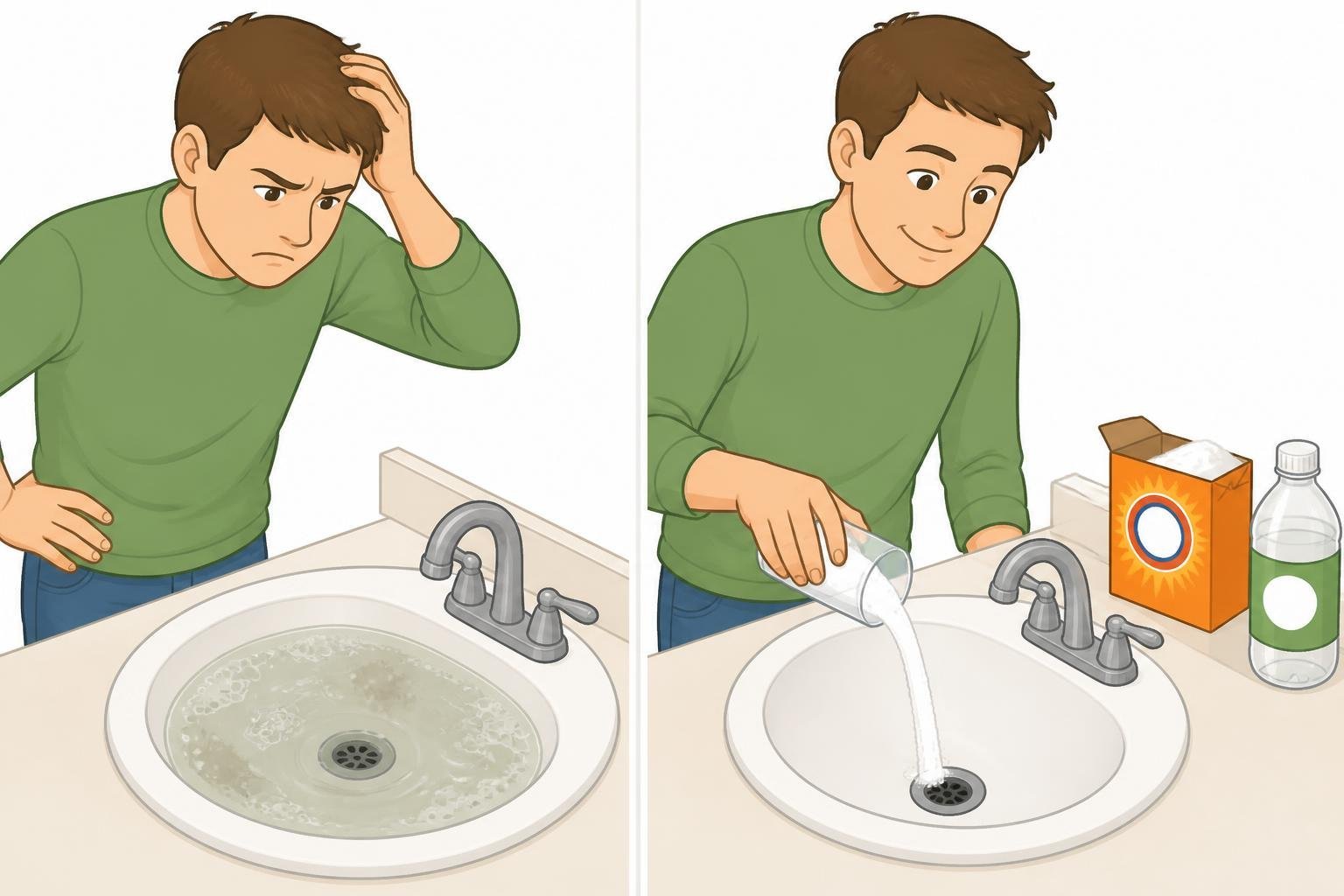
Your sink is full of standing water and it’s going nowhere. Or maybe your shower drain has been slow for weeks and you’ve been ignoring it — until now, ankle-deep in water every morning. Either way, a clogged drain is one of those problems that goes from annoying to urgent fast.
The good news? Most clogs don’t need a plumber. In fact, most of them don’t even need a trip to the hardware store. With a few simple tools and the right approach, you can clear a blocked drain yourself in under 30 minutes. Here’s exactly how to do it.
Why Your Drain Keeps Clogging
Before you fix the problem, it helps to know what you’re dealing with. The type of blockage usually depends on which drain is giving you trouble.
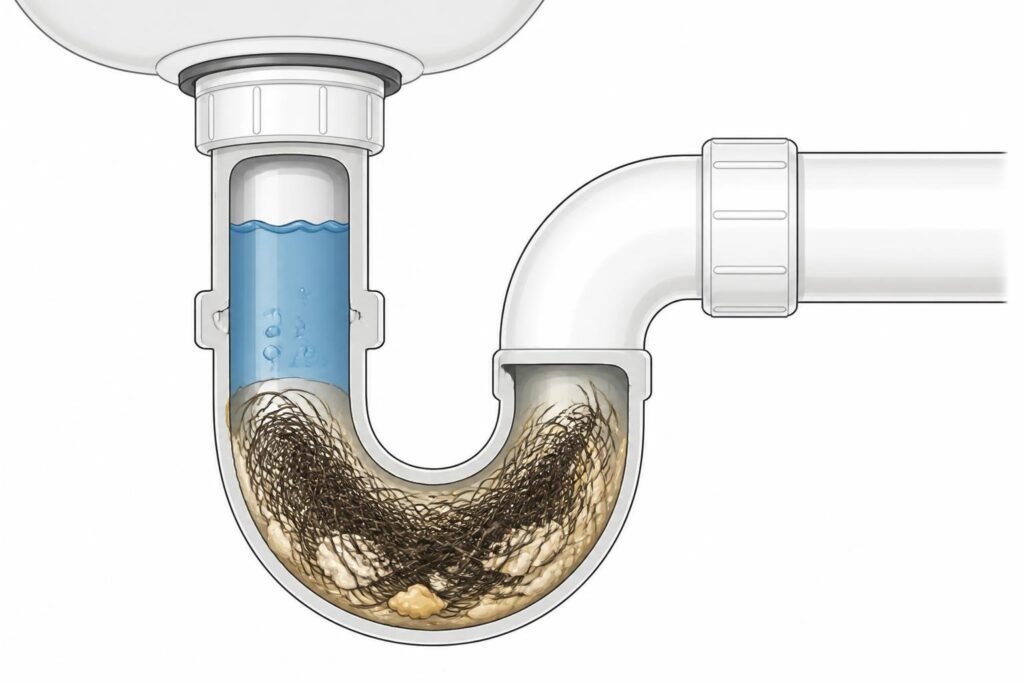
Bathroom sinks and shower drains clog almost exclusively from hair and soap scum. Hair wraps around the stopper or drain cover and traps everything else — soap residue, skin cells, gunk — into a slow-growing mass that eventually cuts off water flow entirely.
Kitchen drains are a different story. Grease and cooking oil are the main culprits. They go down hot and liquid, then cool and solidify on the inside of the pipe. Over time, that coating builds up, narrows the drain line, and catches food bits until the kitchen drain is basically sealed shut.
Toilet clogs are almost always caused by too much paper or something that shouldn’t have been flushed. These usually respond to a good plunger session.
Knowing what caused the clog tells you which fix to try first.
Method 1: Boiling Water — Start Here
This one sounds too simple to work, but it clears a surprising number of clogs, especially in kitchen drains caked with grease.
Boil a full kettle of water. Pour it directly down the drain in two or three stages, pausing 30 seconds between each pour. The heat melts grease buildup and can loosen soap scum enough to flush through the pipe.
One important warning: don’t use boiling water if your pipes are PVC. Boiling water can soften and warp plastic joints. Hot tap water — not boiling — is fine for PVC. If you’re not sure what your pipes are made of, use the hottest water from your tap instead.
If the water drains freely after this, you’re done. If it still pools up, move on.
Method 2: Baking Soda and Vinegar
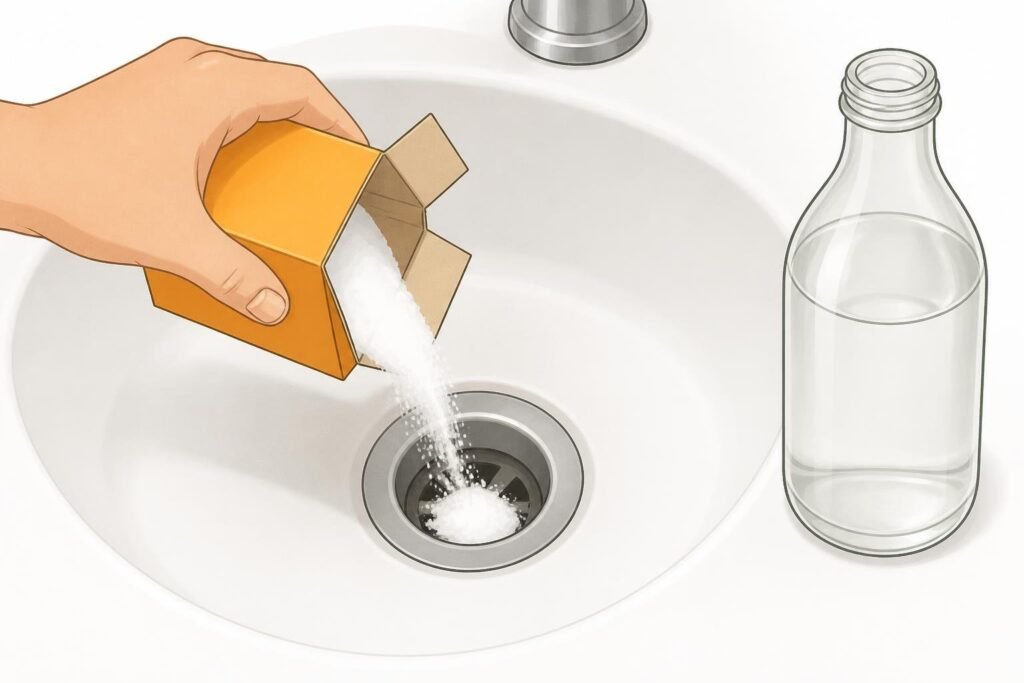
This is the classic DIY fix for a reason. Baking soda and vinegar create a fizzing reaction that can break up light blockages and clear out soap scum and gunk without damaging your pipes.
Here’s how to do it:
- Pour about half a cup of baking soda directly into the drain opening.
- Follow immediately with half a cup of white vinegar.
- Cover the drain with a stopper or rag to force the reaction downward into the pipe.
- Wait 15–20 minutes.
- Flush with hot water — or boiling water if your pipes can handle it.
The combination of baking soda and vinegar won’t dissolve a serious hair clog, but it’s great for grease buildup and slow drains that haven’t fully blocked yet. Think of it as maintenance as much as a fix. Using this method once a month keeps drain cleaning from becoming an emergency.
Method 3: Use a Plunger the Right Way
Most people own a plunger but use it wrong, which is why they think it doesn’t work. There’s a real technique here.
Choosing the Right Plunger
There are two types. The flat-cupped plunger — the classic red one — is designed for sinks and tubs. The toilet plunger has a flange (an extended rubber sleeve at the bottom) that fits into the toilet bowl’s drain hole. Using the wrong one on a toilet or sink means you won’t get a tight seal, and without a tight seal, you’re just splashing water around.
How to Plunge a Sink or Tub
First, fill the sink with enough water to cover the cup of the plunger. You need water, not air, to create pressure in the pipe.
If your sink has an overflow hole (that small opening near the top of the basin), cover it with a wet rag. Otherwise the pressure you build up will just escape out of it instead of pushing through the clog.
Put the plunger over the drain opening and press down to create a seal. Then push and pull with quick, firm strokes — 10 to 15 of them. Pull the plunger off sharply at the end. The goal is to create pressure in both directions to loosen and dislodge the blockage.
Run the water and see what’s happening. If it drains, great. If not, repeat two or three times before moving on.
Method 4: Pull the Clog Out Manually
For shower drains and bathroom sinks, the fastest fix is often just removing the clog by hand — or with a simple tool.
The Zip-It or Drain Snake
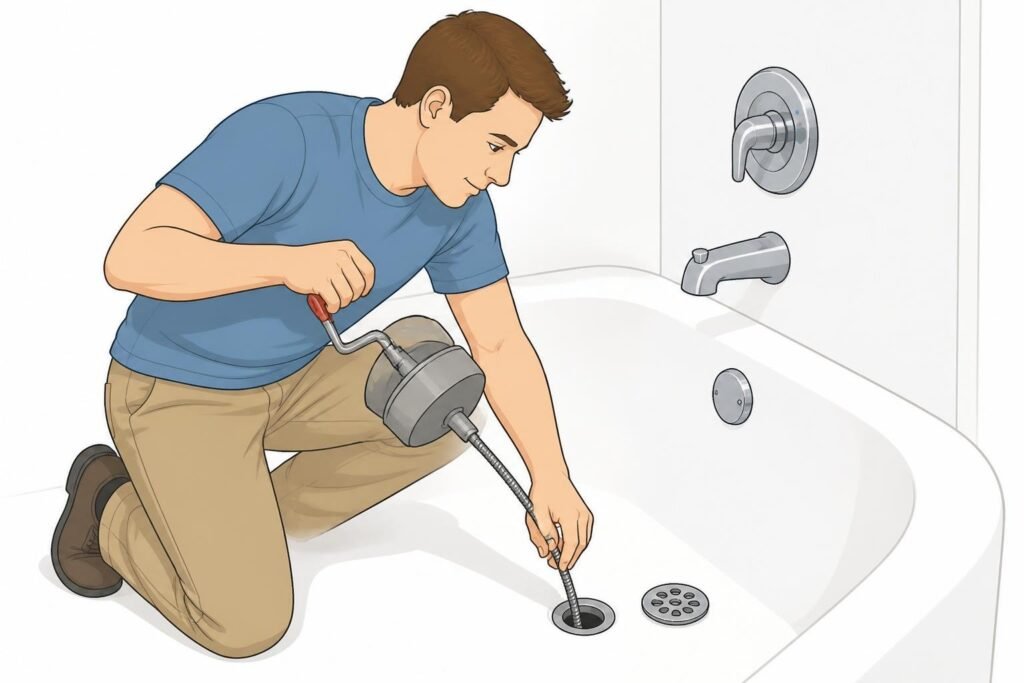
A Zip-It is a cheap disposable plastic drain cleaning tool with small barbs along the sides. You push it down the drain, twist it, and pull it back up. The barbs catch and hold hair clogs, and you’ll be shocked — and disgusted — by what comes out.
A flexible snake or plumber’s snake works on the same principle but reaches further into the drain line. You can buy one at any home store for under $20, or find one at Lowe’s or a similar home improvement retailer. Feed the coil into the drain, twist the handle to hook the clog, then pull it out.
The Coat Hanger Method
Straighten a wire coat hanger and bend a small hook at one end. Push it into the drain and fish around for the clog. This works well in shower drains where hair accumulates just below the drain cover.
If none of the above methods worked, the blockage is probably sitting in the p-trap — that u-shaped curved section of pipe directly under your sink. This is actually pretty easy to fix yourself. You don’t even need a wrench for most modern PVC systems.
Here’s how:
- Clear out the cabinet under the sink to give yourself room to work.
- Place a bucket under the p-trap to catch the water and any gunk that comes out.
- Unscrew the two slip-joint nuts on either end of the u-shaped section — hand tight usually works for PVC; you may need pliers for older metal fittings.
- Remove the trap and check for the blockage. It’s usually right there.
- Clean it out, check the gasket on each nut to make sure it’s still intact, then reassemble everything in reverse order.
- Run water to check for leaks at both joints.
The p-trap holds water intentionally — it creates a seal that keeps sewer gas out of your home. Don’t skip putting the bucket down first. And after you reassemble, run the water slowly at first to confirm neither joint is leaking before you close the cabinet back up.
What About Chemical Drain Cleaners Like Drano?
Chemical cleaners like Drano work by using caustic compounds — often lye or sulfuric acid — to dissolve organic material in the pipe. They can clear clogs, but there are some real trade-offs worth knowing about.
The main issues:
- They can damage pipes. Chemical drain cleaners generate heat during the reaction, which can warp PVC joints over time. In older homes with metal pipes, they can accelerate corrosion.
- They don’t always work. On hair clogs, they’re often ineffective. On solid blockages, they don’t help at all.
- They’re hazardous. The chemicals in drain cleaners are genuinely caustic — splashing any on your skin or eyes is a real hazard.
If you’re going to use chemical cleaners, use them occasionally and as a last resort before trying the p-trap method, not as your first move. Regular maintenance with baking soda and vinegar is a safer long-term strategy for most drains.
How to Unclog a Shower Drain Specifically
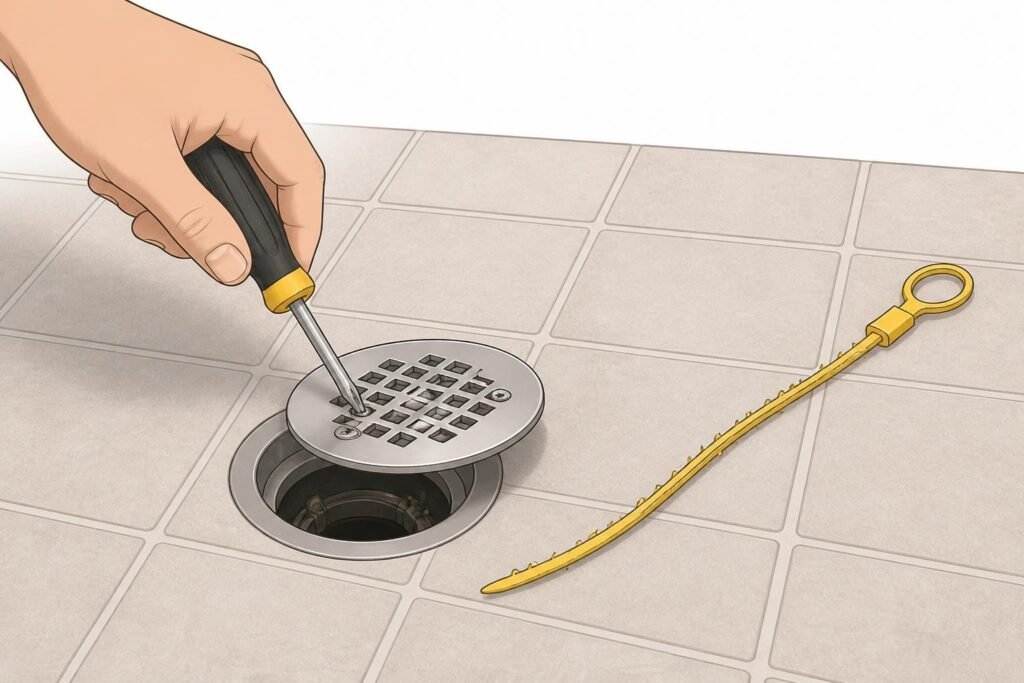
Shower drains have one main enemy: hair. And unlike sink drains, they usually don’t have a stopper you can easily remove — just a cover with screws.
Start by removing the drain cover (a screwdriver handles most of them). Look into the drain with a flashlight. In a lot of cases, you can see the hair clog sitting right there, just below the opening.
Use the Zip-It tool or a coat hanger to pull it out. If nothing’s visible near the surface, run the drain snake further down.
If you’ve got standing water in the shower that won’t drain at all and nothing you pull out seems to clear it, the blockage may be further down the drain line — possibly where your shower pipe connects to the main drain. At that point, a water bladder tool (which attaches to a garden hose and expands inside the pipe to force a blockage through with water pressure) can work, or it’s time to call a professional.
How to Unclog Your Kitchen Sink
Kitchen sink clogs are grease clogs, almost always. The baking soda and vinegar method works well here, especially if you catch the problem early while the drain is just slow rather than totally blocked.
If that doesn’t clear it, try the plunger — but cover the second basin first (if you have a double sink) with a wet rag so you’re directing pressure toward the clog rather than letting it escape.
For a kitchen sink that’s completely backed up with standing water, the p-trap is usually your next stop. Kitchen p-traps fill up with a combination of grease and food debris that’s genuinely unpleasant, so have the bucket ready.
One thing that helps with kitchen drain maintenance: flush the drain with hot water for 30 seconds after washing dishes. It keeps grease from solidifying in the pipe. Small habit, real difference.
When to Call a Plumber
Most clogs are DIY fixes. But some aren’t, and pushing on a problem that’s beyond your reach can make it worse.
Call a plumber if:
- Multiple drains are slow or blocked at the same time. When the kitchen sink, bathroom sinks, and tub are all draining slowly, it’s not individual clogs — it’s a blockage in the main drain line.
- You’ve tried everything and the drain is still totally blocked. Some clogs are deep in the drainpipe or at a joint you can’t reach without professional equipment.
- You hear gurgling sounds from other drains when you flush the toilet. That’s a classic sign of a venting or main line problem.
- Tree roots. If you have older pipes and slow drains throughout the house, root intrusion is a real possibility. That requires a plumber with a camera and an auger.
There’s no shame in knowing where your DIY limits are. A plumber for a main line clog is a hundred dollars well spent compared to the alternative.
A clogged drain is almost always fixable at home. Start with boiling water or the baking soda and vinegar method, move to a plunger or drain snake if needed, and tackle the p-trap if you’ve exhausted the other options. Most of the time you’ll have the drain clear before you’ve spent a dollar. And once it’s flowing again, regular maintenance — monthly baking soda flushes, a drain cover to catch hair — keeps you from doing this all over again in two months.