Table of Contents
You’ve decided it’s time. Maybe you’re moving out of your parents’ house, relocating for a job, or just done with roommates you didn’t choose. Whatever brought you here, renting your first apartment is a big deal — and it can feel overwhelming if no one’s walked you through it before.
The good news? It’s a lot more manageable when you know what to expect. This step-by-step guide covers everything from the apartment search to the moment you sign the lease and get your keys — including the parts most guides skip, like what landlords actually look for and what questions to ask before you commit.

Get Your Finances Ready Before You Search for an Apartment
Before you start scrolling listings, get a clear picture of what you can actually afford. Most landlords want your monthly income to be at least 2.5 to 3 times the monthly rent. So if you’re looking at a $1,500/month apartment, you’ll need to show around $4,500 in monthly income.
Also figure out your upfront costs. You’ll typically need:
- First month’s rent — due before or on move-in day
- Security deposit — usually equal to one month’s rent, sometimes two
- Last month’s rent — some landlords require this upfront too
That means a security deposit and first month’s rent could run you $3,000 or more before you’ve even unpacked a box. Budget for it early.
Check Your Credit Score
Your credit score is one of the first things a landlord looks at. Most want to see a score of 620 or higher, though competitive markets can push that threshold up. If you have a low credit score or no credit history at all, you’re not automatically out — but you’ll want to know where you stand before applying.
Pull your credit report from AnnualCreditReport.com (it’s free) and look for any errors or collections that might be dragging your score down. A low or no credit score doesn’t disqualify you everywhere, but it does mean you may need a co-signer or a larger deposit to get approved.
How to Search for an Apartment That Actually Fits Your Life
An apartment search is about more than square footage and rent prices. Start by making two lists: your must-haves and your nice-to-haves. Must-haves might include a certain commute time, pet-friendly policies, or in-unit laundry. Nice-to-haves are the things you’d love but could live without — a gym, a rooftop, a dishwasher.
Good places to search:
- Zillow, Apartments.com, Rent.com — broad inventory, great for getting a feel for rent prices in a neighborhood
- Craigslist — more individual landlords, lower fees, but vet carefully
- Facebook Marketplace and local groups — surprisingly useful, especially in smaller cities
- Walking the neighborhood — some of the best apartments in older apartment buildings never get listed online
When you find an apartment you like, move quickly. Good units don’t sit. If a listing looks promising, request a tour the same day.

Questions to Ask Before You Commit
Touring an apartment is your chance to learn everything a listing won’t tell you. Don’t just show up and admire the view — ask the landlord and ask directly.
Questions to ask about the unit:
- What’s included in the rent — water, trash, parking?
- What are the average utility costs per month?
- Is the apartment pet-friendly, and is there pet rent?
- What’s the move-in date?
- How long is the lease term?
Questions to ask about the building:
- How are maintenance requests handled?
- Is there on-site management or a property management company?
- What’s the noise situation like — neighbors, street, building?
- Has there been any pest activity?
Questions to ask about the financials:
- What’s the policy on rent increases at renewal?
- Are there any fees beyond the security deposit and first month’s rent (admin fees, parking, amenity fees)?
You’re not being difficult by asking. A good landlord expects these questions. A landlord who gets defensive is telling you something.
How to Complete a Rental Application
Once you find the right apartment, the landlord will ask you to complete a rental application. This is standard — every serious renter goes through it.
A typical rental application asks for:
- Personal information — full name, current address, date of birth
- Proof of income — pay stubs, offer letters, bank statements, or tax returns if you’re self-employed
- Employment history — current employer, position, how long you’ve been there
- Rental history — previous landlords and their contact info
- References — personal or professional contacts who can vouch for you
- Authorization for a credit check and background check
Fill it out completely and honestly. Missing information slows the process down. Inaccurate information can get your application denied — or your lease terminated later.
Most landlords charge a non-refundable application fee to cover the cost of background and credit checks, typically between $25 and $75. If you’re applying to multiple apartments, those fees add up fast, so prioritize the ones you’re genuinely serious about.

What Landlords Look at in a Credit and Background Check
When you submit your rental application, the landlord will run a credit and background check — often through services like TransUnion SmartMove or Experian RentBureau. Here’s what they’re actually looking at.
Credit Check
The credit check isn’t just about your score. Landlords also look at:
- Payment history — do you pay on time?
- Outstanding debt — how much do you owe compared to your credit limits?
- Negative marks — collections, charge-offs, or bankruptcies
- Length of credit history — how long you’ve had accounts open
A thin credit file (low or no credit history) is different from bad credit, but both can make a landlord hesitate. Having a co-signer with solid credit can bridge that gap.
Background Check
Background checks typically look at criminal history, prior evictions, and sometimes sex offender registries. Policies vary — some landlords have blanket rules, others review things on a case-by-case basis. An eviction on your record is usually the biggest red flag, so if that applies to you, be upfront about the circumstances.
What Happens If You’re a First-Time Renter With Low or No Credit
If you’re a first-time renter with a low or no credit score, you’re not alone — and you’re not out of options. Here’s what tends to work:
- Get a co-signer. A co-signer takes on legal responsibility for the rent if you can’t pay. Usually a parent or close family member with good credit. Not every landlord accepts co-signers, but many do, especially in college towns or markets with younger renters.
- Offer extra upfront. Some landlords will approve you with a low credit score if you offer additional months’ rent upfront — sometimes first and last plus the security deposit.
- Show strong income proof. If your credit is thin but your income is solid and consistent, provide as much documentation as possible. Bank statements showing steady deposits can carry real weight.
- Find individual landlords. Large property management companies often have strict algorithmic filters. Individual landlords have more flexibility and can use judgment.

How to Read and Sign the Lease
Getting approved feels like the finish line. It’s not. The lease is the most important document in the entire process — and most first-time renters sign it without reading it carefully.
Don’t do that.
Before you sign the lease, read every page. Flag anything that doesn’t make sense and ask the landlord to explain it. Key things to look for:
- Rent amount and due date — confirm the monthly rent and when it’s due each month
- Lease term — standard leases run 12 months; shorter or longer terms exist but may cost more
- Late fees — what happens if your rent is late, and after how many days?
- Security deposit terms — what are the conditions for getting it back?
- Move-out requirements — notice period (usually 30–60 days), cleaning expectations, damage policies
- Guest policies — some leases restrict long-term guests
- Subletting rules — can you sublet or have someone take over your lease if you need to leave early?
- Pet policy — if you have or plan to get a pet, confirm it’s allowed and what the cost is
Once you sign the lease, you’re legally bound by it. The landlord is too. Keep a copy — physical or digital — somewhere you can find it easily.
Before Your Move-In Date
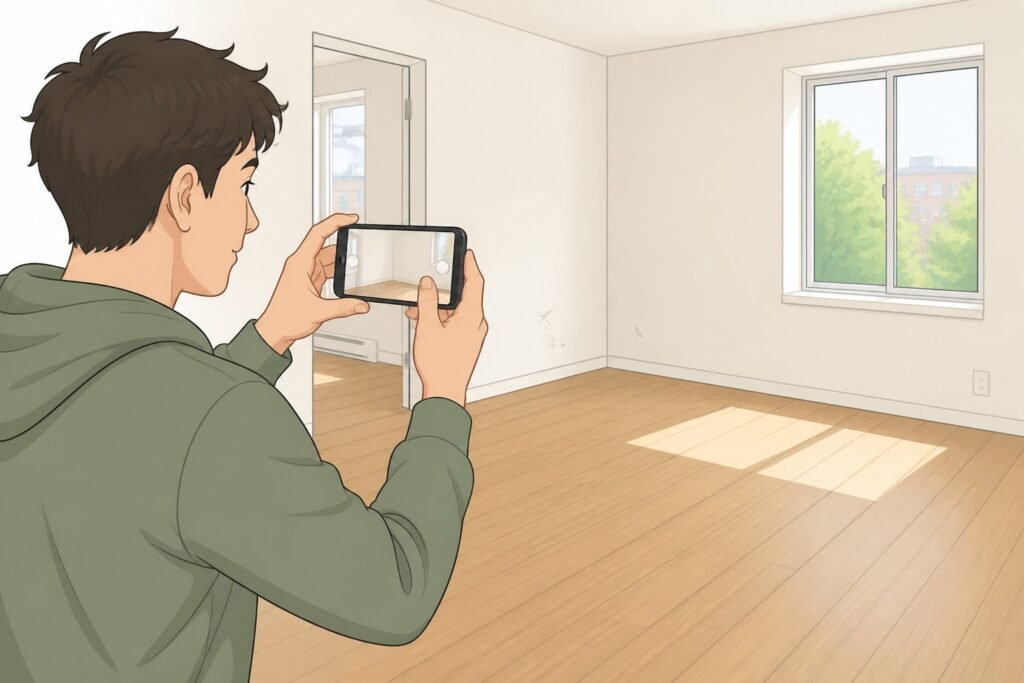
Walk through the apartment before you move anything in. Document everything — take photos and video of every wall, floor, appliance, and fixture. Email the photos to your landlord or property manager immediately so there’s a timestamp.
This protects your security deposit. If there’s a stain on the carpet or a scratch on the wall that was there before you moved in, you want proof.
Once You’re In: How to Be a Good Tenant
Getting the apartment is step one. Keeping it — and keeping your landlord relationship healthy — is the longer game.
Pay your rent on time, every time. This sounds obvious, but rent payments are reported to credit bureaus in many cases now, and consistent on-time payment can actually build your credit history. Set up autopay if you can. If you ever can’t pay your rent on time, contact your landlord before the due date — not after.
Communicate in writing. Any time you have a maintenance request, a concern, or a question, send it by email or through whatever written channel the landlord uses. It creates a record for both of you.
Respect the space. Living in an apartment means you share walls, floors, and hallways with neighbors. Be the tenant you’d want next door.
Give proper notice. When you decide to move out, check your lease for the required notice period and hit that deadline. Failing to give notice can cost you your security deposit or expose you to additional rent charges.
You’re Ready to Rent — Here’s the Short Version
Renting an apartment for the first time has a lot of moving parts, but it’s not complicated when you take it step by step. Know what you can afford. Check your credit. Search smart, tour in person, and ask real questions. Fill out your rental application completely. Read the lease before you sign it. Document the apartment before you move in. Then pay on time and communicate clearly.
That’s it. The dream apartment doesn’t require perfect credit or a decade of rental history. It requires being prepared, organized, and honest — and knowing exactly what you’re walking into.
Good luck. You’ve got this.