Table of Contents
You moved to a new city, got a new job, or signed up for a class — and suddenly you need to speak English, fast. Or maybe you’ve been studying for years and you’re stuck, frustrated that fluency still feels out of reach.
Either way, you’re wondering how to learn English fast without wasting time on methods that don’t work. Good news: it’s absolutely possible to learn English faster than you think. Not overnight — but with the right approach, you can make real progress in weeks, not years. Here’s what actually works.
Set a Clear Goal Before You Start Learning English
Most people start learning English with a vague plan: “I want to get better.” That’s not a plan — that’s a wish.
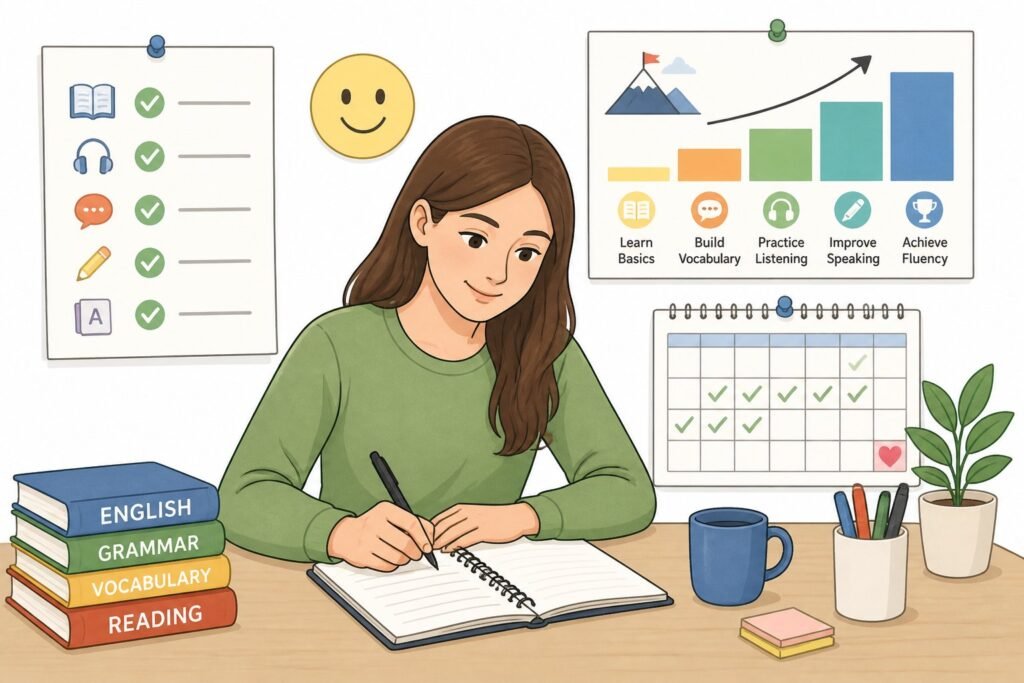
Fast learners are specific. Do you want to speak English fluently for job interviews? Pass an exam? Hold a conversation with your partner’s family? Your goal changes everything — which vocabulary you prioritize, how you practice, and how you measure success.
Write down one specific goal. Then work backwards from it.
Why Goals Speed Up English Learning
When you know why you’re learning, your brain pays closer attention to relevant input. You stop treating every English word as equally important and start filtering for what actually matters to you. That selectivity is one of the biggest differences between people who make fast progress and those who spin their wheels.
Immerse Yourself in English Every Single Day
The single most effective way to learn English fast is to surround yourself with it — not just during study sessions, but all day long.
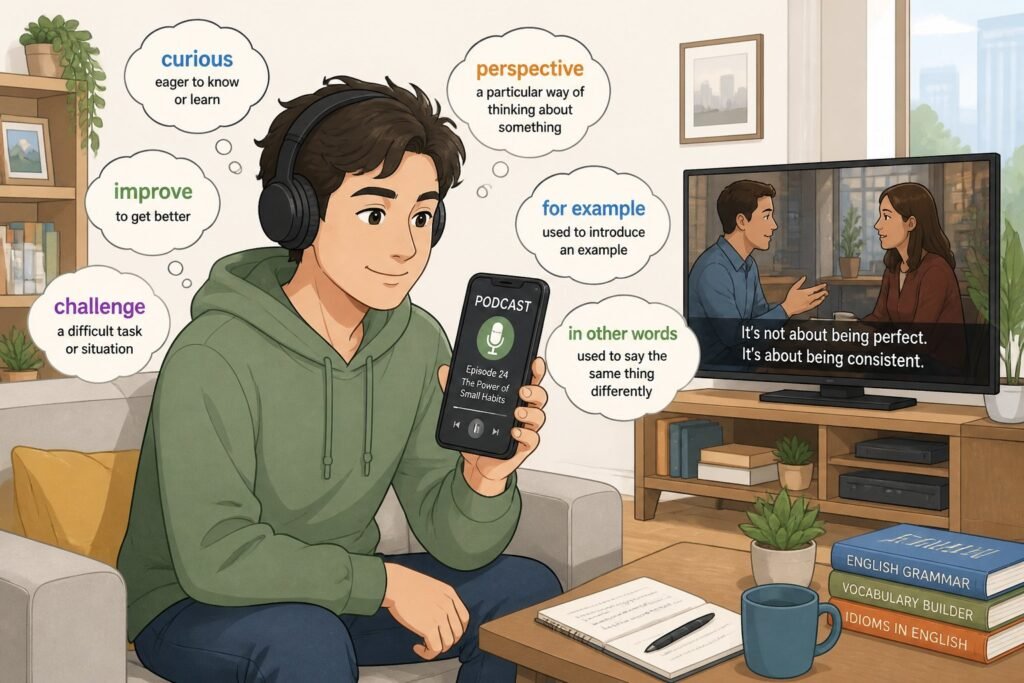
Change your phone settings to English. Watch YouTube in English. Listen to English podcasts on your commute. Read English articles over your morning coffee. The goal is to make English your default environment, not just a subject you study.
This is what immersion does: it gives your brain repeated, varied exposure to real English patterns. Over time, things you once had to consciously translate start to feel automatic.
How to Immerse Yourself in English at Home
You don’t need to move abroad to get immersion-level exposure. Here are practical ways to build English into your daily life:
- Switch your devices: Change your phone, laptop, and social media settings to English. You’ll learn everyday English just by navigating menus and notifications.
- Watch with subtitles: Start with English subtitles (not your native language). BBC Learning English, Netflix, and YouTube all work well.
- Listen passively: English podcasts, English songs, and English radio in the background all count. Your brain picks up patterns even when you’re not actively focused.
- Think in English: Start narrating your day to yourself in English. What are you doing? What do you see? This trains you to stop translating and start thinking directly in the language.
Build Vocabulary the Smart Way
Vocabulary is the engine of any language. You can know all the grammar rules in the world, but if you don’t know the words, you can’t communicate.
The trick isn’t to learn as many new words as possible — it’s to learn the right words first.
Focus on High-Frequency Words
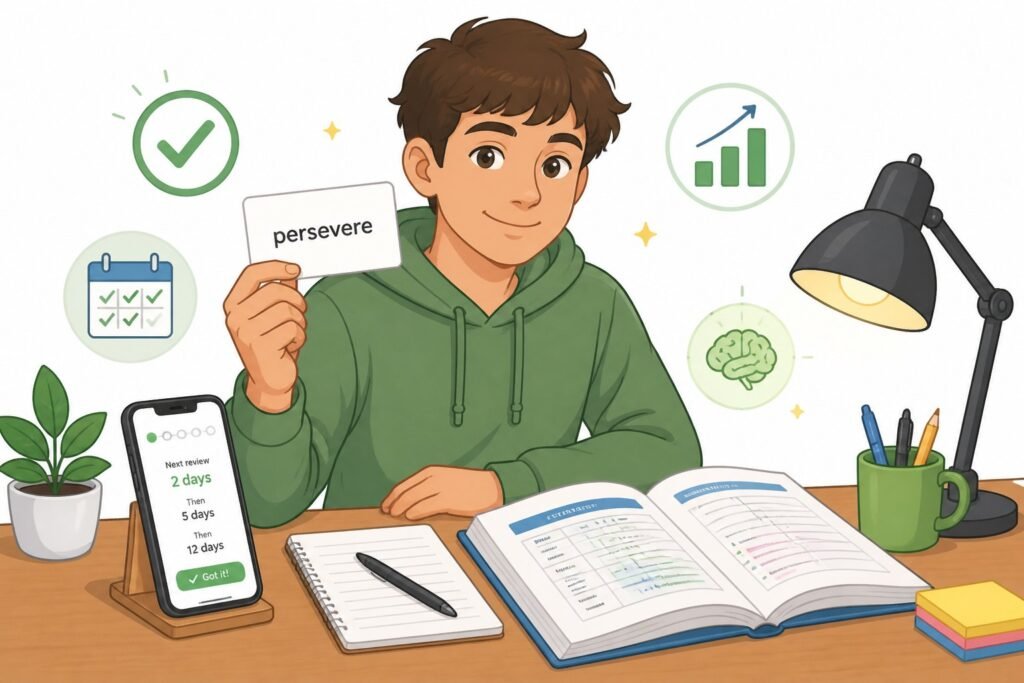
The most common 1,000 words in English cover roughly 85% of everyday conversation. Learn those first. Apps like Anki or tools built around spaced repetition help you remember new vocabulary efficiently, so you’re not just reviewing words you already know.
When you learn new words, don’t just memorize definitions. See them in sentences. Hear them in context. Use them when you speak or write. Passive vocabulary (words you recognize) becomes active vocabulary (words you use) only through practice.
Learn Useful Phrases, Not Just Words
Native English speakers don’t build sentences one word at a time — they use chunks. Phrases like “Could you repeat that?” or “I was wondering if…” are units of meaning that you can learn and deploy as a whole. Learning useful phrases like these gets you speaking faster and sounding more natural.
Don’t Fear English Grammar — Learn It Practically
Grammar has a reputation for being boring, and honestly, traditional grammar textbooks don’t help. But you do need enough English grammar to sound clear and build correct sentences.
The good news: you don’t need to memorize rules out of a textbook. Learn grammar in context.
When you read or listen to English, pay attention to how sentences are built. Notice verb tenses in real articles. Spot how questions are formed in conversations. Absorb patterns from real usage, then look up the rule when something confuses you.
Apps like Grammarly, BBC Learning English, or even just reading English books regularly will reinforce your grammar instincts without turning studying into a chore.
The Grammar Basics to Lock In First
For anyone starting out or trying to improve, these areas give you the most return:
- Present, past, and future verb tenses
- Articles (a, an, the) — notoriously tricky for many learners
- Subject-verb agreement
- Common prepositions (in, on, at, for, with)
- Question formation
Once these feel natural, everything else builds on top of them.
Speak English Every Day — Even If It Scares You
Here’s the uncomfortable truth: you can spend years studying English and still struggle to hold a real conversation if you never actually speak.
Speaking practice is what transforms passive knowledge into active fluency. And yes, it feels embarrassing at first. You’ll make mistakes. That’s not a problem — that’s the process.
Ways to Practice Speaking English When You Don’t Have a Partner
- Talk to yourself: Describe what you’re doing out loud in English. Summarize a video you just watched. Pretend you’re explaining something to a friend.
- Use language exchange apps: Apps like Tandem or HelloTalk connect you with native English speakers who want to learn your language. Win-win.
- Find an English tutor online: Platforms like iTalki give you access to a qualified English tutor for as little as $10–$15 an hour. Even one 30-minute session per week makes a measurable difference.
- Join English conversation groups: Many cities have free or low-cost English conversation meetups. Online groups on Discord or Reddit work too.
The more you speak English every day, the faster your brain stops translating and starts producing language naturally. English speaking skills don’t come from studying — they come from speaking.
Use English Learning Tools That Actually Work
There’s no shortage of apps, websites, and courses promising to make you fluent in 30 days. Most of them won’t. But some tools genuinely help if you use them consistently.
Duolingo: Good for habits and vocabulary drilling, weak for conversation. Use it as a warm-up, not your main study method.
Anki: The gold standard for memorizing vocabulary through spaced repetition. Steep learning curve, massive long-term payoff.
BBC Learning English: Free, high-quality content designed for English learners at every level. Excellent for improving your English pronunciation, grammar, and listening.
Online English courses: Platforms like Coursera, Udemy, and British Council offer structured online English courses for all levels. If you need accountability and structure, a course beats scattered self-study.
YouTube: Hugely underrated. Channels dedicated to English learning exist for every accent, level, and goal. Search for what you need and you’ll find it.
The best tool is the one you’ll actually use. Pick two or three and stick with them.
Find an English Speaking Community
Learning alone is hard. Learning with other people is faster — and a lot more motivating.
When you have conversation partners, fellow learners, or even just online communities to engage with, you get regular exposure to real English conversation practice. You see different writing styles, hear different accents, and get feedback you’d never get from an app.
English proficiency grows fastest when it’s social. Look for:
- Language exchange partners (online or local)
- English-speaking social groups around hobbies you already have
- Online forums and communities where discussion happens in English (Reddit, Discord, Quora)
- Work or school environments where you’re pushed to use English as much as possible
Even passive exposure — reading comments, following English-speaking creators, watching English content — adds up faster than you’d expect.
Track Your Progress and Celebrate Small Wins
Learning a language is a long game, and it’s easy to lose motivation when you can’t see how far you’ve come.
Keep a simple record of what you’ve done: words you’ve learned, conversations you’ve had, videos you’ve watched. Look back at where you started every few weeks. The progress will surprise you.
Celebrate the small stuff. The first time you understand a joke in English. The first time you finish a whole article without looking up a word. The first conversation that just… flowed. These moments matter, and noticing them keeps you going.

Be Consistent — That’s the Real Secret to Learning English Fast
Every person who becomes fluent in English — every single one — got there through consistent daily practice. Not marathon study sessions on weekends. Daily contact with the language.
Thirty minutes a day beats four hours on Sunday. Your brain needs regular, repeated exposure to build the neural pathways that make a language feel natural. Learning English takes time, but it compounds. Every day you practice makes the next day easier.
You don’t need to be perfect. You need to show up.
Ready to Start? Here’s What to Do Today
You now know the most effective ways to learn English fast. But knowing isn’t doing.
Pick one thing from this list and start it today — not next week, not after you finish one more prep course. Change your phone settings to English. Download Anki. Send a message to a language exchange partner. Sign up for one session with an English tutor.
Your English learning journey starts with a single decision: to treat English as part of your daily life, not a subject you study once in a while. Make that shift, stay consistent, and you’ll be surprised how fast the language starts to click.