Table of Contents
You hang a feeder. You fill it with seed. And then… nothing. A week goes by, maybe two. The seed sits there, slowly going stale, while you wonder what you’re doing wrong.
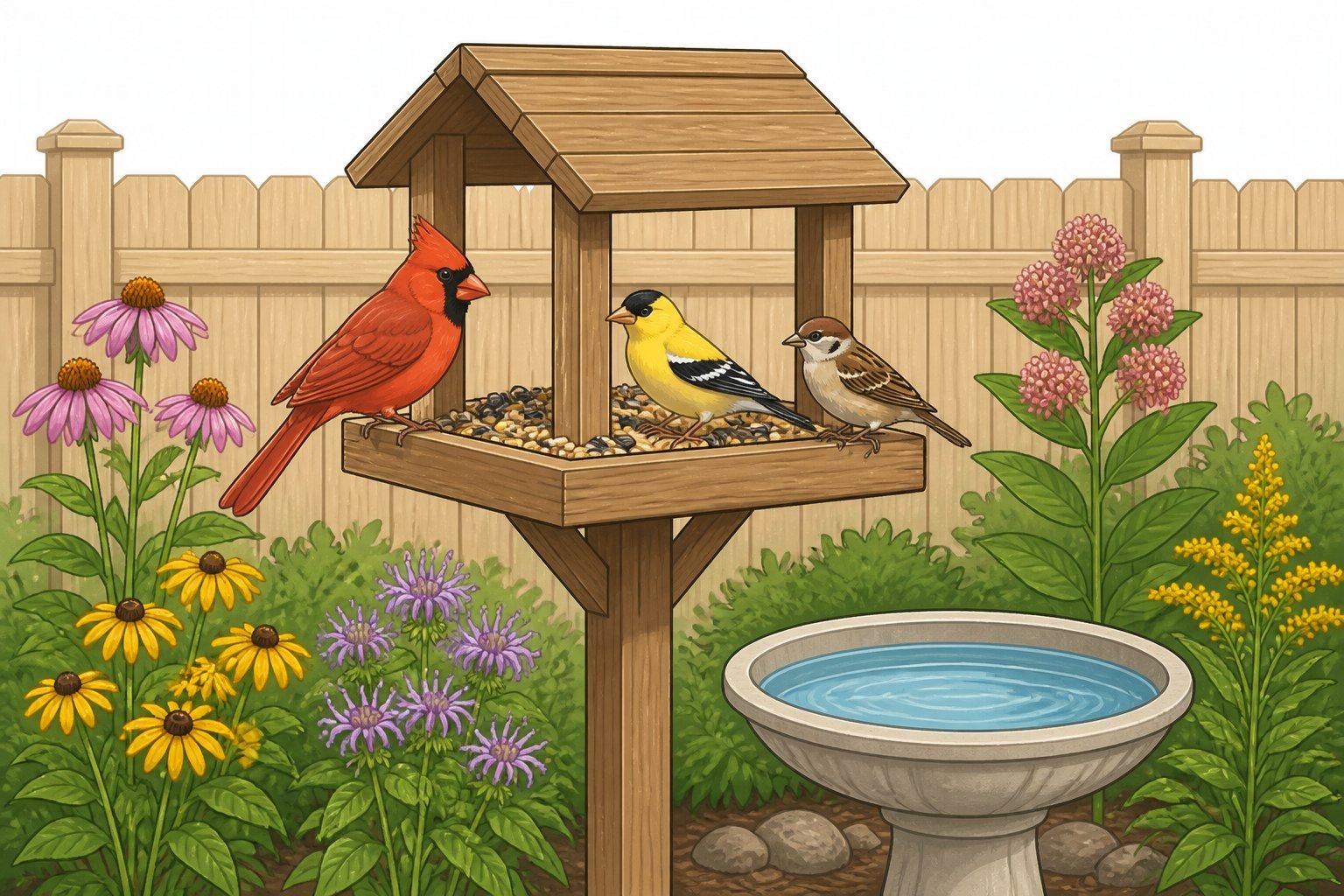
Here’s the thing — attracting birds isn’t just about putting food out. Birds are picky. They’re watching for the right food, a safe place to land, water nearby, and somewhere to take cover if a cat shows up. Get those four things right, and you’ll go from an empty yard to a busy, noisy, genuinely delightful backyard bird scene. This guide covers exactly how to do that.
Get a Good Feeder — Then Place It Right
The feeder is where most people start, and it’s also where most people go wrong. Not because they chose a bad feeder, but because they hung it in the wrong spot.
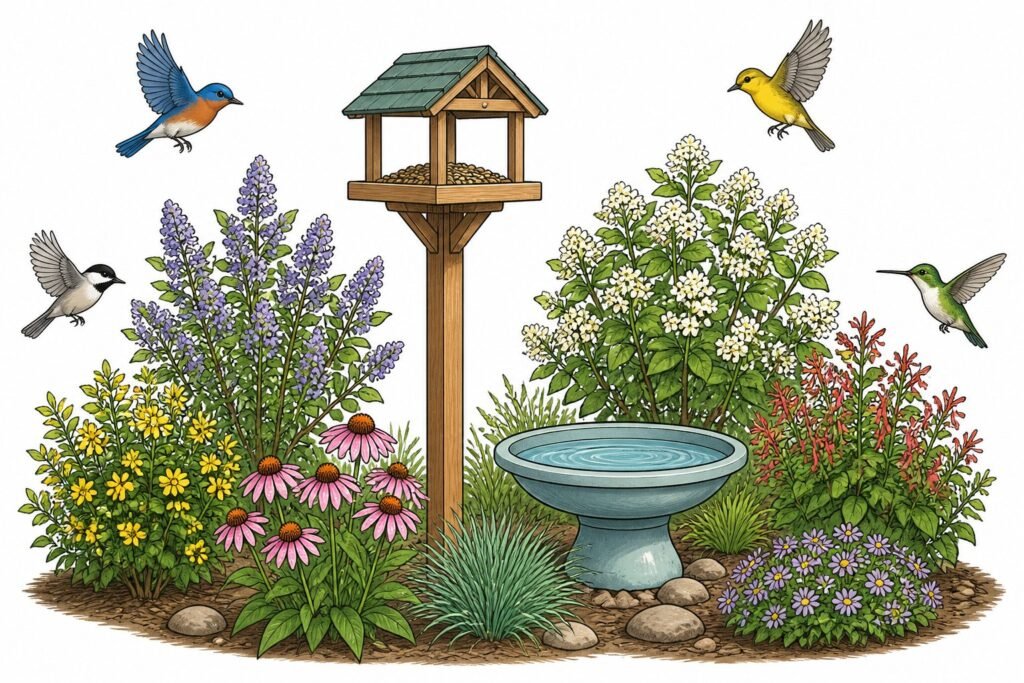
Birds need to feel safe eating. If your bird feeder is sitting in the middle of an open lawn with nowhere to escape to, birds will skip it. They want the feeder within about 10 feet of shrubs or trees they can dart to if something spooks them.
Feeder Types Matter More Than You Think
Different feeder styles attract different birds. Here’s a quick breakdown:
- Tube feeders — great for small birds like goldfinches, sparrows, and chickadees
- Platform or tray feeders — attract a wider variety of birds including ground-feeding birds like doves and juncos
- Suet feeders — metal cages that hold suet cakes, ideal for woodpeckers and nuthatches
- Nyjer/thistle feeders — thin-mesh sock-style feeders that goldfinches absolutely love
If you want to attract birds across many species, run two or three different feeder types. A tube feeder plus a suet feeder covers a lot of ground.
One more thing: keep your feeder clean. Old, wet seed grows mold that can kill birds. Rinse your feeder every one to two weeks, and toss any seed that’s clumped or smells off.
Use the Right Bird Food for the Birds You Want
Cheap mixed seed bags from the grocery store are mostly filler — milo, millet, and red millet that most backyard birds won’t touch. They scratch through it looking for what they actually want, and the rest ends up on the ground rotting.
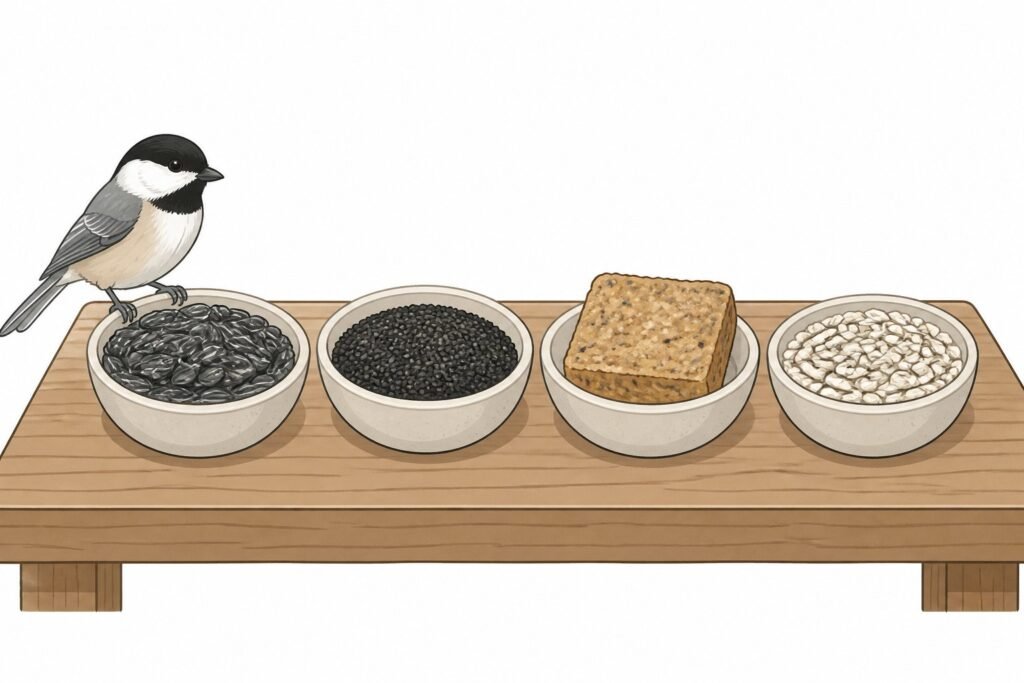
Black oil sunflower seed is the single best thing you can put in a feeder. It has a thin shell that small birds can crack, and almost every backyard bird species eats it — cardinals, chickadees, sparrows, nuthatches, finches, and more. If you only buy one type of bird seed, make it black oil sunflower.
Beyond that:
- Nyjer (thistle) seed — goldfinches go crazy for it
- Safflower seed — cardinals love it, squirrels tend to ignore it (bonus)
- Suet cakes — high-fat, high-energy food that woodpeckers, creepers, and wrens seek out in winter
- Peanuts (shelled or in the shell) — jays, woodpeckers, and nuthatches will clean these out fast
Birds eat different things depending on the season too. In winter, high-fat foods like suet and sunflower seeds help birds stay warm. In spring and summer, protein matters more — which is why many birds shift to eating insects even if you have a feeder up.
Add a Water Source — Birds Need It More Than You Realize
Food gets all the attention, but water might actually be the fastest way to attract birds to your yard. Birds need to drink every day, and they need to bathe regularly to keep their feathers in good shape. A clean water source can pull in species that never touch your feeder.
A basic bird bath works well. You don’t need anything fancy — a shallow dish about 1–2 inches deep, with a slightly rough surface so birds can grip it. Keep the water fresh. Change it every two to three days in summer, more often in hot weather, because standing water can breed mosquitoes and harbor bacteria.
A few upgrades that make a big difference:
- Add a dripper or mister — moving water catches birds’ attention from farther away and signals “clean and safe”
- Keep it heated in winter — birds need liquid water even when it’s freezing; a simple submersible heater does the job
- Place it in the shade — water stays cleaner longer, and birds feel less exposed than in direct sun
Ground-feeding birds like robins and thrushes often prefer a bath that’s at ground level or close to it. Elevate it if you have cats around.
Plant Native Plants to Give Birds Shelter and Natural Food
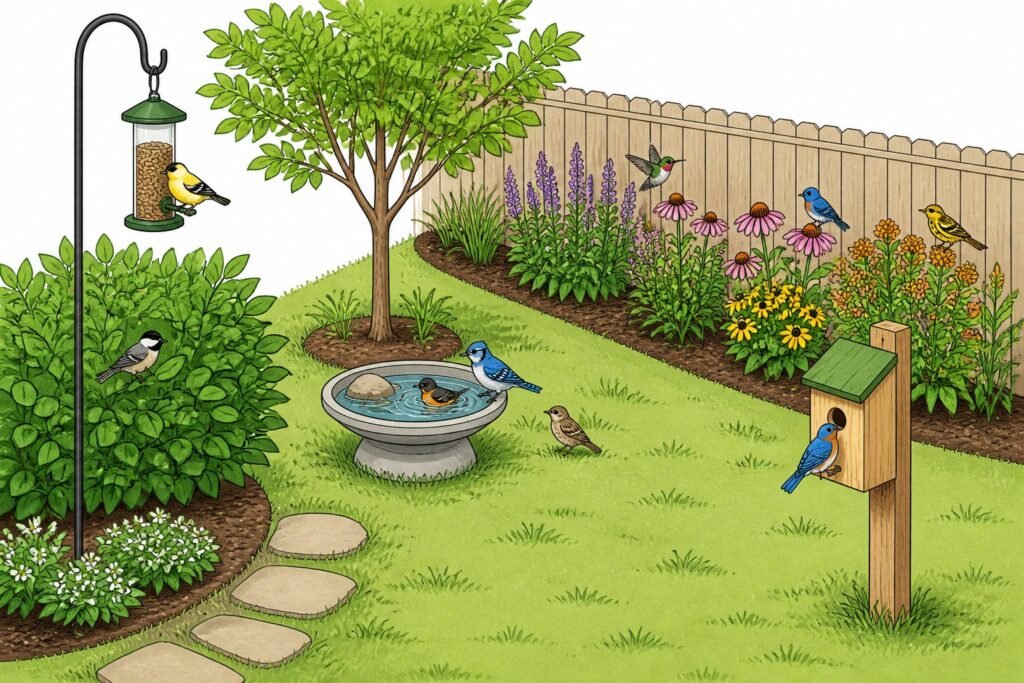
A yard full of native plants does more for birds than any feeder could. Native plants attract the insects birds eat, produce seeds and berries they forage for naturally, and give them cover to hide in, rest in, and nest in.
The best approach? Think in layers. A mix of tall trees, mid-height shrubs, and low ground cover mimics natural habitat and supports many different species of birds.
Some plants that reliably attract birds in North America:
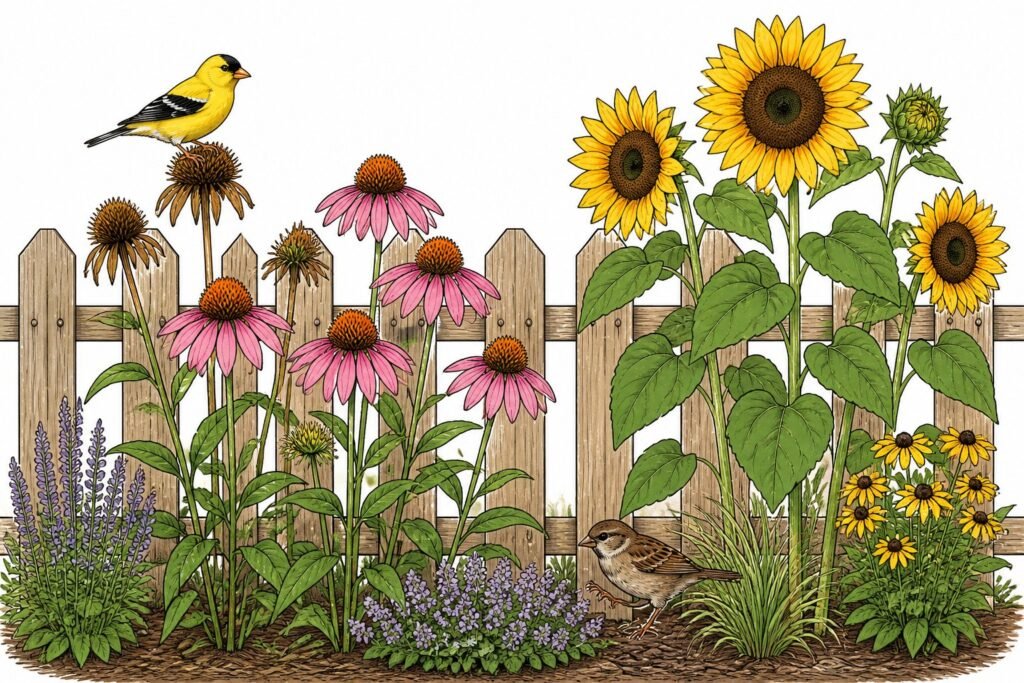
- Coneflowers (Echinacea) — goldfinches strip the seed heads in fall
- Sunflowers — grow your own and let them go to seed; birds will feast for weeks
- Serviceberry (Amelanchier) — produces berries that attract orioles, thrushes, and waxwings
- Oak trees — host hundreds of insect species that birds rely on for raising chicks
- Native grasses — sparrows and juncos love foraging through them
Even a few native shrubs in the corners of your yard will attract more birds than a bare lawn will, no matter how many feeders you put up.
Set Up a Nest Box to Encourage Nesting in Your Yard
A bird feeder brings birds to visit. A bird house gives them a reason to stay.
Different species of birds need different box designs — the hole size, interior dimensions, and mounting height all matter. A bluebird house won’t attract a wren if the entrance hole is too big. A chickadee box won’t work for a wood duck. Match the box to the birds you want to attract.
General guidelines for common backyard birds:
- Chickadees and nuthatches — 1⅛-inch hole, mounted 5–10 feet high on a tree
- Eastern bluebirds — 1.5-inch hole, mounted 4–6 feet high on a post in an open area
- House wrens — 1–1.25-inch hole, can tolerate a wide range of mounting heights
- Screech owls — 3-inch hole, mounted 10–30 feet high
Avoid bird houses with perches on the outside — they look cute, but they give predators something to grab onto. Clean out old nests at the end of each season so the box is ready for the following spring.
One bird house in a good spot beats five in the wrong spot. Face the entrance away from prevailing winds and direct afternoon sun.
Deal With Squirrels Without Losing Your Mind
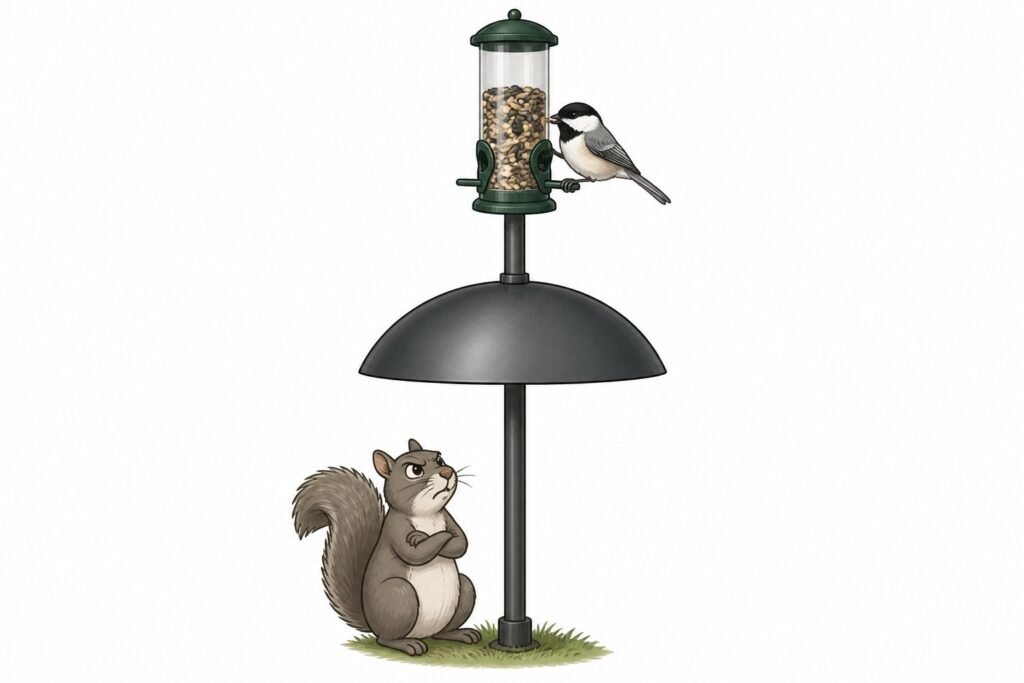
Squirrels will find your feeder. It’s not a question of if — it’s when. And once they do, they’ll eat everything, scare the birds away, and probably chew through the feeder itself.
The most effective solution is a squirrel baffle — a dome-shaped or cylindrical barrier that mounts on the feeder pole and physically blocks squirrels from climbing up. Pole-mounted feeders with a good baffle are far more squirrel-proof than feeders hung from a wire.
A few other things that help:
- Use safflower seed — squirrels strongly dislike it, most birds love it
- Try hot pepper suet or seed — birds can’t taste capsaicin, squirrels hate it
- Mount feeders at least 5 feet off the ground and 8–10 feet away from anything a squirrel can jump from
If you can’t beat them, feed them separately. A dedicated squirrel feeder with corn or peanuts away from your bird feeders can keep bigger birds like jays and the squirrels occupied while smaller birds eat in peace.
Attract Specific Birds With Targeted Setups
Once you’ve got the basics in place, you can dial in for the birds you’d like to attract specifically.
How to Attract Hummingbirds
Hummingbirds want nectar — both from flowers and from feeders. A red nectar feeder filled with a simple sugar-water mix (1 part white sugar to 4 parts water) works well. Skip the red dye; it’s unnecessary and potentially harmful. Plant native red tubular flowers — bee balm, trumpet vine, and cardinal flower all attract hummingbirds reliably.
Change the nectar every 3–4 days in warm weather, or it ferments and can make them sick.
How to Attract Orioles
Orioles are drawn to orange — both the color and the fruit. Halved oranges impaled on a spike feeder are the classic setup. Oriole feeders with ports for grape jelly also work well. Set these out early in spring, before they pass through on migration, and keep them up through summer.
Attract Goldfinches
A dedicated nyjer feeder is all it takes to bring goldfinches in numbers. They’re social birds and will pile onto a feeder when they find one they like. Plant coneflowers and let them go to seed in fall — you’ll find goldfinches clinging to the stalks well into October.
Make Your Yard Feel Safe for Birds
Food, water, and shelter cover the basics. But birds also need to feel safe, and a yard that feels threatening will stay empty no matter what you put out.
A few things that make birds feel at ease:
Keep cats indoors. Free-roaming cats are the single biggest threat to backyard birds in North America. Billions of birds are killed by cats every year. If neighborhood birds are skittish around your yard, a roaming cat in the area is often why.
Avoid pesticides. Insects are a critical food source, especially for raising chicks. A yard that’s been sprayed for bugs is a yard with less to offer birds. Native plants managed without pesticides attract insects naturally, which brings in birds that hunt them.
Place feeders carefully around windows. Window strikes kill a staggering number of birds. Either place feeders within 3 feet of a window (so birds don’t build up speed if they flush) or more than 30 feet away. Window decals or external screens on problem windows also help.
Be Patient — Birds Take Time to Find You
The number one thing new backyard birders get wrong is expecting results overnight. Birds follow habits and territory. If your yard hasn’t had feeders before, it takes time for local birds to discover them and start trusting the space.
Give it two to four weeks before you start worrying. Keep the seed fresh, the water clean, and the feeders topped up. Once one bird finds you and the others see it eating safely, things often pick up fast.
Different seasons bring different birds too. What you attract in winter — juncos, sparrows, white-throated sparrows — won’t be what you see in summer. That’s part of what makes bird feeding interesting long-term. The yard keeps changing.
Start simple. A tube feeder with black oil sunflower seed, a bird bath, and one native shrub is enough to get going. Once birds start visiting, you’ll naturally want to add more — and the birds will reward you for it.