Table of Contents
You have a job interview in 48 hours. Your stomach is already doing something uncomfortable. You’ve Googled “interview tips” and gotten a list so generic it may as well say “just be yourself and smile.” Not helpful.
Here’s the thing — most people prepare for interviews the wrong way. They cram a list of common interview questions the night before, wing their answers, and hope their personality carries them through. Sometimes it works. Often, it doesn’t.
The candidates who land jobs are the ones who do the work before they walk in the room. This guide covers exactly how to prepare for an interview, step by step, without wasting your time on advice that doesn’t move the needle.
Research the Company and the Position Before Anything Else
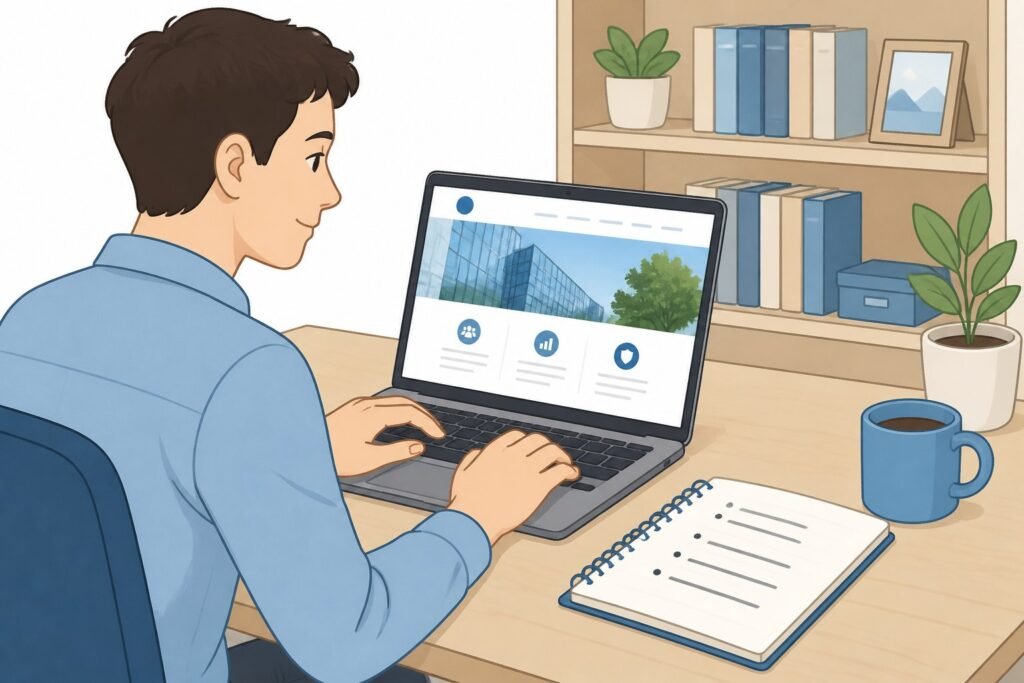
This is the first step in preparing for a job interview, and most candidates rush it or skip it entirely. Don’t.
Before you rehearse a single answer, spend at least an hour researching the company. Read their website — not just the homepage, but the “About” page, their blog if they have one, recent press releases. Check their LinkedIn page. Look for news about them in the last six months.
What you’re actually looking for
- What does the company do, and who do they serve?
- What’s their stated mission or values?
- What recent challenges or wins have they had?
- How does the specific position you’re interviewing for fit into their bigger picture?
When you review the job description carefully, you’ll notice patterns — the skills they mention more than once, the kind of person they seem to want. That’s your cheat sheet. Every answer you give should connect your skills and experience back to what they clearly need.
Research on the company also gives you material for the questions you’ll ask at the end. An interviewer can tell immediately whether your questions came from genuine curiosity or a generic list.
Know Your Own Resume Better Than They Do
This sounds obvious. It’s not.
Plenty of candidates freeze up when an interviewer asks about something on their own resume — a project they listed, a role they held three jobs ago, a skill they checked off without thinking about it. Your work experience is fair game for every question in the room.
Before your scheduled interview, re-read your resume from top to bottom. For every job and every bullet point, be ready to answer: “Tell me more about that.” Think about specific results — numbers, timelines, outcomes. Vague answers kill interviews. Concrete ones win them.
If there are gaps, transitions, or anything that might raise eyebrows, prepare a calm, honest explanation. You don’t need to apologize for anything. You just need to be ready.
Prepare Answers to Common Interview Questions
Every interview is different. Some are structured, some are casual, some feel like an interrogation. But certain interview questions come up so often that there’s no excuse not to have answers ready.
The questions you’ll almost certainly hear
- “Tell me about yourself.” (Not your life story — a 90-second professional summary)
- “Why do you want to work for this company?”
- “What’s your greatest weakness?”
- “Tell me about a time you handled a difficult situation.”
- “Where do you see yourself in five years?”
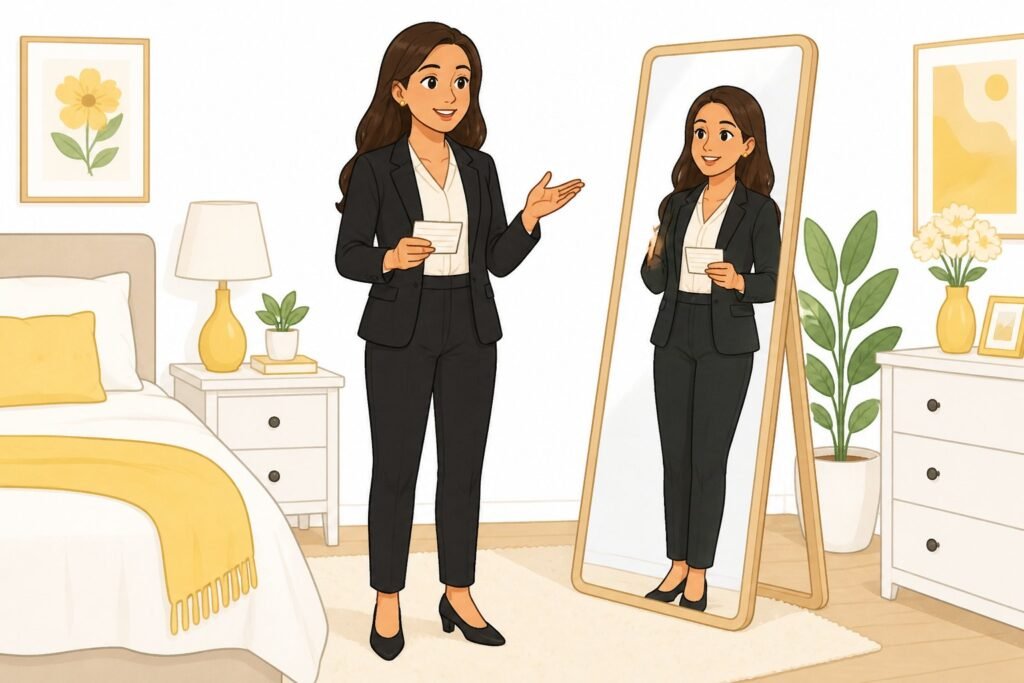
The answers to common interview questions should feel natural, not rehearsed. That means you need to actually practice saying them out loud — not just reading them in your head.
Behavioral interview questions deserve special attention
A behavioral interview question usually starts with “Tell me about a time when…” or “Give me an example of…” These are the kinds of questions that trip people up most.
Use the STAR method to structure your answers: Situation, Task, Action, Result. Set the scene briefly, explain what you needed to do, describe what you actually did, and end with the outcome. Keep it under two minutes. The result matters — quantify it if you can.
Prepare three to five STAR stories from your past experience that you can adapt to different questions. Most behavioral interview questions can be answered with the same core stories, just framed differently.
Practice Out Loud — Seriously
Reading your answers in your head is not the same as saying them out loud. Your brain fills in gaps. Your mouth doesn’t.
Mock interviews are one of the best things you can do before the real thing. Ask a friend, a family member, or a career center counselor to run through a practice interview with you. If no one’s available, record yourself on your phone and watch it back. Painful? Yes. Worth it? Absolutely.
When you rehearse, pay attention to:
- Filler words — “um,” “like,” “you know” — that make you sound uncertain
- Answer length — too short reads as unprepared, too long loses the interviewer
- Eye contact — critical in a live interview, translates to looking at the camera in a virtual interview
- Pace — nerves make people rush. Slow down.
You want to get feedback before you’re in the room, not while you’re in it.
Sort the Logistics Before the Day Of
Interview anxiety is bad enough. Don’t add logistical chaos to it.
The day before your interview, handle everything that isn’t about what you’ll say:
The practical checklist:
- Print multiple copies of your resume (yes, even in 2025 — some interviewers still want a physical copy)
- Confirm the interview location and figure out the exact route, including parking or transit
- Know who you’re meeting — the interviewer’s name, title, and how to pronounce it
- Set a buffer — arrive 10 to 15 minutes early, not five, not thirty
- Charge your phone and laptop if it’s a virtual interview
- Test your camera, mic, and internet connection if interviewing remotely
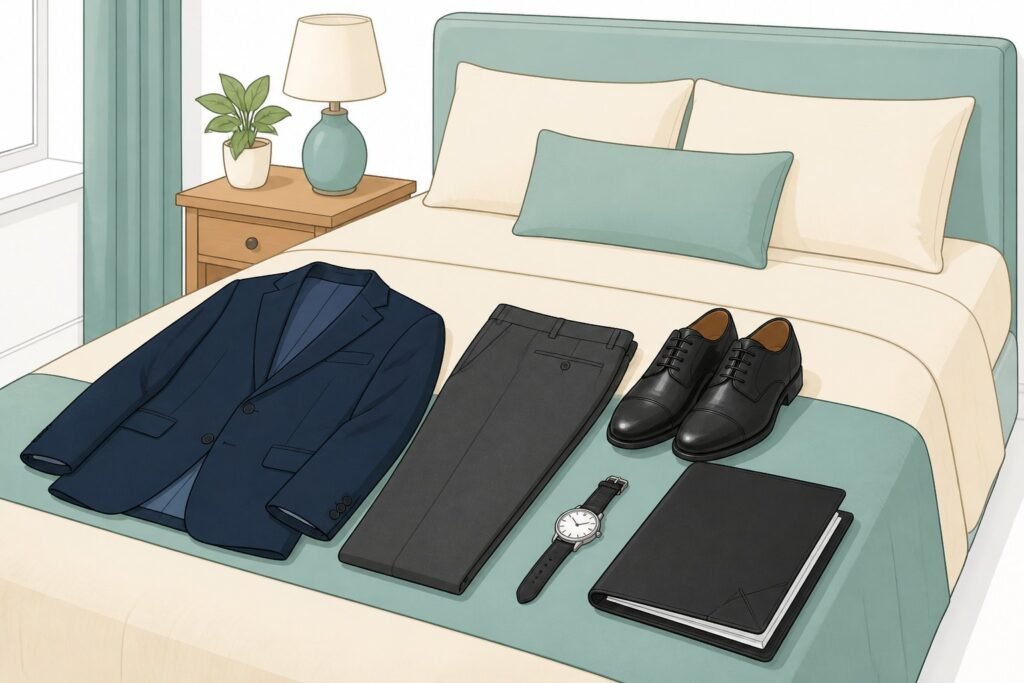
Your interview outfit should be sorted the night before too. Not the morning of, when you discover the button is loose or the shirt needs ironing. Dress for the company culture — slightly above the average employee, but not overdressed to the point of looking like you don’t understand the room.
A virtual interview has its own version of this. Check your background, your lighting (natural light in front of you, not behind), and close every app that might send a notification mid-conversation.
Prepare Questions to Ask the Interviewer
Here’s something a lot of candidates get wrong: they treat “Do you have any questions for us?” as a formality. It’s not. It’s an opportunity, and interviewers notice when you use it well.
Ask strategic questions that show you’ve done your homework and that you’re thinking seriously about the role. Aim for two to three questions — enough to show genuine interest without running the clock out.
Questions worth asking
- “What does success look like in this role in the first 90 days?”
- “What are the biggest challenges someone in this position typically faces?”
- “How would you describe the team culture?”
- “What do you enjoy most about working here?”
- “What are the next steps in the hiring process?”
What you should avoid: questions about salary or benefits in a first interview unless they bring it up, questions you could have answered by spending five minutes on their website, and questions that are vague to the point of seeming unprepared.
Questions at the end of the interview are your last impression. Make them count.

Handle Nerves Like a Pro
Feeling nervous before a job interview is completely normal. Every candidate feels it. The ones who do well aren’t the ones who feel no nerves — they’re the ones who don’t let nerves run the show.
A few things actually work:
The night before: get a decent night’s sleep. Cramming interview questions at midnight is less useful than you think, and showing up tired hurts you in ways you can’t compensate for in the room.
The morning of: eat something. Do some light movement. Avoid anything that spikes your anxiety — heavy caffeine, doom-scrolling, reading every possible Glassdoor review of the company at 7 a.m.
Right before: take a few slow, deep breaths. If you’re waiting in a lobby, sit up straight — physical posture genuinely affects how confident you feel and come across.
Once you’re in it, remember: the interviewer wants you to succeed. They’re not hoping you fail. They have a position to fill, and every candidate who comes in is a chance for them to solve their problem. You being there is already a good sign.
During the Interview: A Few Things That Actually Matter
Interview prep doesn’t stop when you walk in. How you show up in the room — or on screen — matters just as much as your answers.
Listen actively. Don’t spend the whole time the interviewer is talking thinking about your next answer. Actually listen, and if you need a moment to think, take it. Saying “that’s a good question, let me think about that for a second” is infinitely better than rambling nervously.
Be specific. Vague answers to interview questions — “I’m a real team player,” “I work well under pressure” — tell interviewers nothing. Every claim you make should come with an example. Show, don’t just tell.
Ask for clarification if needed. If a question is tricky or unclear, it’s perfectly fine to ask the interviewer to rephrase or give more context. It shows self-awareness, not weakness.
Watch the time. The end of an interview will usually give you a signal. Don’t overstay. Wrap up warmly, thank the interviewer genuinely, and ask about next steps in the hiring process if they haven’t told you.
After the Interview: Don’t Stop Yet
Most people treat the job interview as over the moment they walk out the door. It’s not.
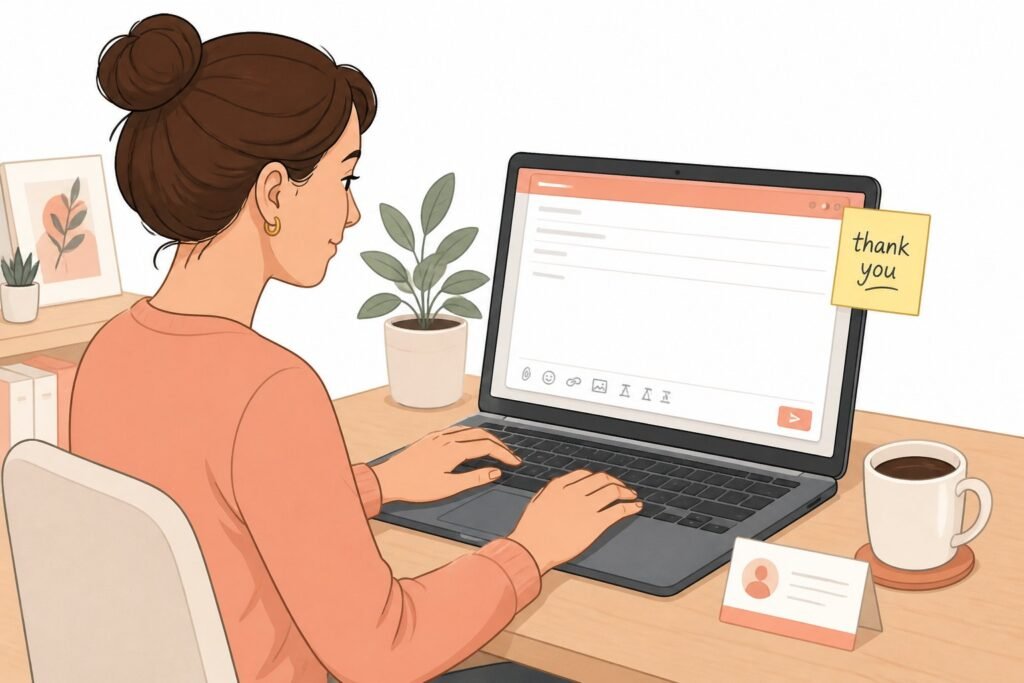
Send a thank-you email within 24 hours — to every person you interviewed with, if there were multiple. Keep it short. Reference something specific from your conversation, restate your interest in the position and employer, and close cleanly. It takes five minutes and a surprising number of candidates skip it.
If you don’t hear back within the timeline they gave you, a polite follow-up is fine. One follow-up. Not three.
Use the time in between to reflect on how it went. What questions caught you off guard? What answers landed well? What would you do differently next interview? Whether you get the job or not, every interview is practice for the next one. Get feedback if you can — some recruiters and hiring managers will share it if you ask.
The candidates who stand out from the competition aren’t always the most qualified people in the room. They’re the ones who showed up prepared — who did the research, practiced their answers, asked smart questions, and carried themselves with genuine confidence.
That stuff is learnable. All of it. So start now, not the night before.