Table of Contents
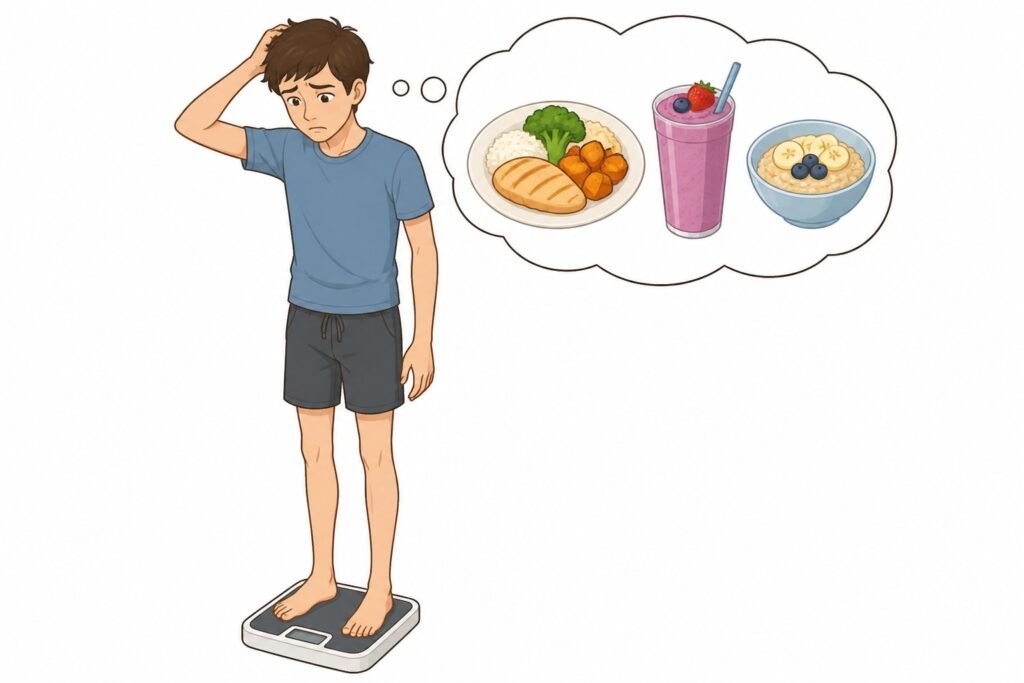
You eat plenty. You’re not trying to lose weight. And yet the scale barely moves.
For people who are underweight or just naturally thin, gaining weight can feel just as frustrating as losing it does for everyone else. The advice is usually vague — “eat more, lift weights” — and rarely accounts for the real challenge: eating enough of the right foods consistently, without feeling miserable or stuffed all day.
This guide cuts through the noise. You’ll learn how to gain weight in a healthy way, which foods actually work, how resistance training fits in, and what to do if nothing seems to stick. No fluff. Just what works.
Why Some People Struggle to Gain Weight
Before jumping into solutions, it helps to understand why some people struggle to put on weight in the first place.
A fast metabolism is the most common reason. If your body burns through calories quickly, you’d need to eat significantly more than the average person just to break even — let alone create a surplus for weight gain.
Other factors include genetics, high activity levels, stress, poor appetite, and underlying health conditions. If your body mass index is less than 18.5, you’re clinically considered underweight, and it may be worth a visit to your doctor before trying to gain weight through diet alone.
The point is: struggling to gain weight isn’t a character flaw. It’s biology. And it responds to the right strategy.
The Secret to Healthy Weight Gain: Calories First
Here’s the core principle — weight gain requires eating more calories than your body burns. Simple in theory. Harder in practice.
Most people who are trying to gain weight underestimate how many calories they actually need. If you have a high metabolism, you might need 3,000–3,500 calories a day just to maintain your current weight. To gain, you’d need to add hundreds of calories on top of that, consistently, over weeks.
The goal isn’t to eat junk. It’s to find calorie-dense, nutrient-dense foods that provide a lot of energy without making you feel stuffed after a few bites. That’s the difference between gaining weight by building actual muscle and health — versus just gaining fat.
Aim for a calorie surplus of 300–500 calories per day. That’s enough to support steady, healthy weight gain without overwhelming your system.
Best Foods to Help You Gain Weight
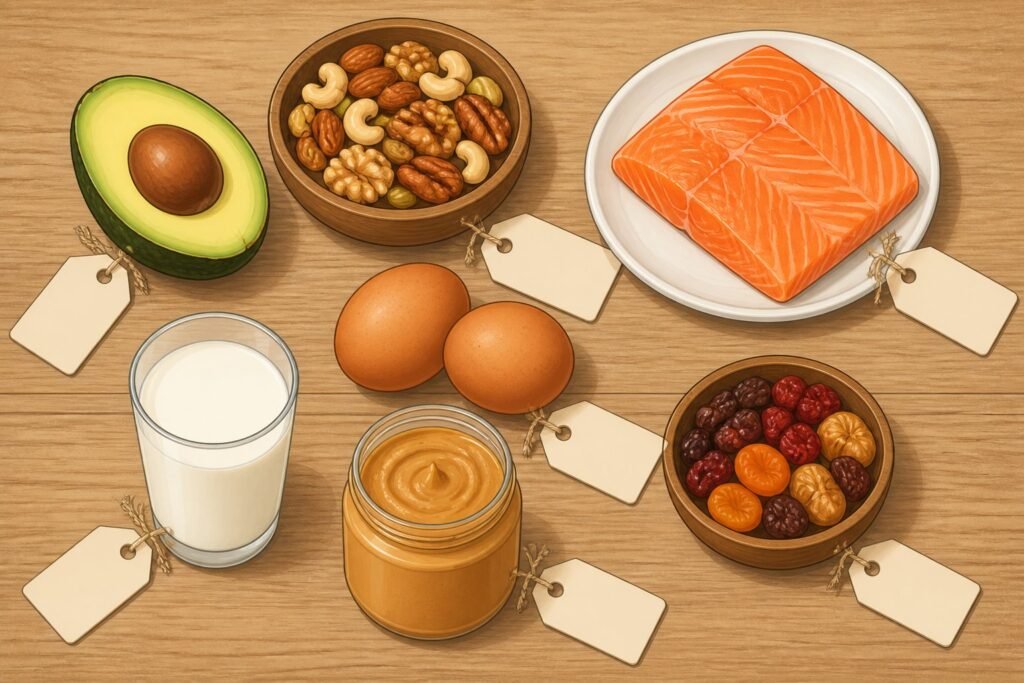
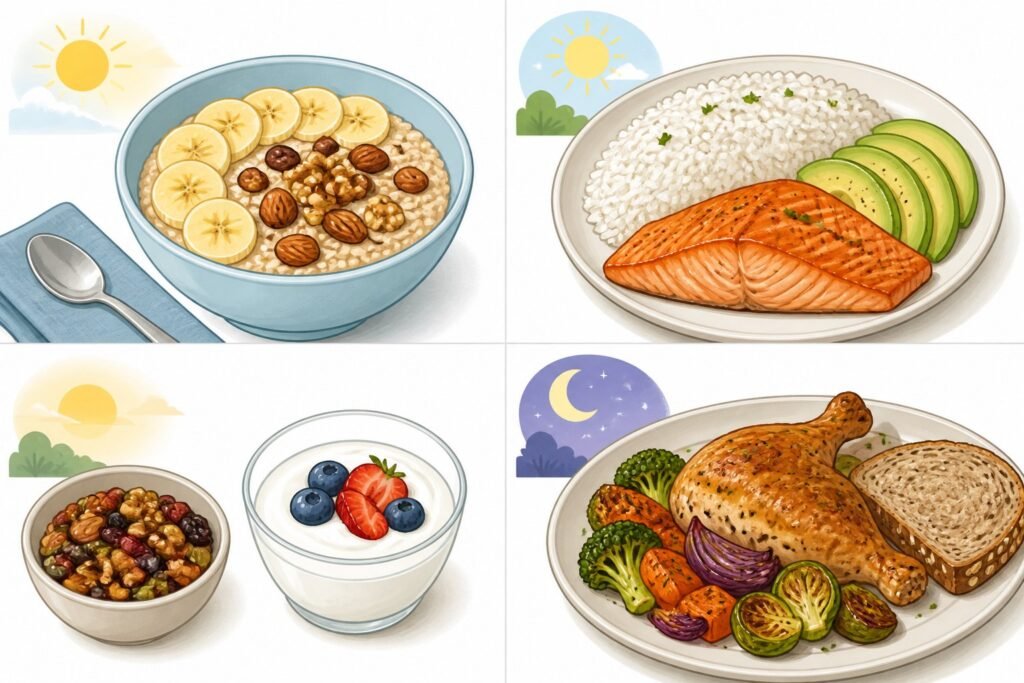
Not all calories are equal. These are the foods that give you the most nutritional value per bite — high in calories, high in protein, and rich in vitamins and minerals your body needs.
Nuts and Nut Butter
Nuts are one of the most efficient ways to add calories without making you feel full. A single handful of mixed nuts can deliver 170–200 calories. Nut butter — peanut or almond butter — is just as effective spread on toast, stirred into oatmeal, or blended into smoothies.
Two tablespoons of peanut butter adds about 190 calories and a solid hit of protein and healthy fat. That’s easy calories you can add to almost any meal or snack.
Avocado
Avocado is one of the best foods to help with healthy weight gain. One medium avocado has around 240 calories and is packed with monounsaturated fats — the kind that supports heart health. Add it to eggs, rice bowls, sandwiches, or eat it straight with a little salt.
Unlike most vegetables, avocado is high in calories and genuinely filling in a good way. It’s one of those rare foods that checks every box.
Dried Fruit and Trail Mix
Dried fruit is calorie-dense in a small package. A quarter cup of raisins has about 120 calories — far more than the same volume of fresh fruit. Mix dried fruit with nuts and seeds into trail mix and you’ve got a portable, high-calorie snack you can eat anywhere.
Watch out for added sugars in some dried fruit products. Plain or lightly sweetened versions are your best bet.
Salmon and Oily Fish
Salmon and oily fish like mackerel and sardines are high in protein and healthy omega-3 fats. A 3-ounce serving of salmon has about 175 calories and over 20 grams of protein. Protein is what your body uses to build muscle mass — so eating enough protein isn’t optional if you want to gain weight as muscle, not just fat.
Whole Milk and Greek Yogurt
Whole milk is an easy way to add calories without eating a full meal. One cup has about 150 calories and a good mix of protein, fat, and carbs. Swap it into your smoothies, pour it over cereal, or just drink a glass with meals.
Greek yogurt is similarly useful — especially the full-fat version. 1 cup can have 200+ calories and up to 20 grams of protein, making it one of the most efficient snacks for anyone trying to gain weight fast.
Healthy Oils
Drizzling healthy oils like olive oil or avocado oil onto your food is one of the easiest ways to add extra calories without changing what you eat. A single tablespoon of olive oil adds about 120 calories. Cook with it, pour it over salads, or mix it into sauces.
How to Structure Your Meals and Snacks
Eating more food is hard if you’re not hungry. The trick is frequency and planning.
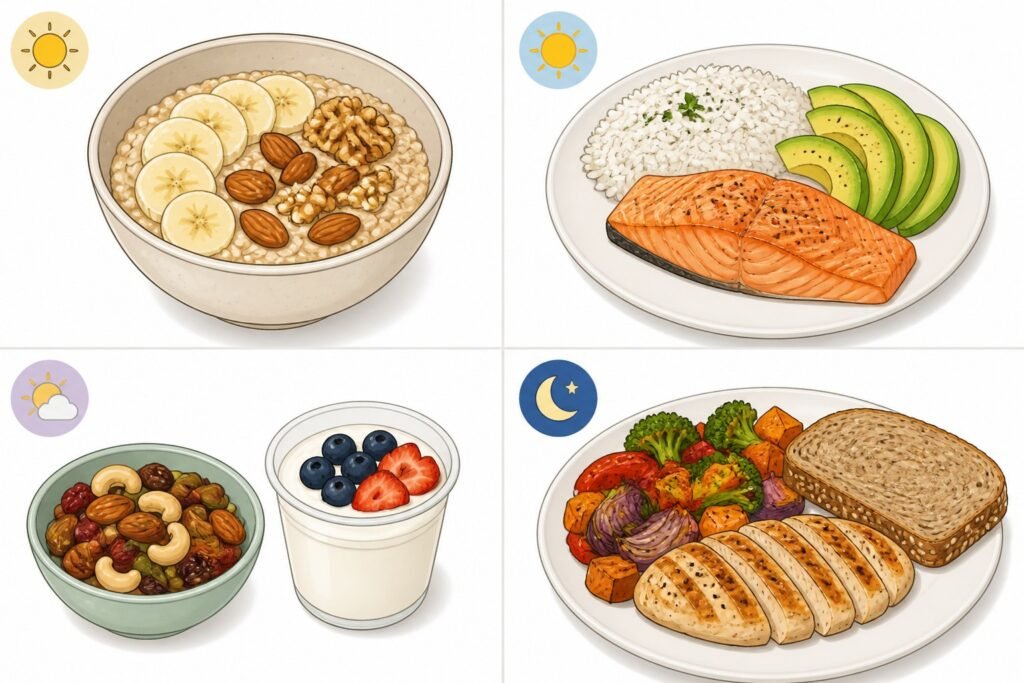
Instead of three large meals a day, try eating 4–6 smaller meals and snacks spread out through the day. This prevents you from getting too full at any one sitting while still hitting your calorie targets.
Practical ways to eat more without feeling overwhelmed:
- Eat before you feel hungry. If you wait until you’re starving, you’ll eat one big meal and feel too full to eat again for hours.
- Don’t drink water before or during meals. It fills your stomach and reduces appetite. Drink between meals instead.
- Add calorie boosters to what you already eat. Stir nut butter into your oatmeal. Add avocado to your eggs. Pour whole milk instead of water into your smoothie.
- Keep easy snacks visible. A bowl of trail mix on your desk or a jar of nut butter on the counter makes it easier to snack without thinking.
Building balanced meals around protein, complex carbs, and healthy fat at every sitting gives your body the raw materials it needs for muscle growth and energy.
High-Calorie Smoothies That Actually Work
If eating feels like a chore, drink your calories.
Smoothies are one of the most effective ways to gain weight because you can pack 600–900 calories into a single glass without the physical effort of chewing through a full meal. They’re also fast and customizable.
A simple high-calorie smoothie recipe:
- 1 cup whole milk (or full-fat coconut milk)
- 1 banana
- 2 tablespoons peanut or almond butter
- 1 cup Greek yogurt
- A handful of oats
- Optional: whey protein powder
Blend it all together and you’ve got 600–700 calories with solid protein and healthy fat. Drink it as a second breakfast or an evening snack.
Dried fruit, avocado, and healthy oils can all be blended in if you want to push the calorie count even higher without changing the flavor much.
Resistance Training: Why Exercise Matters for Weight Gain
Eating more without exercising will cause you to gain weight — but a significant chunk of it will be fat. If you want to gain weight as muscle, resistance training is non-negotiable.
Resistance training — also called strength training or weight training — signals your muscles to grow. When you combine it with a calorie surplus and enough protein, your body uses those extra calories to build muscle mass rather than store fat.
You don’t need to spend two hours in the gym. Three to four sessions per week of compound movements — squats, deadlifts, rows, presses — is enough to stimulate muscle growth. Focus on getting stronger over time and the muscle will follow.
A few basics:
- Aim for 0.7–1 gram of protein per pound of body weight daily to support muscle repair
- Prioritize sleep — muscle grows during recovery, not during the workout itself
- Be consistent over 8–12 weeks before judging results
People who are underweight often see faster initial progress from resistance training because their bodies respond strongly to the new stimulus.
Effective Ways to Gain Weight When Nothing Seems to Work
If you’ve been trying to gain weight for a while and you’re barely moving the needle, a few things might be going wrong.
You’re overestimating how much you eat. Most people who are naturally thin do this. Track your food for a week using an app — not forever, just long enough to see where you actually stand on calorie intake. The number is usually lower than expected.
You’re not eating consistently. One big day followed by several light days won’t create a calorie surplus. Consistency day-to-day matters more than any single meal.
You’re doing too much cardio. Cardio burns extra calories, which works against weight gain. That doesn’t mean you have to stop — but if you’re running 5 miles a day while trying to gain weight, you’re making the math harder on yourself.
You have an underlying issue. Health conditions like hyperthyroidism, celiac disease, or digestive problems can make it hard to absorb calories properly. If you’ve genuinely been focusing on nutrient-dense foods and resistance training for months without results, talk to your doctor.
Talk to Your Doctor Before Trying to Gain Weight
If you’re significantly underweight, recovering from an illness, or losing weight unexpectedly, always talk to your doctor before making major changes to your diet or exercise routine.
Healthy eating and a calorie surplus are safe strategies for most people — but underlying causes should be ruled out first. A doctor can also check whether your body mass index puts you in a range that warrants closer monitoring, and can refer you to a dietitian who specializes in weight gain.
This applies especially to older adults, where losing weight as you age can signal something that needs medical attention.

A Simple Plan to Start Gaining Weight This Week
You don’t need to overhaul everything at once. Here’s a straightforward starting point:
- Calculate your maintenance calories using an online TDEE calculator — then add 400–500 on top.
- Identify two or three calorie-dense foods you actually enjoy (avocado, nuts, nut butter, Greek yogurt) and eat them daily.
- Add a smoothie as a second meal or evening snack three to four times a week.
- Start a simple resistance training routine — even three sessions a week of basic compound exercises.
- Track your weight once a week, same day, same time. Look for 0.5–1 pound per week as a sign things are working.
That’s it. Weight gain in a healthy way isn’t complicated — it’s just consistent. Stick with it for 6–8 weeks and you’ll see the number on the scale actually start to move.
The goal isn’t just to weigh more. It’s to stay healthy, build strength, and feel good in your body. Focusing on nutrient-dense foods that provide real fuel — not just empty calories — is the way to get there and maintain a healthy weight long-term.