Table of Contents
You found flights you’re happy with. Now you’re staring at 47 different hotel options across three booking sites, the prices keep changing every time you refresh, and you’re not sure if the “4-star” property with 200 reviews is actually worth it or just well-photographed. Sound familiar?
Booking a hotel online doesn’t have to be a rabbit hole. Once you understand how the system works — which sites to use, when to book, and what to watch for — you can cut through the noise fast and land a room you’re genuinely glad you picked. Here’s everything you need to know.
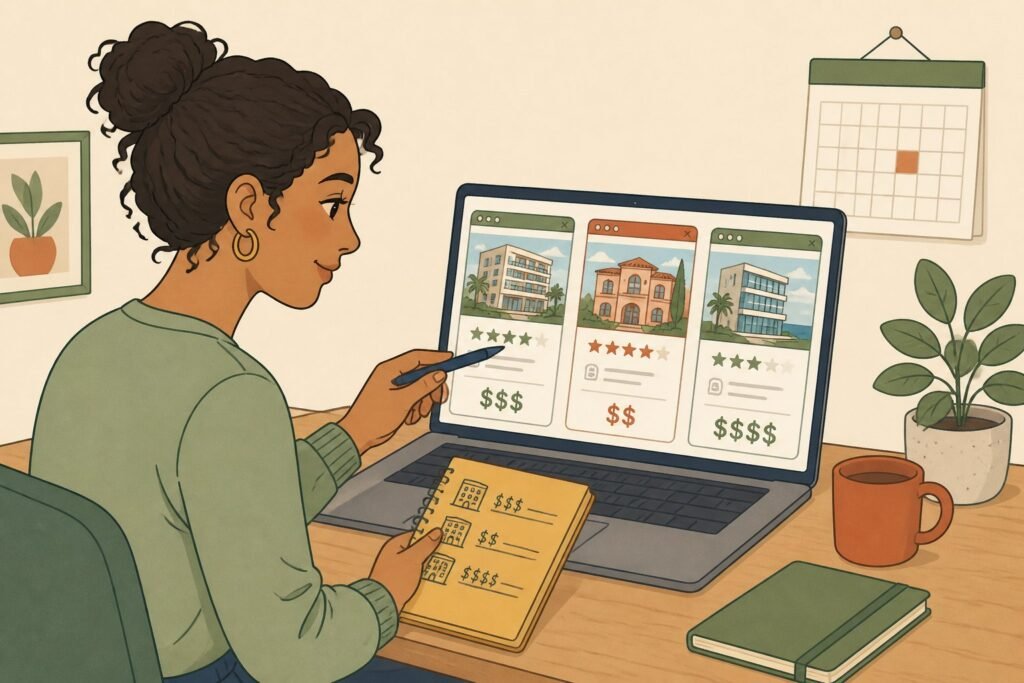
How Hotel Booking Sites Actually Work
Before you start comparing prices, it helps to understand what kind of site you’re using. There are three main types, and they behave differently.
Online Travel Agencies (OTAs)
Sites like Booking.com, Expedia, and Hotels.com are online travel agencies. They act as middlemen — you book through them, they pay the hotel, and they pocket a commission. The upside is convenience: you can compare hotel prices, read reviews, and complete your reservation in one place. The downside is that OTAs sometimes have less flexibility than booking directly, and their customer support can be slower to resolve issues.
Hotel Search Engines
Trivago is the classic example of a hotel search engine. It doesn’t take your booking — instead, it pulls prices from hundreds of travel sites and sends you to the cheapest one to complete the transaction. Use it to find the cheapest hotel rate quickly, then decide where to actually book.
Booking Direct
Going straight to the hotel website or calling the hotel directly is often underrated. Many hotel chains offer a best-rate guarantee on their own site, and booking direct usually means better cancellation flexibility, easier access to early check-in requests, and the ability to earn hotel loyalty points that third-party sites won’t give you.
The Best Hotel Booking Sites Worth Using
There’s no single best hotel booking site that wins every time. Each one has its strengths.
Booking.com is the most widely used OTA globally, with an enormous inventory that covers everything from budget hostels to boutique hotels. Its free cancellation filters are easy to use, and its guest reviews tend to be thorough.
Expedia bundles flights and hotels, which is useful if you want everything in one place and potentially unlocks package discounts.
Hotels.com runs a loyalty program where you collect stamps toward a free night — decent if you travel regularly and always use the same platform.
Priceline offers “Express Deals” where you get a discounted rate on a mystery hotel in a specific neighborhood and star rating. It’s a gamble, but it can produce genuinely cheap hotel rates if you’re flexible.
Trivago is best used as a price comparison layer. Run a search there first, see which platform has the lowest rate, then use a hotel search engine check before committing.
For most trips, the real play is: search on Trivago or Google Hotels to compare hotel prices quickly, then check the hotel website directly to see if they match or beat it.
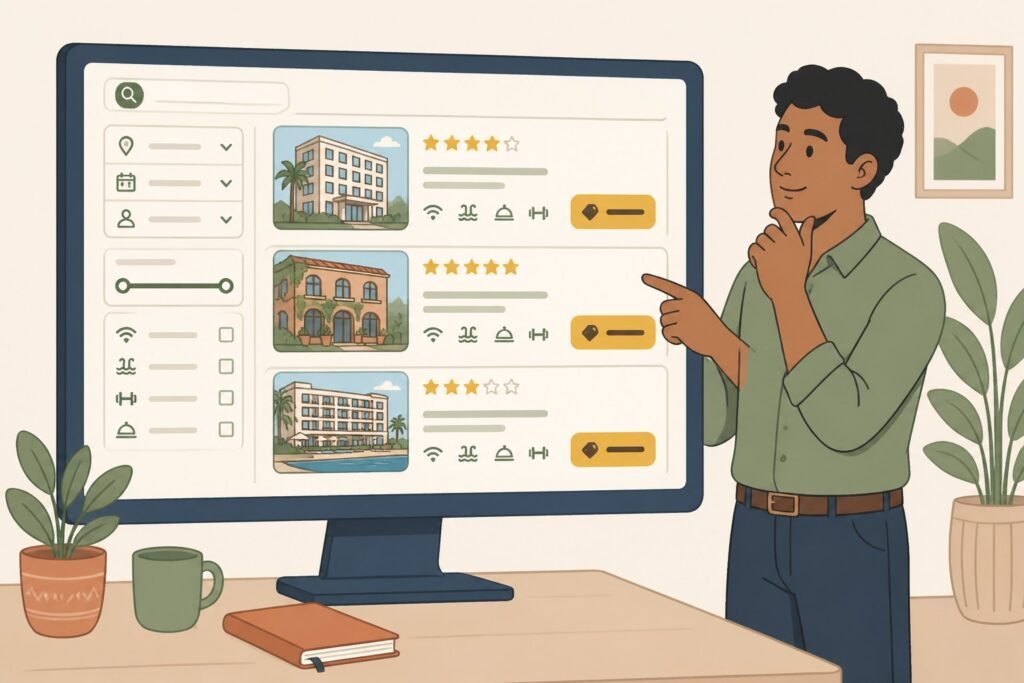
How Far in Advance to Book a Hotel
Timing matters more than most people realize. Book too early and you might overpay before prices drop. Book too late and you’re picking from whatever’s left.
The best time to book a hotel depends on your destination and travel dates, but here are some reliable patterns:
- Leisure destinations and peak season travel: Book 2–3 months out. Popular beach resorts, ski towns, and major cities during festival season fill up fast and prices climb the closer you get.
- Business travel and major cities: 3–6 weeks out is often the sweet spot. Hotels in cities with steady demand drop prices to fill last-minute gaps, but popular properties still sell out.
- Last-minute bookings: Apps like HotelTonight specialize in same-day and next-day deals. Hotels would rather fill a room at a discount than have it sit empty overnight.
As a general rule, the best time to book isn’t a fixed number of days — it’s when the price you see feels right relative to what you’ve seen before. Set a price alert on Google Hotels and book when it drops to your target.
How to Choose the Best Hotel for Your Trip
Price isn’t the only factor — and sometimes the cheapest option costs you in ways that don’t show up until you arrive.
Read Reviews Strategically
Don’t read reviews to confirm a hotel is good. Read them to find out what it’s actually bad at. Sort by lowest rating and look for patterns. One person complaining about the WiFi is noise. Fifteen people mentioning thin walls and street noise in the past six months is a signal.
Look at how recent the reviews are. A hotel that was great three years ago might have changed ownership or let maintenance slide. Stick to guest reviews from the last 12 months wherever possible.
Check the Location of the Hotel
A hotel that’s technically in the right city but 40 minutes from where you’re actually spending your time isn’t a bargain. Use the map view on any booking site to check the location of the hotel relative to your main destinations. A slightly pricier room that’s walkable to everything you care about often saves you more in transport costs than you spent on the upgrade.
Don’t Ignore Amenities and Hidden Fees
Read what’s included. Free breakfast sounds minor but can add up to real savings if you’re traveling for a week. Resort fees, on the other hand, are a classic gotcha — a hotel might advertise a rate of $120/night but charge a $35 resort fee on top that only appears at checkout. Many hotel booking platforms now show these fees upfront, but always check before you complete the reservation.
Check the cancellation policies before you book. Free cancellation rooms typically cost slightly more but are worth it for any trip with any uncertainty in your travel plans. If you know your dates are locked, a non-refundable rate can save you 10–20%.

Booking Direct vs. OTAs: Which Is Actually Better?
This is the question people debate most, and the honest answer is: it depends.
When to Use an OTA
Use booking sites like Booking.com or Expedia when:
- You’re comparing many hotel options in a new destination and want everything in one search
- You want to use accumulated credits or cashback from the platform
- The OTA rate is clearly lower than the hotel’s own site
- You need a platform with buyer protection in case something goes wrong
When to Book Directly with the Hotel
Book directly with the hotel when:
- You’re staying with a hotel chain that has a loyalty program — points and rewards only credit when you book direct
- You want to make special requests (early check-in, specific floor, room type) more easily
- The hotel matches the OTA price and you’d rather have a direct relationship
- You’re calling the hotel to negotiate a better rate — front desk staff often have discretion to offer deals that aren’t available online, especially for multi-night stays
Many hotel chains have a published best-rate guarantee. If you find a cheaper rate on an OTA after booking direct, they’ll match it. Use that policy.
Step-by-Step: How to Book a Hotel Online
Here’s a clean run-through of how to actually make a hotel reservation start to finish:
- Start with a search engine — use Google Hotels or Trivago to use a hotel search and compare hotel prices across booking websites quickly. Filter by your dates, budget, and star rating.
- Shortlist 3–5 properties — check reviews, the location of the hotel, and what amenities are included.
- Check the hotel website directly — see if their rate matches or beats what you found on booking sites.
- Pick your rate type — decide between free cancellation (more flexibility) or a non-refundable rate (lower price) based on how certain your travel date is.
- Check for resort fees or extras — make sure the total cost at checkout matches what you expected.
- Complete the reservation — enter your details, confirm check-in time, and save your booking confirmation.
- Set a reminder to check prices again — especially if you booked early with free cancellation. Prices sometimes drop, and you can rebook at the lower rate.
That’s it. No complicated strategy required — just a few minutes of comparison and one decision point.
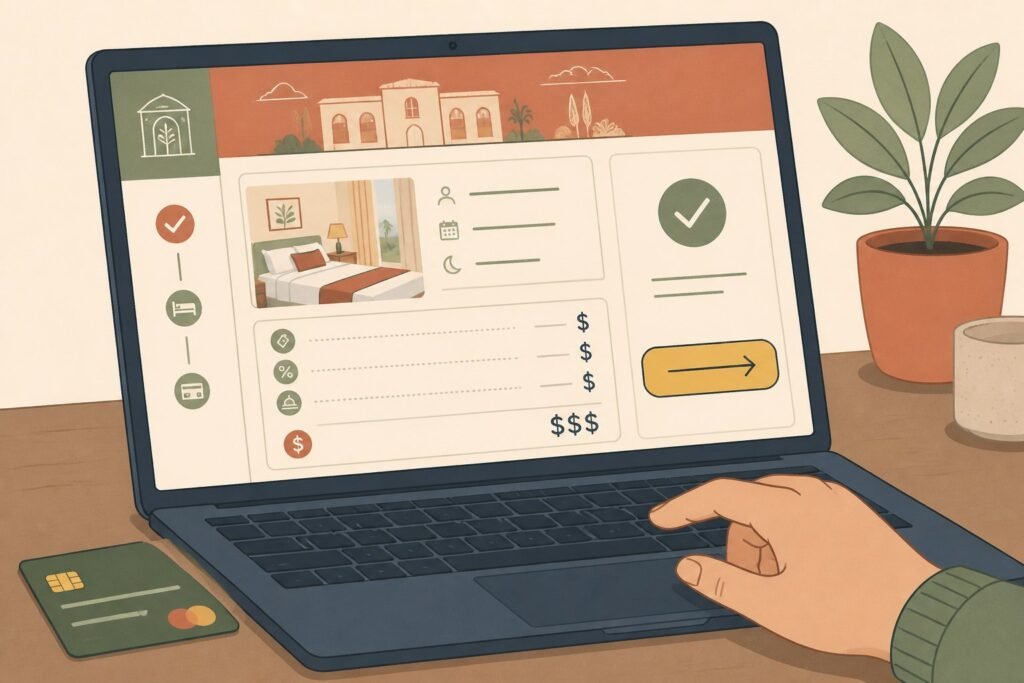
How to Save on Hotels Without Sacrificing Quality
Getting a good rate doesn’t mean settling for a bad room. A few tactics actually work.
Use Hotel Loyalty Programs
If you travel even 4–5 times a year, signing up for a hotel loyalty program costs nothing and adds up fast. Marriott Bonvoy, Hilton Honors, and IHG One Rewards all offer free nights, room upgrades, and late checkout to members. Hotel loyalty programs are free to join, so there’s no reason not to use one if you have a preferred hotel chain. Rewards for hotel stays are only tracked when you book directly with the hotel or on the brand’s own app.
Book Midweek When You Can
Hotels in business-heavy cities are fullest Sunday through Thursday. Leisure destinations peak on weekends. Flip the usual logic: if you’re going to a city for tourism, going Tuesday to Friday instead of Friday to Sunday often shaves 15–25% off room rates.
Bundle Flights and Hotels
Online travel agency platforms like Expedia often discount hotel rooms when you book them as part of a package with flights. If your flights are already decided, it’s worth checking whether rebooking through an OTA bundle saves money on the hotel side.
Don’t Ignore Smaller Booking Websites
Big OTAs dominate the market, but smaller booking websites sometimes surface better rates on independent properties. If you’re staying at a boutique hotel, check the hotel’s own site, then try a couple of smaller platforms before assuming Booking.com has the best deal.

Making a Reservation: What to Double-Check Before You Confirm
This takes two minutes and prevents most of the headaches that come from hotel bookings.
Before you confirm a reservation:
- Dates: Check-in and check-out dates — confirm they match your travel plans exactly.
- Cancellation policy: Know exactly when the free cancellation window closes and what the penalty is after that.
- Total price: Make sure the displayed total includes taxes and fees, not just the base rate.
- Bed type and room type: A “double” means different things in different countries. Confirm you’re getting what you expect.
- Name on the reservation: It needs to match the ID the hotel will ask for at check-in.
Confirming these before you click “book” takes less than two minutes. Fixing them after is considerably more complicated.
The next time you need to book a hotel, start with a quick search to compare hotel options, check the hotel website directly, and make a call on flexibility vs. price based on how solid your plans are. The whole process should take under 15 minutes. If it’s taking longer, you’re probably overthinking it — most hotels in a given area at a given price point will give you a perfectly good stay. Pick one with solid recent reviews in the right location and get on with planning the trip.