Table of Contents
You’re standing at a networking event. Or maybe you’ve just sat down next to someone interesting on a flight. You know you want to say something — but your brain goes blank, your palms go a little damp, and you end up staring at your phone instead.
Sound familiar?
Most people struggle to start a conversation, not because they’re boring or awkward, but because no one ever actually taught them how. Talking to someone new feels like a performance with no script. The good news: it doesn’t have to. Starting conversations is a learnable skill, and once you understand what’s actually happening when two people connect, it becomes a lot less scary.
Here’s how to do it well.

Why Starting a Conversation Feels So Hard
Before diving into tactics, it helps to understand the actual problem. When you’re nervous about talking to someone new, your brain is usually running one of two fears: I’ll say something stupid or they won’t want to talk to me.
Both are lies your brain tells you to keep you safe. The reality? Most people are also waiting for someone else to make the first move. Studies in social psychology consistently find that people underestimate how positively strangers will receive them — we expect rejection and get warmth instead.
Knowing this doesn’t make the nerves disappear overnight. But it’s a useful reframe. You’re not interrupting someone. You’re giving them a reason to stop being alone in a crowd.
The Best Way to Start a Conversation: Just Go First
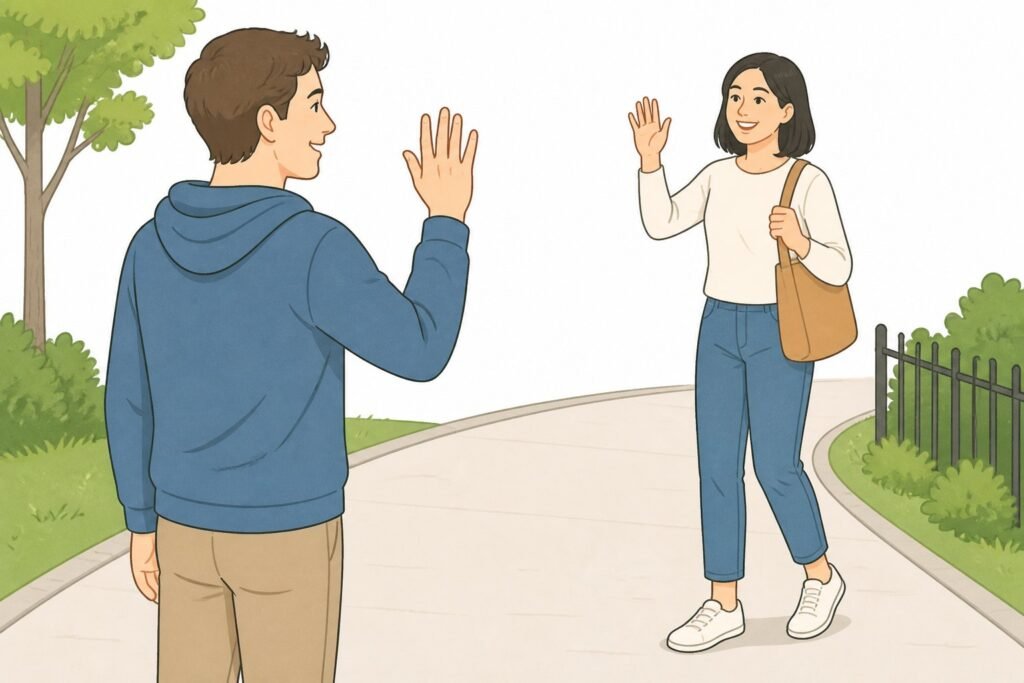
Here’s the most effective conversation starter in existence: say “hi.”
Seriously. A simple, genuine “hi” — followed by anything relevant to the moment — gets conversations started every single time. People overthink the opening. They wait for the perfect line, the clever hook, the brilliant observation. That wait is the real problem.
The best way to start is to start. Say something that fits the context:
- At an event: “How do you know the host?”
- In a class or workshop: “Is this your first time doing something like this?”
- At a coffee shop or bookstore: “What are you reading / working on?”
These aren’t flashy. They don’t need to be. A good conversation starter does one thing: it opens a door. The conversation is what you build on the other side.
How to Start a Conversation in Every Situation
Different settings call for different approaches. Here’s a quick breakdown.
Starting a New Conversation In-Person
Body language does half the work before you say a word. Make eye contact, smile, turn your body toward the person — these signals communicate that you’re open and friendly. Then open with something situational.
The most natural way to start a conversation with someone you’ve just met is to comment on something you both share in that moment: the event, the place, the situation. “This line is moving surprisingly fast” or “Do you know if the presenter is still speaking after the break?” These are low-stakes, easy to answer, and naturally invite a follow-up.
Starting a Texting Conversation
Starting a texting conversation is a little different because you can’t rely on body language or shared context. Your opener has to carry more weight.
The trick is to reference something specific — a recent conversation, something you know they care about, or a question that shows genuine interest: “Hey, I just saw that band you mentioned last week is coming to town — have you heard?” That’s infinitely better than “Hey, what’s up?” which gives you much to work with.
Talking to Someone New at a Networking Event
Networking events are uncomfortable for most people. Everyone’s there to make connections but nobody wants to feel like they’re being schmoozy or transactional.
Skip the elevator pitch opener. Instead, ask something open-ended about their experience: “What’s been the most useful session for you so far?” or “What brings you to this one specifically?” People love to share opinions, and this gets a real conversation started far faster than trading job titles.

Good Conversation Starters That Actually Work
There’s no universal magic phrase. But there are patterns that reliably work. The best conversation starters share a few traits: they’re open-ended, easy to answer, and show genuine interest in the other person.
Open-Ended Questions
Closed questions get one-word answers. Open-ended questions get stories.
Compare these:
- “Did you enjoy the conference?” → “Yeah.”
- “What’s been your biggest takeaway from the conference?” → [actual conversation]
Open-ended questions invite people to think, share, and reveal something real about themselves. When you’re talking to someone new, they’re your best tool. Get a conversation going with questions like:
- “What are you working on these days that you’re actually excited about?”
- “What’s the best thing you’ve read or watched lately?”
- “How did you end up in [city / job / situation]?”
Would You Rather — and Other Hypotheticals
This sounds like a party game, but hypothetical questions work surprisingly well as ice breakers because they’re pressure-free. There’s no right answer, no vulnerability required. “Would you rather work from anywhere but never stay more than a month, or work from one amazing place for a full year?” gets people thinking and reveals something about how they see the world.
Use hypotheticals after you’ve gotten past the initial hello. They work especially well in small groups.
Questions About Passion and Purpose
Asking someone “what do you do?” is fine. Asking “what’s a problem you find fascinating right now?” is a conversation. People light up when they get to talk about the things they care about most. It takes one more second of thought to ask something better than the default.
How to Keep the Conversation Going
Starting a conversation is only half the job. The real social skill is keeping it alive and making the other person feel heard.
Listen More Than You Talk
Most people think of conversations as performances. They listen just long enough to figure out what they want to say next. Don’t do this.
When you’re genuinely interested in the other person — when you’re actually curious — conversations don’t fizzle. They build. Listen for the thing behind what someone says. If they mention they just moved here, that’s a jumping-off point: “What made you choose this city?” Follow-up questions show that someone cares, and that changes how people feel talking to you.
Use a Follow-Up Question to Go Deeper
One question gets a surface answer. A follow-up question gets a real one.
Most conversations stay shallow because people accept the first answer and move on. Ask the follow-up: “That’s interesting — what made you see it that way?” or “How long have you been into that?” Going beyond one layer of exchange is what turns small talk into a real connection.
Transition to Another Topic When Things Slow Down
Every conversation has ebbs. That’s fine — an awkward silence isn’t a conversation disaster; it’s just a pause. When a topic runs its course, pivot naturally: “Speaking of which…” or “That actually reminds me — have you ever…”
You don’t have to maintain a frantic pace. Good conversations breathe.

How to Build Social Confidence Over Time
Knowing how to start a conversation is partly technique, partly mindset. And mindset takes practice.
Stop Trying to Be Interesting — Be Interested
The pressure to say something clever or impressive is what makes people freeze. The moment you stop trying to impress and start genuinely trying to understand, conversations become easy.
People don’t remember you as interesting. They remember you as someone who made them feel understood. That shift — from performing to listening — is the real foundation of social confidence.
Make It a Habit
Conversation skills don’t improve in theory. They improve through repetition. Set a low-stakes goal: start one conversation with a complete stranger per week. A cashier, someone in a waiting room, a neighbor you’ve never spoken to.
Each interaction is a rep. The goal isn’t to make a new friend every time — it’s to make talking to someone new feel natural instead of scary. Over time, starting a new conversation goes from a conscious effort to a default reflex.
Accept That Some Conversations Will Fizzle
Not every conversation starter leads somewhere. Some people aren’t interested in talking. Some moments are just wrong. That’s totally fine.
Good conversationalists don’t treat every exchange as a test of their worth. They start the conversation, see what happens, and don’t take it personally if it doesn’t click. Moving on quickly — and without self-criticism — is one of the most underrated people skills there is.
What to Avoid When Starting a Conversation
A few things consistently kill conversations before they begin.
Asking too many questions in a row. Three questions back to back feels like an interview. Ask one, listen, respond — then maybe ask another. Let it breathe.
Giving one-word answers. If someone asks you something and you answer in five words, you’ve handed them a dead end. Add a detail, a thought, something they can pick up. “Yeah, I just moved here — from Toronto, actually” gives a conversation partner something to work with.
Making it about you too fast. There’s a fine balance between sharing yourself and dominating. If you find yourself talking for three straight minutes, check in: ask them something.
Using your phone. This one’s obvious, but worth saying. Nothing signals disinterest faster. If you’re talking to someone, be talking to them.
Being afraid to interrupt (gently). If a conversation is clearly going nowhere, it’s okay to wrap it up. “It was really great meeting you” is a full sentence. You don’t have to suffer through twenty minutes of nothing to be polite.
How to Connect With Someone You Already Know
Starting a conversation with someone new is one thing. Re-engaging someone you’ve drifted from — an old colleague, a distant friend, a family member you don’t see often — is its own skill.
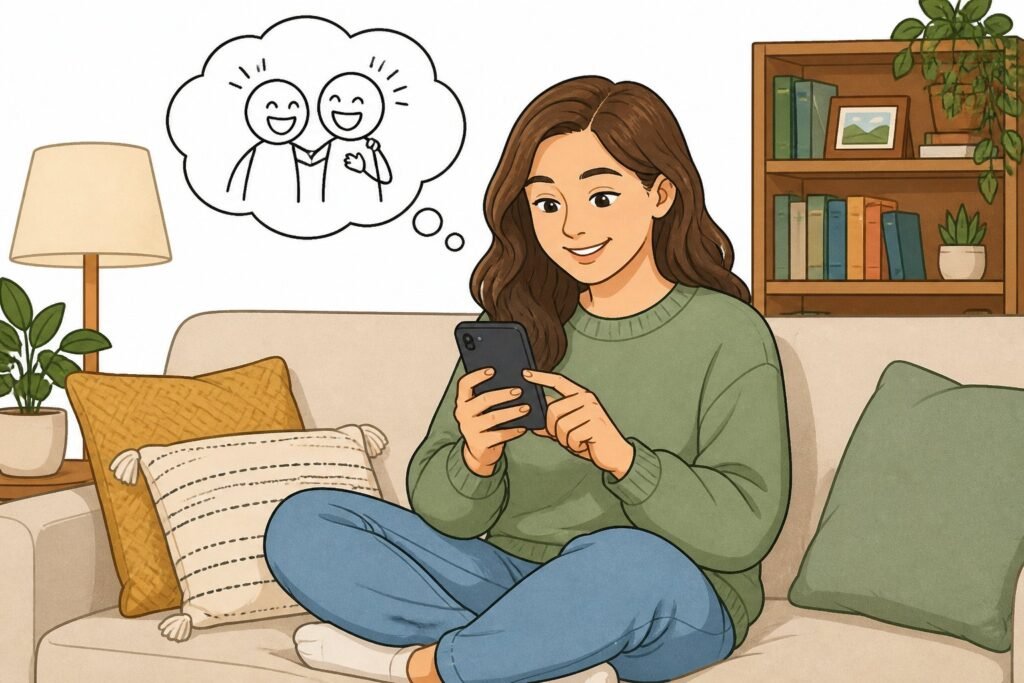
The best way to start the conversation here is to reference something specific: a shared memory, something you know they care about, or an update from your own life that you think would genuinely interest them.
Reaching out to say “I just read something that made me think of you” — and then actually sending it — is one of the warmest ways to re-open a door. It tells someone that you think about them. People rarely forget that.
Start a Conversation Like a Pro — Starting Now
You don’t need a perfect opener. You don’t need to be witty or charming or fearless. You need to go first.
Whether you’re trying to make a new friend, connect with someone at work, or simply get better at making conversation — the move is always the same: open your mouth and say something real. Ask a question you actually want to know the answer to. Listen like what they say matters.
That’s it. That’s how you start a conversation with anyone.
The more you do it, the easier it gets — and the more you realize that most people are just waiting for someone to make it easier for them, too.