Table of Contents
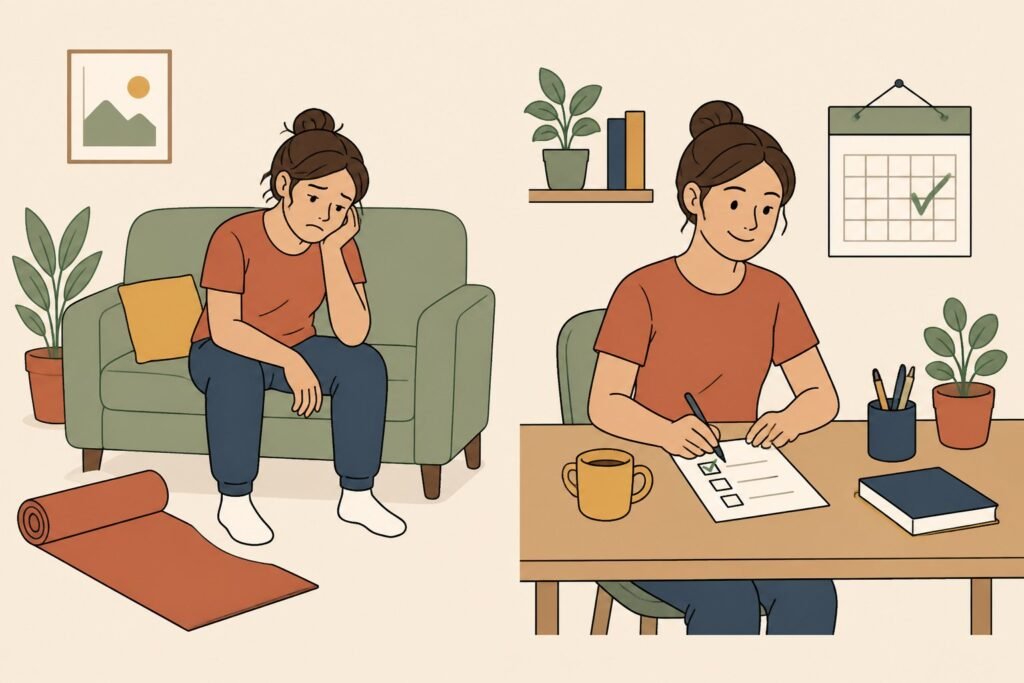
Most people try to change their habits the same way: rely on motivation, go hard for a week or two, then quietly slide back to where they started. New Year’s resolutions fail at a rate of around 80% by February. Not because people don’t want to change — they do — but because they’re using the wrong approach.
The science of habit formation has gotten a lot clearer over the last decade. Building habits isn’t about discipline or white-knuckling through discomfort. It’s about understanding how behaviors become automatic and designing your life so good habits are easier to do than not do.
Here’s what actually works.
Understand How Habit Formation Actually Works
Before you try to build any new habit, it helps to understand the mechanics. Habits don’t form because you decide to have them — they form when a behavior gets repeated enough times in a consistent context that it becomes automatic.
Researchers call this the habit loop, a concept popularized by Charles Duhigg in his bestselling book The Power of Habit and later expanded on by James Clear in Atomic Habits. The loop works in three parts: a cue (something that triggers the behavior), a routine (the behavior itself), and a reward (what you get from doing it). Every habit — good or bad — runs on this loop.
Understanding the habit loop matters because it tells you where to intervene. You can’t just decide to want different things. You need to change the cue, the routine, or the reward — and preferably make all three work together.
Habit formation takes longer than the popular “21 days” myth suggests. A 2010 study published in the European Journal of Social Psychology found it takes anywhere from 18 to 254 days for a new behavior to become automatic — with 66 days being the average. That range exists because habits vary in complexity, and people vary in how consistently they practice. Give yourself more runway than you think you need.
Start Small — Much Smaller Than Feels Worthwhile
One of the most counterintuitive pieces of advice about building habits: make them almost embarrassingly easy to start.
BJ Fogg, a behavior change researcher at Stanford and author of Tiny Habits, has spent decades studying how people change. His core finding: the size of the habit at the start matters far less than the consistency of doing it. Start small — a two-minute version of the habit you actually want — and scale up from there once the behavior becomes part of your routine.
Want to eat healthy? Start by adding one vegetable to one meal per day, not overhauling your entire diet. Want to build a reading habit? Read one page before bed. Want to exercise? Put on your workout clothes and do five minutes — no more required for the first two weeks.
This sounds like it couldn’t possibly work. It works because the goal in the beginning isn’t transformation — it’s showing up. Every repetition of the behavior strengthens the neural pathway. Behaviors become automatic through repetition, not through intensity.
Willpower matters less than people think. Willpower is a finite resource — it depletes with use and under stress. Designing habits to require as little willpower as possible is how you build good habits that last rather than habits that hold for a few days and then collapse.
Attach New Habits to Existing Ones
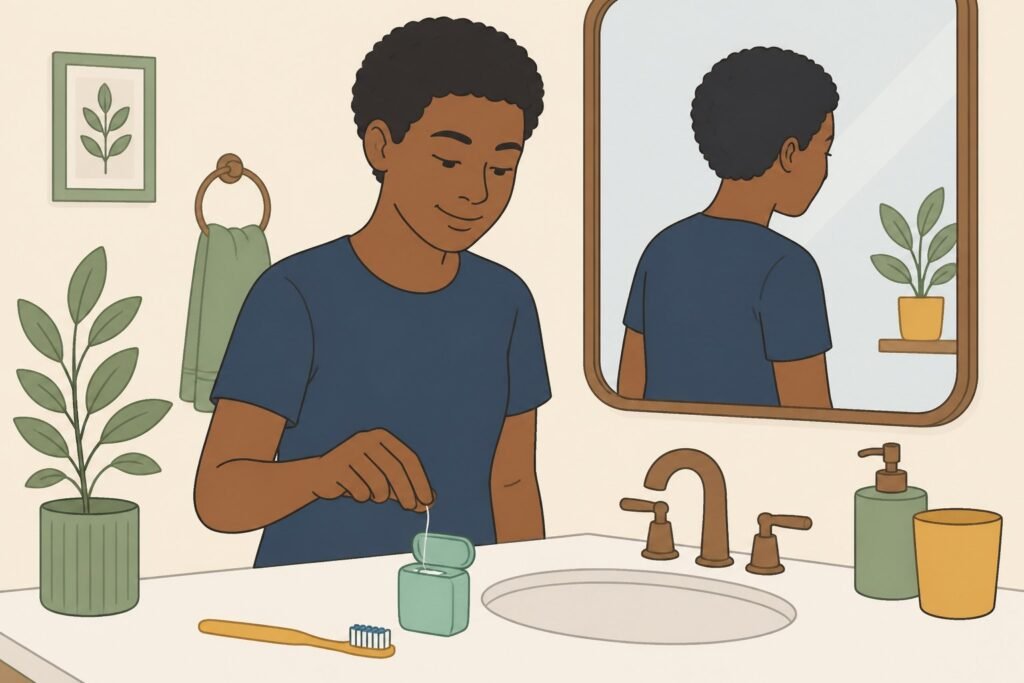
One of the most reliable techniques in habit formation is called habit stacking: linking a new habit to an existing habit that’s already part of your daily routine.
The formula is simple: After I [existing habit], I will [new habit].
- After I brush my teeth, I will floss one tooth (not “floss thoroughly” — just one tooth, to start).
- After I pour my morning coffee, I will write one sentence in my journal.
- After I sit down at my desk, I will review my top three priorities for the day.
The reason this works so well is that your existing habit becomes the cue — the trigger that fires the habit loop. You don’t need to rely on remembering to do the new behavior, or on feeling motivated. The behavior is triggered by something you already do automatically.
Start with habits that are logically connected. Attaching a new habit to a consistent, already-ingrained existing habit makes it far easier to remember and execute.
Design Your Environment for Success
Your environment shapes your behavior more than motivation does. Most people try to change their habits without changing their surroundings, then wonder why nothing sticks.
Make good habits the path of least resistance. If you want to eat less junk food, don’t keep it in the house. If you want to read before bed, put a book on your pillow instead of your phone on the nightstand. If you want to exercise in the morning, lay your workout clothes out the night before so you see them first thing.
The reverse applies to bad habits. If you’re trying to quit smoking or break a bad habit around social media, increase the friction. Log out of the app. Delete it from your home screen. Put your phone in another room when you’re working. You’re not relying on self-control — you’re making the bad habit harder to do impulsively.
Your physical space, your digital environment, and your daily schedule are all levers you can pull. Most people pull none of them and then blame their lack of discipline.
Use Rewards — But Choose Them Carefully
The reward at the end of the habit loop is what tells your brain the behavior is worth repeating. Without a reward, the loop doesn’t close, and the behavior doesn’t stick.
The tricky part: the reward needs to happen immediately after the behavior, not at some point in the future. This is why “I’ll feel healthier in three months if I exercise” isn’t a strong enough reward to build a lasting habit. The reward needs to be closer than that.
Some ways to build immediate rewards into positive habits:
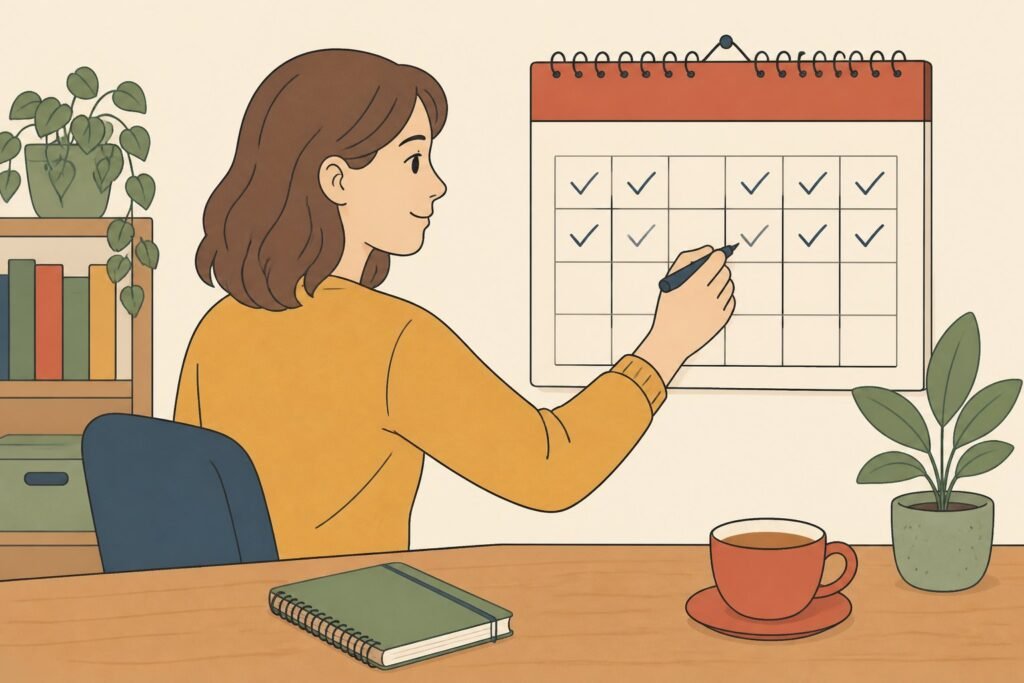
- Track your streak. A simple calendar where you mark an X for each day you completed the habit gives an immediate visual reward. Keeping the streak going becomes motivating in itself.
- Pair the habit with something enjoyable. Only listen to a specific podcast while you exercise. Only drink a particular tea while you journal. The enjoyable thing becomes part of the reward.
- Celebrate immediately. BJ Fogg recommends a small, genuine internal celebration right after completing the behavior — even something as simple as saying “yes” or a quick fist pump. It sounds silly; it registers in your brain as a reward signal.
The goal is to make the behavior feel good now, not just in theory. That’s what makes habits stick.
Expect Setbacks and Plan for Them
Missing a habit one day doesn’t break a habit. Missing it twice in a row starts to. That’s the real rule — not perfection, but never missing twice.
Changing habits is not a linear process. You’ll have days where the routine falls apart — you’re tired, traveling, sick, or just off. That’s not failure. That’s normal. What matters is how quickly you return to the behavior after a slip.
Build a plan for the most common disruptions. If you know you travel for work regularly and your gym routine always falls apart on the road, decide in advance what a “minimum viable” version of the habit looks like — maybe 10 minutes of bodyweight exercise in a hotel room. Having a fallback keeps the streak alive in a smaller form rather than abandoning it entirely.
People who feel overwhelmed by habit change often make the mistake of treating a slip as evidence that they can’t do it. It isn’t. One missed day is just one missed day. Return to the behavior the next morning.
Break Bad Habits by Replacing Them
You can’t break a bad habit by removing a behavior without putting something in its place. The habit loop needs a routine — if you take out the old routine without substituting a new one, the cue and the craving are still there, and the old behavior usually rushes back in.
The most effective way to break a bad habit is to keep the cue and the reward the same but swap out the routine.
Take a common example: snacking out of boredom in the afternoon. The cue is usually a drop in energy or focus around 3pm. The reward is a brief mental break. The routine — reaching for chips or something sugary — is the part to change. Swap in a short walk, a glass of water, or two minutes of stretching. Same cue, same reward signal, different routine.
Old habits never fully disappear from the brain — they get overwritten by new ones, but the old pathway is still there. That’s why long-term smokers sometimes still feel a pull years after they quit smoking, especially in the contexts where they used to smoke. Knowing this helps you build discipline without being surprised when old urges show up.
Make Habit Change a Social Effort
Trying to change your behavior in isolation is significantly harder than doing it with someone else. People who have a partner or group around a new habit — whether it’s a workout buddy, an accountability group, or even just telling someone your intention — are more likely to follow through.
This isn’t just moral support. Social accountability works because it adds a layer of consequences to not showing up. It also provides accountability and support when your own motivation dips, which it will.
You don’t need a formal setup. Tell a friend what you’re trying to do. Check in weekly. Join an online community around the habit you’re building — whether it’s running, reading, cooking, or improving your mental well-being. Being part of a group where the behavior is normal makes it easier to adopt it as normal yourself.
The Real Goal: Behaviors You Don’t Have to Think About
Building habits is really about moving good behaviors out of the “effortful choice” category and into the automatic, part of your schedule category. When clean the kitchen after dinner or go for a walk at 7am or write for twenty minutes in the morning stop being decisions and become second nature — that’s when lasting change takes hold.
To get there, you need to build good habits one at a time. Not five simultaneously, not a complete lifestyle overhaul starting Monday. Pick one behavior. Make it small. Stack it onto something you already do. Reward it immediately. Repeat for long enough that it stops requiring a decision.
Everything else follows from that.