Table of Contents
That hiss. You hear it from the bathroom at 11pm and you already know. Your toilet’s running again. And if you ignore it, you’re looking at hundreds of gallons of water down the drain — literally — and a water bill that’ll make you wince.
Here’s the good news: figuring out how to fix a running toilet takes about 10 minutes, costs around five bucks, and you don’t need to be handy. The parts inside a toilet tank are almost embarrassingly simple once you know what they do. I’ve fixed dozens of them. So have plenty of people who’d never call themselves DIYers.
This guide walks you through every common fix in order, from the dead-easy stuff to the slightly more involved swaps. By the end, you’ll either have a quiet toilet or know exactly when it’s time to call a plumber.
Why Your Toilet Won’t Stop Running
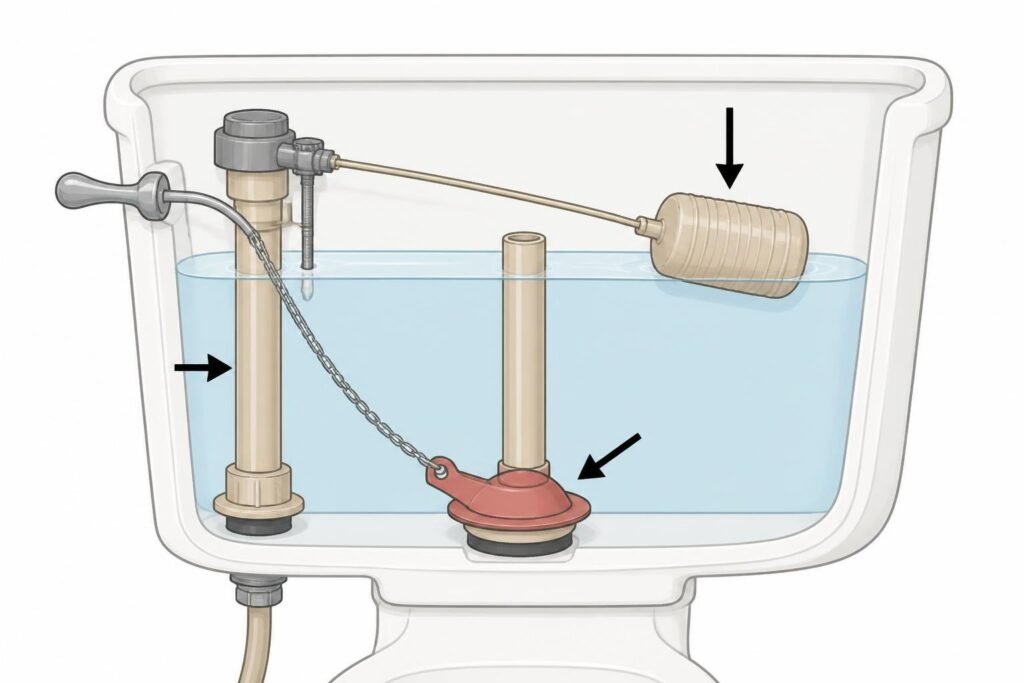
Before you fix anything, it helps to know how a toilet works. Lift the tank lid and you’ll see three main parts working together.
The flapper is a rubber seal at the bottom of the tank covering the flush valve hole. The fill valve is the tall tower (usually on the left) that fills the tank with water. The float is the thing that rides up with the water level and tells the fill valve when to stop.
When you press the flush handle, a chain connecting the flush handle to the flapper pulls the flapper up. Water rushes from the tank to the bowl. The flapper drops back down, the fill valve opens, the tank fills, and the float rises until the water stops running.
If any of these parts goes wrong — the flapper doesn’t seal, the chain’s the wrong length, the float’s stuck, or the fill valve is worn — you get a constantly running toilet. That’s it. Three parts. Most fixes take minutes.
The common causes of a running toilet almost always come down to one of these four things, in this order: flapper, chain, float, fill valve. Work through them and you’ll solve 95% of toilet troubles without calling a plumber.
Step 1: Turn Off the Water and Open the Toilet Tank
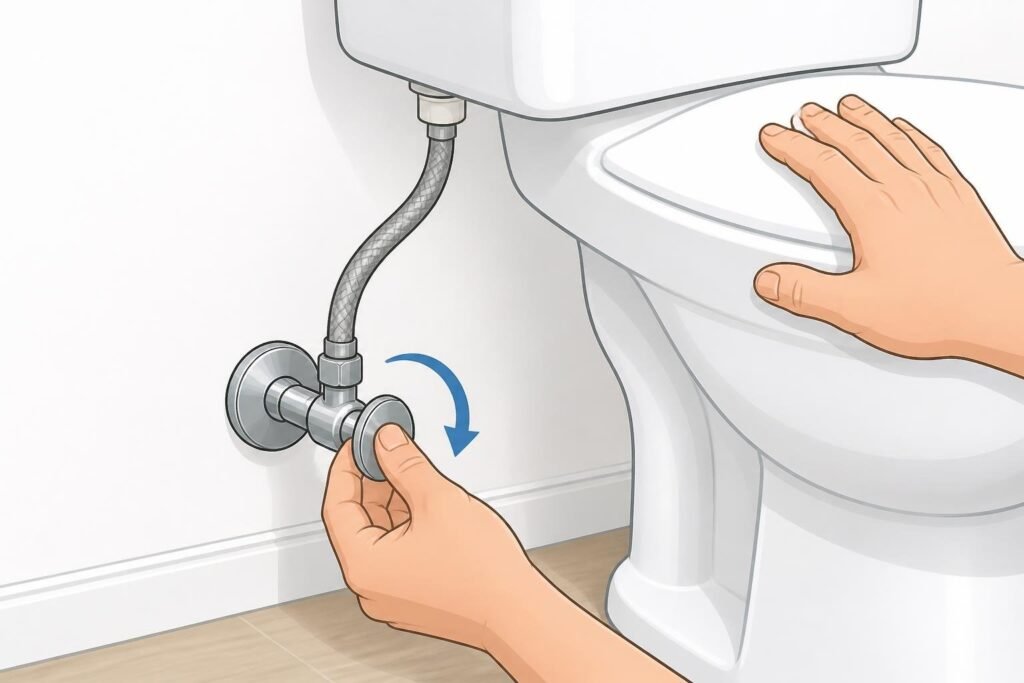
First thing: turn off the water to the toilet. Look at the wall behind the toilet for a small valve on the water supply line — usually chrome or plastic. Turn it clockwise until it stops. This shuts off the water flow so you can work without flooding the floor.
Then flush the toilet to drain the tank.
Now remove the tank lid. Lift it straight up and set it somewhere flat. It’s heavier and more fragile than you think — cracked tank lids cost $40 or more to replace, so don’t rest it on the edge of the bathtub.
Take a quick look inside the toilet tank. If you can still hear the toilet trickling or see water moving, you’ve got an active leak somewhere. Good. That’s what you’re hunting.
Check the Flapper First — It’s Almost Always the Flapper
If I had to guess one cause of a running toilet sight unseen, I’d bet on the flapper every time. Maybe 70-80% of running toilets come down to this one little rubber part.
The flapper is the rubber disc sitting over the drain hole at the bottom of the tank. Over time it warps, cracks, or gets coated in mineral buildup. When that happens, it can’t fully seal the flush valve. Water slowly leaks from the tank into the bowl, the tank water level drops, the fill valve kicks back on, and your toilet runs.
How to Test the Flapper
Drop a few drops of food coloring into the tank water and wait 15 minutes without flushing. If color shows up in the toilet bowl, your flapper isn’t sealing. Easiest toilet leak test there is.
How to Replace the Flapper
- Make sure the water’s off and the tank’s drained.
- Unhook the chain from the flush handle.
- Pull the old flapper off the two pegs on the sides of the flush valve.
- Attach the new flapper — it just slides onto the same pegs.
- Reconnect the chain (more on that next).
Universal flappers cost about $5 at any hardware store. Bring the old one to match it. Done. That’s the cheapest toilet repair you’ll ever do.
One tip: skip the in-tank bleach tablets. Those blue chlorine cleaners absolutely destroy rubber flappers. They’re the reason a lot of people end up replacing flappers every six months.
Adjust the Chain (The Second Most Common Issue)
The chain connecting the flush handle to the flapper is finicky. It’s the second-leading cause of toilet troubles after the flapper itself.
If the chain is too short, it holds the flapper slightly open and water keeps running into the bowl forever.
If the chain is too long, it can get caught under the flapper and prevent the flapper from sealing properly.
If it’s tangled or kinked, same problem — the flapper to the flush valve never makes a tight seal.
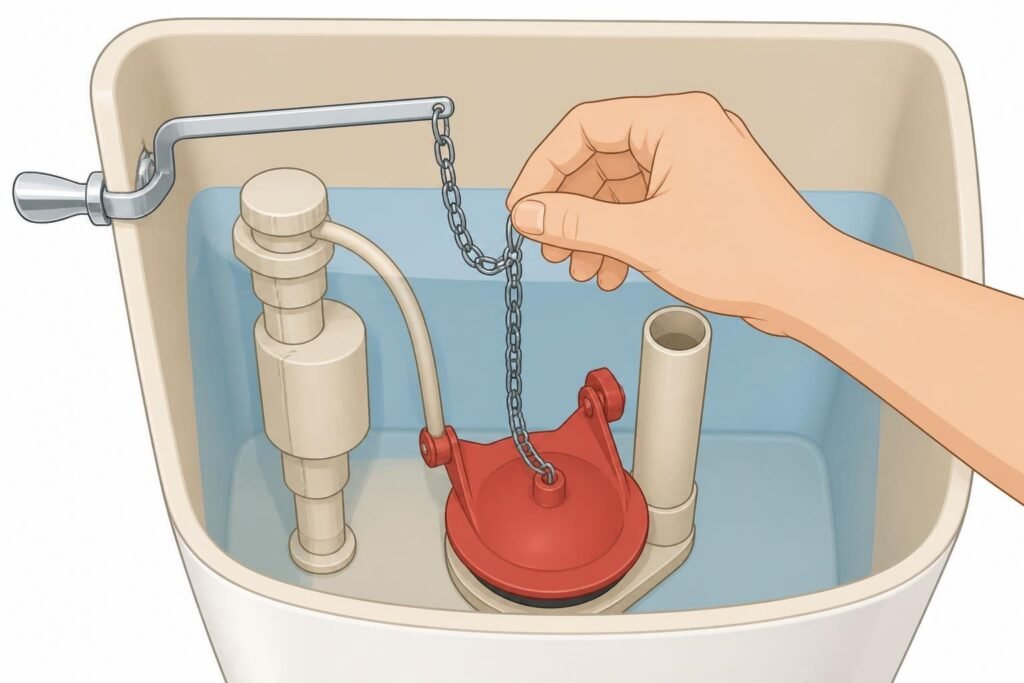
You want a little slack when the flapper is closed — about half an inch of dangle. Reach into the tank, hook the chain into a different link on the flush handle arm to shorten or lengthen it. Test by flushing. The flapper should snap shut firmly when the toilet flush finishes and the water stops running.
This is the quick fix nobody talks about because it sounds too simple to work. But I’ve fixed neighbors’ toilets in 30 seconds by just adding two links of slack.
Check the Float and Adjust the Water Level
If the water level in the tank is too high, water spills into the overflow tube nonstop and you’ll hear the toilet running constantly. The fix is adjusting the float so the tank fills less.
There are two kinds of floats you’ll run into.
The ball float is the old-school floating ball on the end of a float arm. Bend the float arm down slightly to lower the water level, or look for an adjustment screw where the float arm meets the fill valve and turn it counterclockwise.
The cup float is a plastic cylinder that slides up and down the fill valve shaft. Pinch the clip and slide it down to lower the water level.
The water level should sit about an inch below the top of the overflow tube. Most overflow tubes have a fill line marked on them. If yours doesn’t, an inch below the rim is the rule.
Flush the toilet, let it refill, and check where the water settles. Keep adjusting the float until it stops at the right spot. Then put the tank lid back on and listen. Silence? You’re done.
If the water won’t stop rising no matter how low you set the float, the fill valve itself is shot. That’s the next section.
Replace the Fill Valve if Water Keeps Flowing In
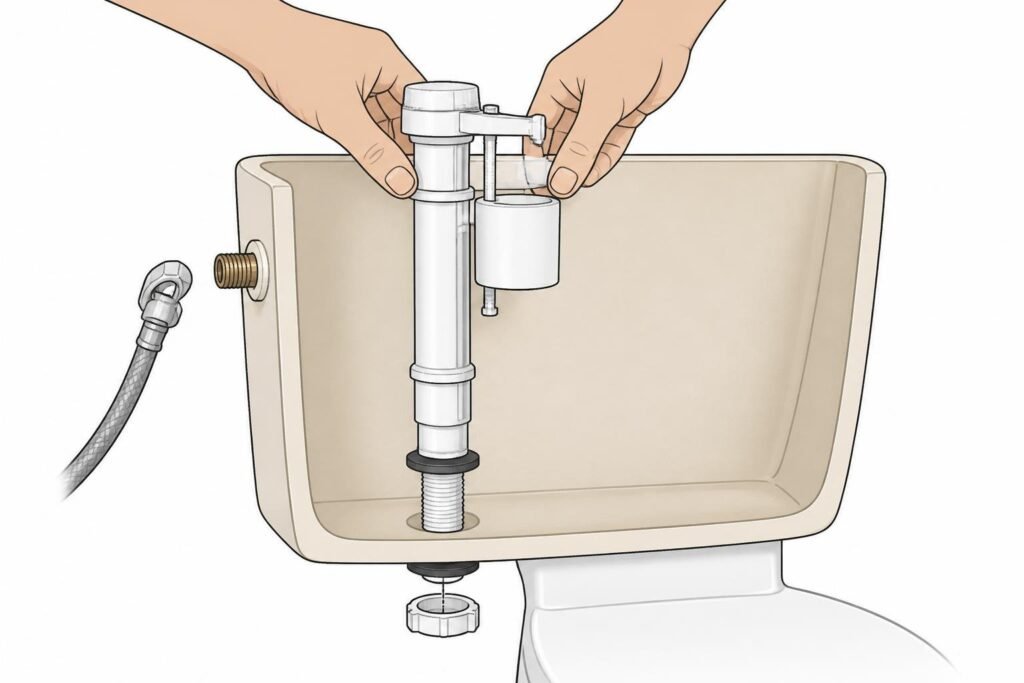
Sometimes the fill valve itself wears out. You’ll know because the water won’t stop running even with the float adjusted right, the fill valve hisses or whines after the tank fills, or water actually shoots up out of the top of the fill valve.
A new fill valve runs about $10-15. The Fluidmaster 400 series is the standard — fits almost every toilet on the market and comes with instructions any beginner can follow.
Swapping a Fill Valve Step-by-Step
- Turn off the water supply and flush to drain the tank.
- Disconnect the water supply line from the bottom of the tank with an adjustable wrench.
- Unscrew the lock nut holding the fill valve in place from underneath the tank.
- Pull the old fill valve out from inside the tank.
- Drop the new one in, screw the lock nut back on, reconnect the supply line.
- Turn the water back on and let it fill.
- Adjust the float so the water stops about an inch below the top of the overflow.
The whole job takes maybe 15 minutes. If you can change a lightbulb, you can change a fill valve.
Other Sneaky Causes of a Constantly Running Toilet
Sometimes you’ve checked the flapper, the chain, the float, and the fill valve, and your toilet keeps running anyway. A few less obvious culprits worth knowing about.
A Cracked Overflow Tube
If the overflow tube has a hairline crack near the base, water from the tank slowly leaks down through it. You’ll need to replace the flush valve assembly, which means pulling the tank off the bowl. This is where some people draw the line and call in help.
Mineral Buildup on the Flush Valve Seat
The plastic ring the flapper seals against can get rough or scaly from hard water. The flapper sits on it but never fully seals, allowing water to keep dribbling from the tank to the bowl. Drain the tank and check by running your finger around the seat. If it feels gritty, scrub it gently with a green scouring pad. Don’t use anything metal — you’ll wreck the surface and make it worse.
A Loose Flush Handle
Rare, but worth checking. A loose flush handle can keep enough tension on the chain to hold the flapper slightly open. Tighten the nut behind the toilet handle (remember it’s reverse-threaded on most toilets — righty loosey, lefty tighty).
A Sticking Float Arm
On older toilets with a ball float, the float arm can stick against the tank wall and never tell the fill valve to shut off. Bend it slightly so it has clearance.
When It’s Time to Call a Plumber
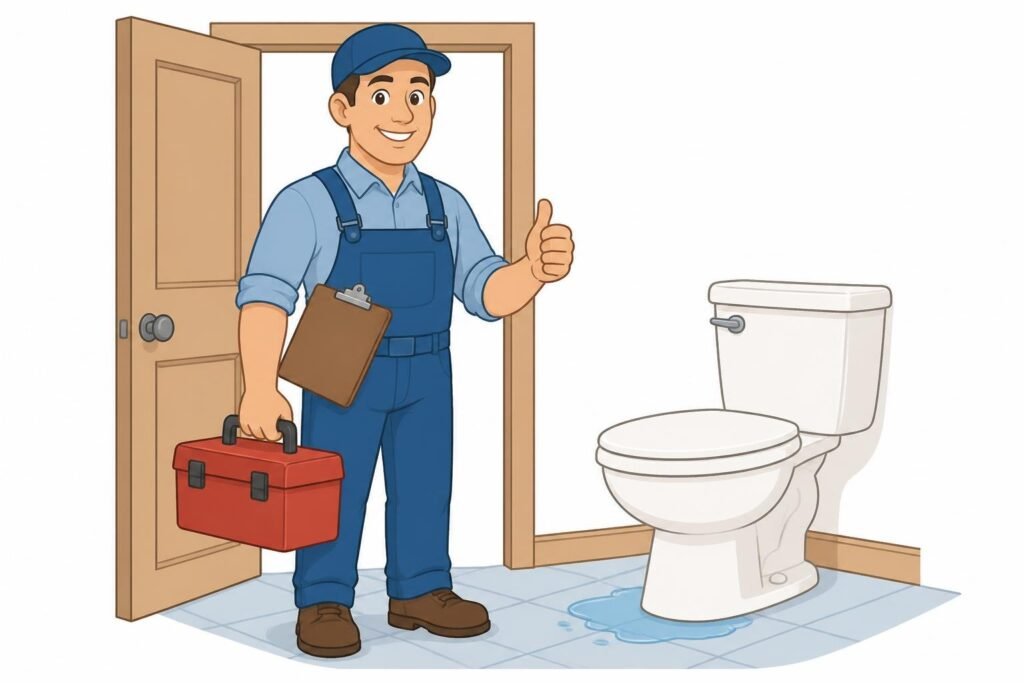
I’ll be straight — 95% of running toilets are DIY fixes. But here’s when to call a plumber instead of fighting it.
You’ve already replaced the flapper and fill valve and the toilet still won’t stop running. Water is leaking from the base of the toilet, not just inside the tank. The tank itself is cracked. You smell sewage near the toilet. The toilet bowl is cracked or wobbling on the floor.
A plumber typically charges $100-200 to fix a toilet that won’t behave. That’s still cheaper than a destroyed bathroom floor if a real leak is brewing. Sometimes plumbing is worth paying for.
How to Keep It From Happening Again
Once you’ve fixed your running toilet, a few small habits keep it that way.
Skip the in-tank bleach tablets — they wreck rubber parts faster than anything. Use bowl cleaners instead. Pop the tank lid off once a year and look for mineral buildup, cracks, or worn rubber. A two-minute inspection beats a $200 plumber visit.
Replace the flapper proactively every four or five years. Rubber doesn’t last forever. A $5 part on a slow schedule is cheaper than a surprise water bill.
And listen for ghost flushes. If you hear the toilet briefly refill itself when nobody’s been near it, the flapper is leaking. Catch it early and you’ll never see the words “$400 water bill” on a statement.
A running toilet can waste hundreds of gallons of water a day. The EPA puts the worst-case figure at around 200 gallons in 24 hours. That’s not a rounding error on your water bill — that’s real money walking out the door.
The Bottom Line
You don’t need a plumber to fix your toilet most of the time. Open the toilet tank, find the part that’s worn, swap it for $5-15 in supplies, and you’re done. The hardest part is just willing yourself to lift the lid the first time.
Start with the flapper. Then the chain. Then the float. Then the fill valve. In that order. One of those four is the answer almost every time.
Now go silence that hiss.