Table of Contents
You wake up, catch your reflection, and the first thing you notice is the puffiness — round cheeks, a soft jawline, a face that looks heavier than you feel. Sound familiar? Face fat is one of the most frustrating places to carry extra weight, partly because you can’t hide it and partly because most advice online is vague at best.
Here’s what’s actually true: you can’t spot-reduce fat in the face specifically. But you can take targeted steps that make your face appear slimmer, tighten things up, and speed up overall fat loss. Here are eight ways to lose face fat that are grounded in real evidence.
What Causes Facial Fat in the First Place?
Before you can reduce face fat, it helps to understand why it’s there.
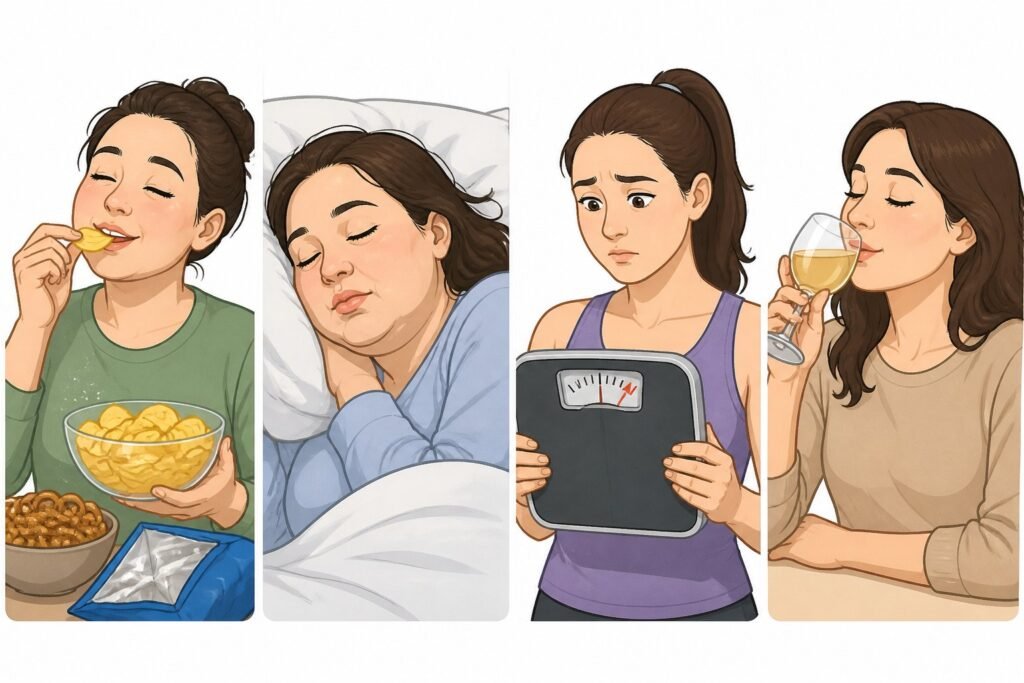
The causes of facial fat break down into a few main categories. The most obvious is overall weight gain — when body fat percentage rises, the face stores fat too, especially in the cheeks, under the chin, and around the jowls. The face doesn’t have some special immunity to fat storage.
There’s also water retention. A high-sodium diet, poor sleep, alcohol, and hormonal shifts can all cause puffiness in your face that looks like fat but is actually just fluid. Fix the lifestyle habits and that kind of bloating can go down in days.
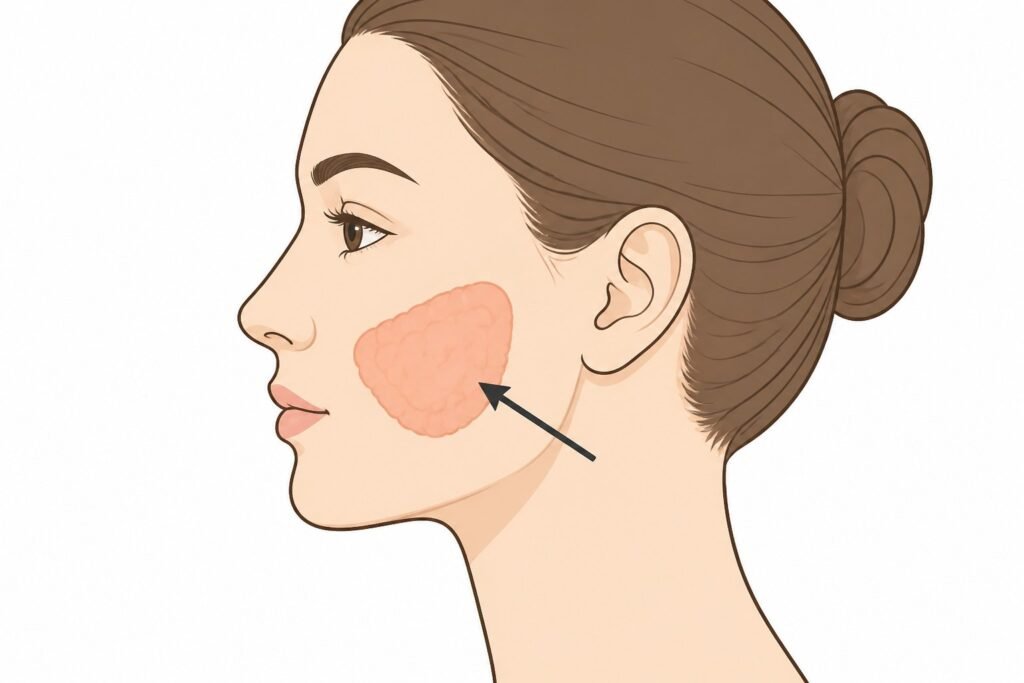
Genetics plays a role too. Some people naturally carry more fat in the buccal fat pad — the fat deposit that sits in your lower cheeks. If you’ve always had fuller cheeks even at a healthy weight, that’s likely structural.
1. Focus on Overall Fat Loss, Not Just Your Face
Losing weight from a specific area — any area — isn’t how the body works. You can’t target fat loss in the face any more than you can tell your body to pull exclusively from your thighs or arms. The body loses fat systemically, and the face follows.
That said, the face is often one of the first places people notice a difference when they start losing weight. Even a 5–10 lb drop can make your face appear visibly slimmer.
A solid approach: focus on overall fat loss through a calorie deficit, regular exercise, and sustainable eating habits. The face fat and overall body fat will come down together.
2. Do Cardio Consistently
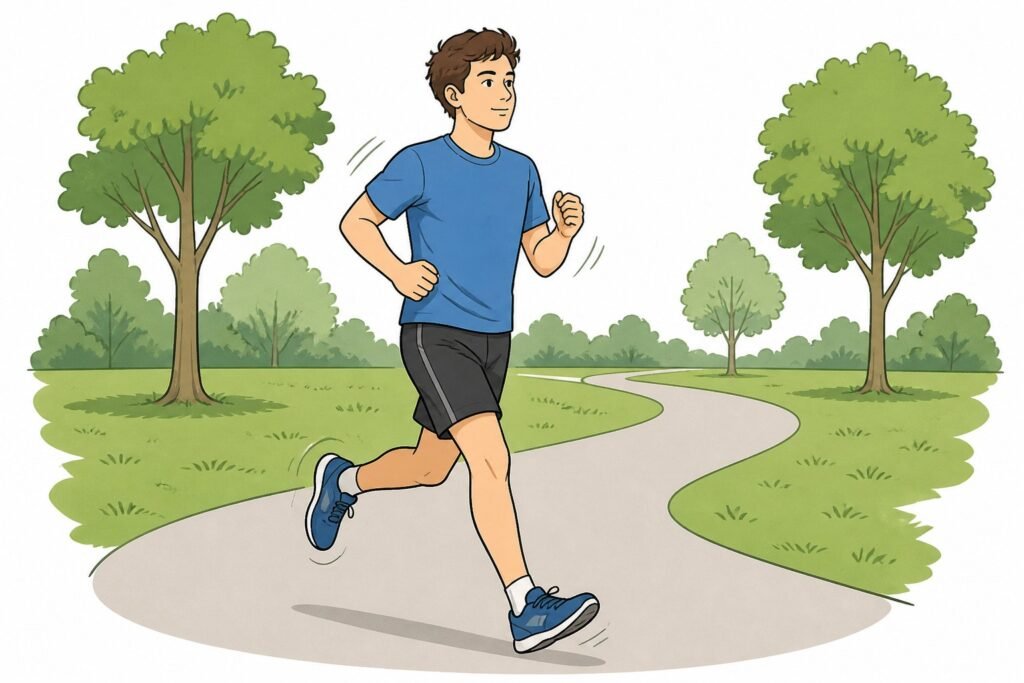
Cardio is one of the best ways to increase fat loss across your whole body — including your face.
Studies consistently link regular aerobic exercise with associated weight loss and reduced body fat percentage. Aim for at least 150–300 minutes of moderate cardio per week. That’s 30 minutes, five days a week. Running, cycling, swimming, brisk walking — pick what you’ll actually stick with.
High-intensity interval training (HIIT) can be especially efficient for fat burning if you’re short on time. Alternating short bursts of effort with recovery periods keeps your metabolism elevated even after you finish.
The consistency matters more than the specific activity. One hard session a week won’t move the needle. Five moderate sessions will.
3. Try Facial Exercises for Fat Loss
Facial exercises are a somewhat underrated tool. They don’t burn a ton of calories, but they do strengthen and tone the muscles underneath the fat — which can make your face look more defined even before significant weight loss.
A 20-week facial exercise program published in JAMA Dermatology found that participants who did structured facial exercises had measurably firmer, fuller-looking cheeks and appeared younger at the end. While that study focused on anti-aging, the muscle-toning effect is real.
Exercises to Try
- Cheek puffs: Puff air from cheek to cheek in rotation, 30 seconds at a time.
- Jaw release: Simulate chewing with your mouth closed, then open wide and hold. Repeat 10–15 times.
- Chin lifts: Tilt your head back, look at the ceiling, and press your tongue to the roof of your mouth. Hold 5 seconds, repeat 10 times.
- Fish face: Suck in your cheeks and hold for 10 seconds. Releases facial tension and works the cheek muscles.
Do these exercises daily. Results are gradual — expect 4–8 weeks before you see visible changes — but they’re free, take under 10 minutes, and pair well with everything else on this list.
4. Cut Back on Sodium and Refined Carbs
Dietary habits have a surprisingly direct effect on how much face fat (and facial puffiness) you’re carrying around.
Sodium is the big one. High salt intake causes your body to retain water, and a lot of that shows up in the face. If you wake up looking puffier than you went to bed, your dinner the night before is worth examining. Processed foods, fast food, soy sauce, and canned goods are common culprits.
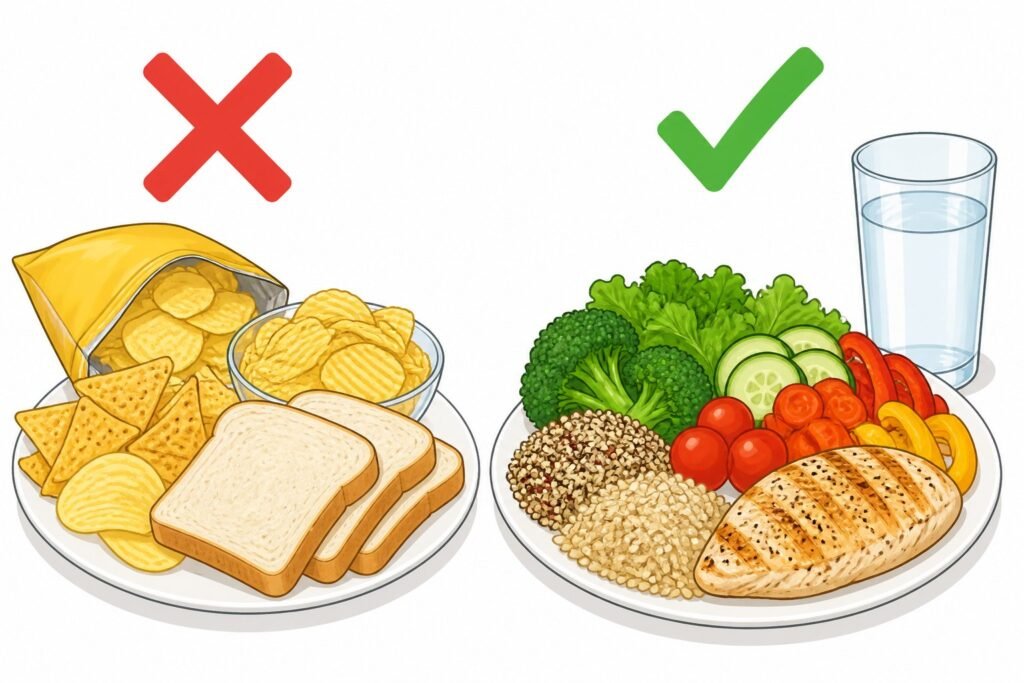
Refined carbs — white bread, pasta, pastries, sugary drinks — spike blood sugar, trigger insulin, and promote fat storage throughout the body including the face. Swapping refined carbs for whole grains, vegetables, and lean protein can reduce facial fat over time and support your overall weight loss efforts.
The impact of refined carbs on facial fat is real, though it works through the same route as body fat generally: more refined carbs = more fat gain = more fat in the face. Clean up the diet and you address both.
5. Drink More Water
Counterintuitively, drinking more water helps reduce facial puffiness — not add to it. When you’re chronically dehydrated, your body holds onto fluid as a protective measure. Drink enough and it lets go.
Aim for 8–10 glasses a day, more if you’re exercising heavily. Cold water in the morning is particularly effective at temporarily reducing that just-woke-up puffiness.
Water also supports fat loss more broadly. It keeps you fuller between meals, supports kidney function (which affects how well you excrete excess sodium), and can temporarily boost metabolism. It’s one of the easiest ways to lose face fat naturally.
6. Cut Back on Alcohol
Alcohol causes weight gain and increased fat storage for a few reasons — it’s calorie-dense, it disrupts sleep, it raises cortisol, and it’s a diuretic that leads to water retention the next day. All of that shows up in the face.
If you drink regularly and notice your face looks puffier or rounder than you’d like, a 30-day alcohol break is worth trying. Many people report that their face looks noticeably slimmer within two to three weeks.
You don’t necessarily have to quit entirely. Cutting from daily drinking to weekends only — or from several drinks to one — can make a real difference for your body weight and waist circumference over time.
7. Improve Your Sleep
Bad sleep makes your face look worse in the short term (hello, under-eye bags and puffiness) and contributes to weight gain and fat storage in the long term.
Research consistently links poor sleep with increased body weight and higher body fat percentage. Sleep deprivation spikes cortisol and ghrelin — the hormones that drive fat storage and hunger — and suppresses leptin, the hormone that signals fullness.
Getting 7–9 hours of quality sleep is genuinely one of the most effective things you can do for weight management and for how your face looks daily. It costs nothing, requires no gym, and pays off immediately.

8. Consider Buccal Fat Removal If It’s Structural
If you’ve done everything right — you’re at a healthy weight, you exercise, your diet is clean — and your cheeks still look fuller than you want, the issue might not be fat at all. It could be your buccal fat pad.
The buccal fat pad is a naturally occurring pocket of fat deep in the cheek, between the cheekbone and jawline. Its size is largely genetic. No amount of diet and exercise can reduce it because it’s not metabolically active in the same way subcutaneous fat is.
Buccal fat removal is a cosmetic surgical procedure where a surgeon makes a small incision inside the mouth and removes part of the buccal fat pad. It’s been around for decades but recently gained massive attention — you may have heard the term “Ozempic face” or noticed celebrities with dramatically hollowed cheeks.
A few things worth knowing:
- It’s permanent. The buccal fat pad doesn’t grow back.
- It can look gaunt with age. Faces naturally lose fat as you get older. Removing the buccal fat pad at 25 may look sharp at 30 and hollow at 50.
- Recovery is relatively quick — about one week — but results take months to fully settle.
- Not everyone is a candidate. Surgeons typically advise against it for people who already have thin faces.
If you’re considering it, consult with a board-certified plastic surgeon and see multiple opinions. It’s not the right way to lose face fat for most people, but for some, it’s the only way to address the structure underneath.
Ways to Reduce Face Fat: A Quick Recap
You can’t control exactly where your body loses fat first — but you can absolutely make choices that slim your face over time. Here’s the honest advice on how to lose face fat:
- Get into a calorie deficit and focus on overall fat loss
- Do cardio 4–5 times per week
- Add daily facial exercises (10 minutes is enough)
- Cut sodium and refined carbs
- Drink more water
- Reduce or eliminate alcohol
- Prioritize sleep
- If it’s structural, consult a specialist about buccal fat removal
Most of these are things you should be doing anyway for your health. That’s the point — a healthy diet and regular exercise don’t just make your body leaner, they make your face appear slimmer too. The face is connected to everything else.
Pick two or three of these to start this week. In four to six weeks, you’ll see the difference.