Table of Contents
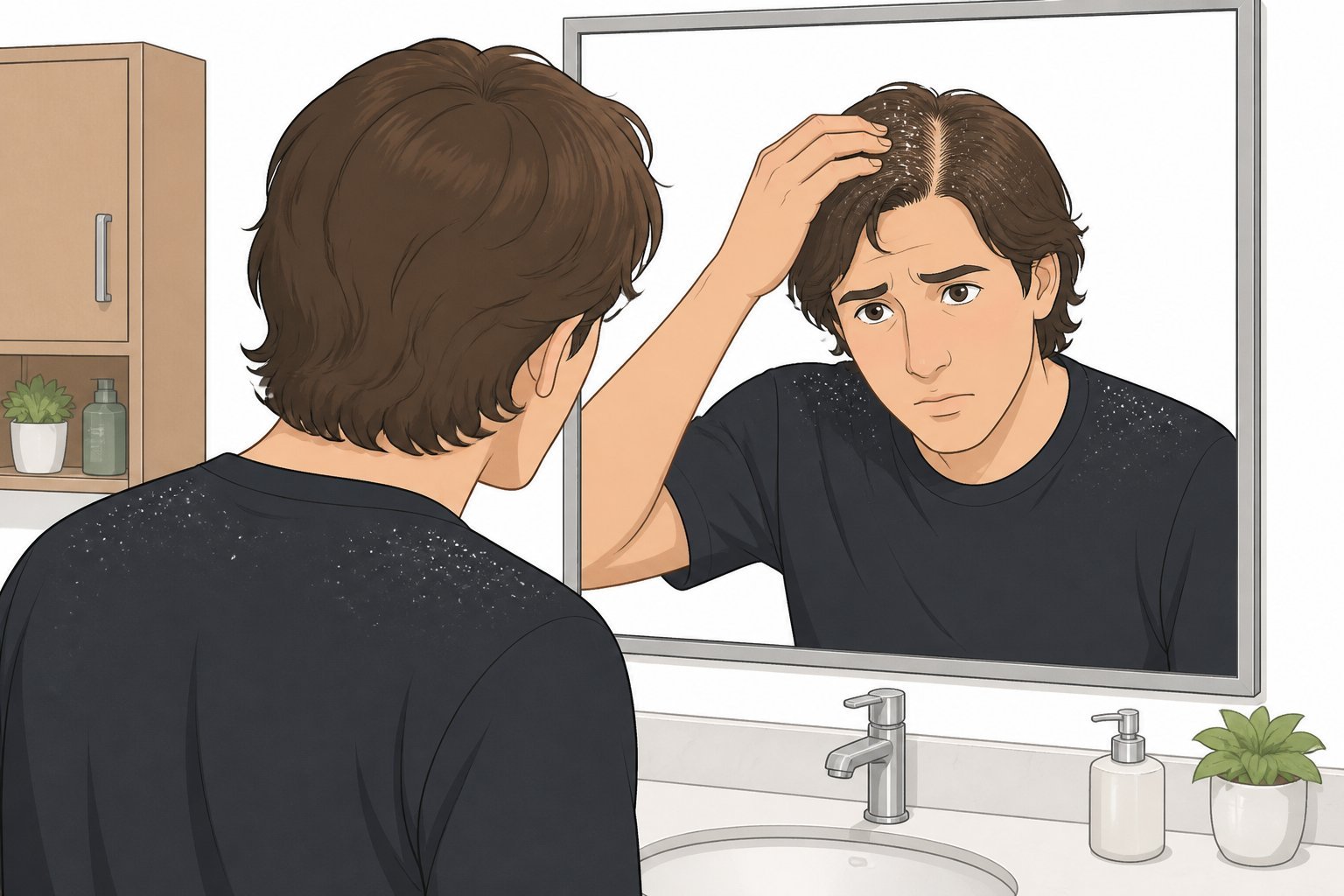
You put on your favorite black shirt, catch yourself in a mirror, and there they are — white flakes dusting your shoulders like you just walked through a snowstorm. Sound familiar? Dandruff is a common scalp condition that affects nearly 50% of adults worldwide at some point in their lives, and yet most people spend years trying random shampoos and hoping for the best.
Here’s the thing: how to get rid of dandruff isn’t really a mystery. It just requires understanding what’s actually causing yours — because dry scalp dandruff and oily scalp dandruff are not the same problem and don’t respond to the same fixes. This guide covers what causes dandruff, 10 home remedies that genuinely help, the best dandruff shampoo ingredients to look for, and when it’s time to call in a dermatologist.
What Causes Dandruff in the First Place?
Before you buy anything or try any remedy, it helps to know what you’re actually dealing with. The cause of dandruff usually falls into one of a few categories.
The Malassezia Connection
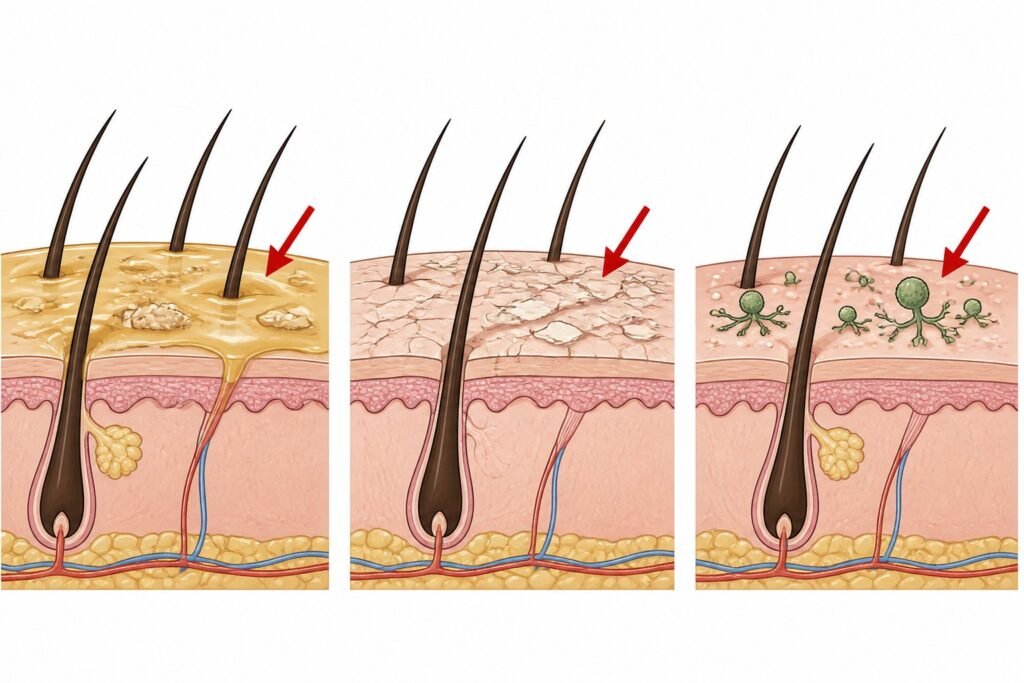
The most common culprit is a fungus called malassezia — a yeast-like organism that naturally lives on most people’s scalps. When it grows too much, it irritates the scalp and speeds up the shedding of dead skin cells. Those shed cells clump together into the visible white or yellowish flakes you see on your collar.
Oily vs. Dry Scalp
An oily scalp actually feeds malassezia, which is why people with oily skin tend to get worse dandruff. But dry scalp can cause its own version of flaking — smaller, whiter flakes that come with tight, itchy skin.
These are different problems. Treating oily scalp dandruff with heavy moisturizers can make things worse. Treating dry scalp dandruff with harsh anti-dandruff shampoos can strip too much moisture and backfire.
Other Common Causes
- Seborrheic dermatitis — a chronic skin condition that causes red, scaly, greasy patches. It’s the more serious end of the dandruff spectrum and conditions such as seborrheic dermatitis often require medicated treatment.
- Product buildup — dry shampoos, styling gels, and leave-ins that aren’t rinsed thoroughly can accumulate on the scalp and trigger irritation.
- Not washing your hair often enough — oil and dead skin cells accumulate faster than you might expect.
- Stress and diet — both are linked to flare-ups, though they rarely cause dandruff on their own.
10 Home Remedies for Dandruff That Actually Help
These aren’t old wives’ tales. Most of these have real science behind them — or at least enough evidence that dermatologists don’t dismiss them.
1. Tea Tree Oil
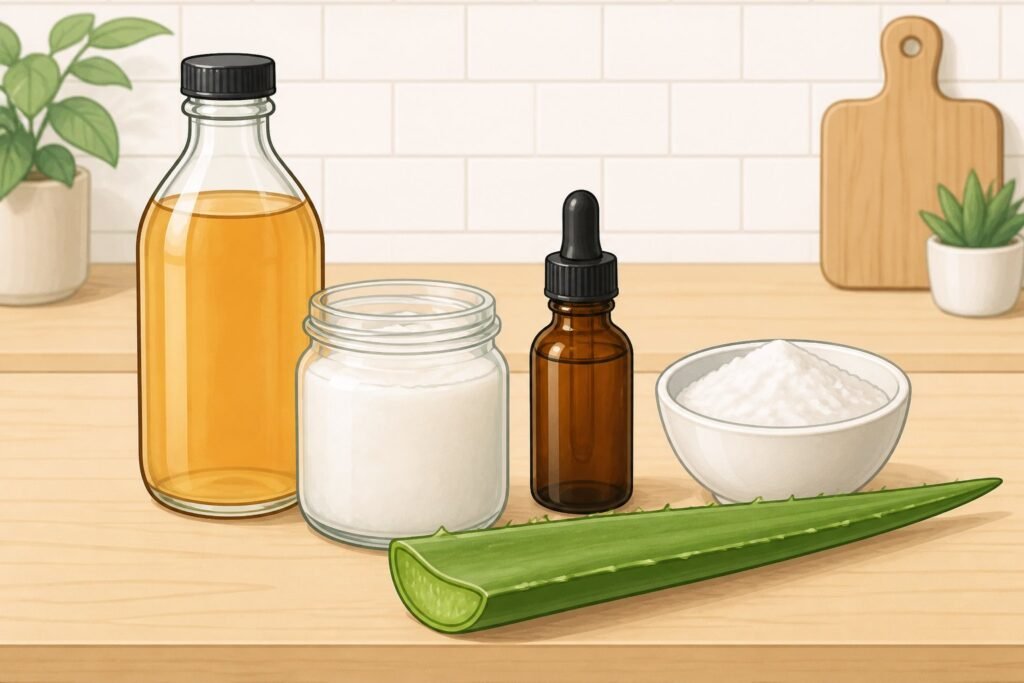
Tea tree oil has solid antifungal and antibacterial properties. You don’t apply it straight — always dilute a few drops in a carrier oil or look for a shampoo that already contains it at a 5% concentration. It can help soothe an itchy scalp and reduce flaking when used consistently.
2. Apple Cider Vinegar Rinse
The acidity of apple cider vinegar may help balance your scalp’s pH and discourage fungal growth. Mix equal parts water and apple cider vinegar, apply it to your scalp after shampooing, leave it for a few minutes, then rinse thoroughly. Don’t overdo it — once or twice a week is plenty.
3. Coconut Oil
Coconut oil has antifungal properties and works especially well for people with dry scalp dandruff. Massage a small amount directly to the scalp, leave it for 30 minutes, then wash it out with a gentle shampoo. If your dandruff is caused by an oily scalp, go easy — too much oil can make things worse.
4. Aloe Vera
Aloe vera is genuinely good at reducing irritation and itching. Apply fresh gel or a pure aloe product directly to the scalp, leave it on for 20–30 minutes, then rinse. It won’t kill the fungus, but it can calm an itchy, inflamed scalp while other treatments do their work.
5. Baking Soda
Baking soda acts as a mild exfoliant and may reduce excess skin cells from the scalp. Wet your hair, rub a tablespoon of baking soda into your scalp, let it sit briefly, then rinse. Use it sparingly — too often and it can leave the scalp feeling dry.
6. Salicylic Acid Scrubs
Salicylic acid breaks down the bonds between dead skin cells, which helps loosen and remove flakes. You can find it in scalp scrubs and some anti-dandruff shampoos. It’s especially effective for product buildup-related dandruff.
7. Zinc-Based Products
Zinc pyrithione is one of the most studied anti-dandruff ingredients out there. It slows down the reproduction of malassezia and reduces inflammation. Many over-the-counter dandruff shampoos use it for exactly this reason.
8. Aspirin Paste
Aspirin contains salicylate — the same active compound in salicylic acid. Crush two uncoated aspirin tablets, mix with a small amount of shampoo, apply to the scalp, wait a few minutes, then rinse thoroughly. It’s a budget workaround that some people swear by.
9. Reduce Your Stress
Stress doesn’t cause dandruff directly, but it weakens your immune response, which lets malassezia grow more freely. If your dandruff flares during stressful periods, that’s likely why. Exercise, sleep, and genuinely stepping back from what’s burning you out — they matter here too.
10. Wash Your Hair More Consistently
This one sounds obvious, but it’s frequently the issue. Letting oil and dead skin cells build up between washes gives dandruff a better environment to thrive. Wash your hair often enough that your scalp stays relatively clean — for most people that’s every other day or every two days.
How to Choose the Right Dandruff Shampoo
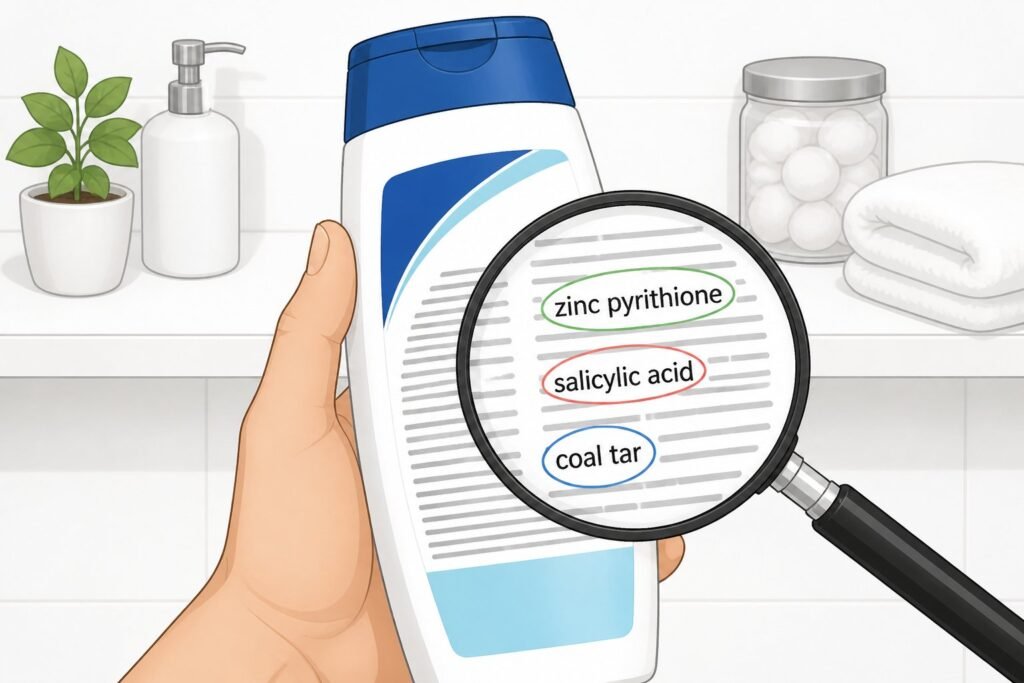
Most dandruff shampoos work — if you pick the right one for your type.
Key Ingredients to Look For
Zinc pyrithione — good all-purpose antifungal; gentle enough for daily or near-daily use.
Selenium sulfide — stronger antifungal; works well for more persistent dandruff. Use it as directed, not more.
Coal tar — one of the oldest dandruff treatments around. It slows cell turnover and can be very effective for seborrheic dermatitis. The downside: it can discolor lighter hair and has a distinct smell.
Salicylic acid — best when your main problem is thick buildup or scaling rather than fungal overgrowth.
Ketoconazole — a prescription-strength antifungal that’s now available over the counter at lower concentrations. Worth trying if other anti-dandruff options haven’t worked.
How to Actually Use Dandruff Shampoo
Using dandruff shampoo wrong is more common than you’d think. Apply it to a wet scalp, massage it in, and leave it on for at least two to five minutes before rinsing. That contact time is what makes it work. Rinse it off immediately and you’re mostly just washing your hair.
Medicated dandruff shampoos are meant to be left on, not lathered and rinsed in 30 seconds.
Dry Scalp vs. Dandruff — Why It Matters for Treatment
These two look similar but have different root causes and need different fixes.
| Dandruff | Dry Scalp | |
|---|---|---|
| Flake appearance | Larger, oily, yellowish | Smaller, white, dry |
| Scalp feel | Oily or irritated | Tight, dry |
| Main cause | Fungal overgrowth | Lack of moisture |
| Best treatment | Anti-dandruff shampoo | Gentle shampoo + moisturizing |
If you’ve been using a harsh dandruff shampoo for months and things aren’t improving — or they’re getting worse — dry scalp dryness might actually be your issue. Switch to a mild shampoo and focus on scalp hydration for a few weeks and see what changes.
Scalp Care Habits That Prevent Dandruff From Coming Back
Getting rid of dandruff is one thing. Keeping it away is another. A few consistent habits make a real difference.
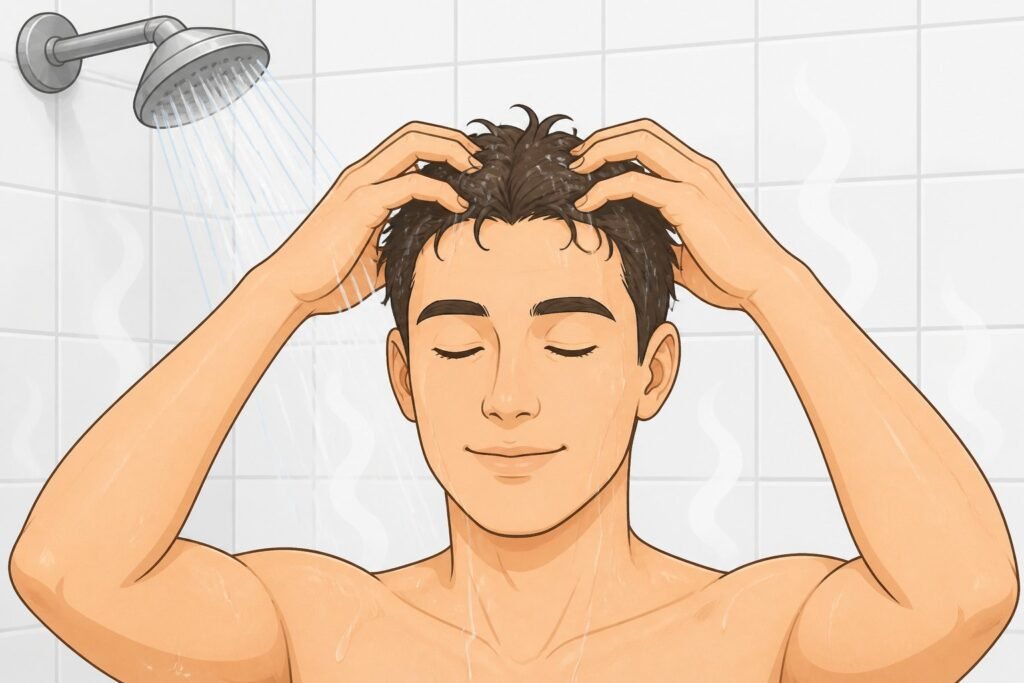
Rinse thoroughly every time you shampoo. Product buildup is a silent contributor to an irritated scalp. Make sure no shampoo or conditioner residue stays behind — rinse more than you think you need to.
Don’t scratch. It’s tempting, but scratching an itchy scalp breaks the skin and creates openings for bacteria. Use your fingertips to massage gently instead.
Shampoo and condition your hair regularly. Skipping washes to “let your scalp breathe” often backfires — it lets oil and dead skin accumulate and gives malassezia exactly what it wants.
Watch how your scalp responds to products. Certain styling products, dry shampoos, and even some conditioners can irritate or clog hair follicles. If your dandruff flares up after adding something new to your routine, it’s probably not a coincidence.
Protect your scalp from sun exposure. Sunburn on an already-sensitive scalp can make your scalp more sensitive and trigger a flare-up. A hat works.
When Home Remedies Aren’t Enough — See a Dermatologist
Most cases of dandruff respond to over-the-counter dandruff treatment within a few weeks. But some don’t, and that’s not a failure — it’s just a sign that the underlying issue needs a closer look.
See a dermatologist if:
- Your dandruff hasn’t improved after 4–6 weeks of consistent anti-dandruff shampoo use
- You have thick, crusty patches on your scalp rather than loose flakes
- The itching and irritation is severe or keeps you up at night
- You notice redness, swelling, or signs of infection
- You have skin conditions such as seborrheic dermatitis, psoriasis, or eczema that may be complicating things
A dermatologist can confirm the diagnosis, prescribe a stronger medicated shampoo or topical steroid if needed, and help you rule out conditions like scalp psoriasis that look similar to dandruff but need different treatment entirely.
Can You Prevent Dandruff Entirely?

For some people, yes — especially if their dandruff is mild and lifestyle-driven. For others, particularly those with seborrheic dermatitis or a genetic tendency toward it, dandruff management is more realistic than total prevention.
The goal is to keep your scalp clean, keep the fungal balance in check, and respond quickly when flakes start coming back. Most people find that once they figure out their triggers — whether it’s skipping washes, stress, certain products, or seasonal changes — they can prevent dandruff from getting bad again.
Dandruff usually isn’t a one-and-done fix. Think of it more like maintenance. Use an anti-dandruff shampoo a couple of times a week, stay consistent with scalp care, and don’t wait until things are bad to act.
If you’re just starting out, pick one thing from this list and try it for three weeks before switching to something else. Jumping between remedies every few days makes it impossible to know what’s actually helping. Start with a zinc pyrithione shampoo used properly, stay consistent, and most mild dandruff cases will improve significantly on their own.
And if they don’t? That’s what dermatologists are for.