Table of Contents
There’s a reason the tomato is the most popular plant in the home garden. Nothing from the grocery store touches a tomato you picked warm off the vine twenty minutes ago. The color is deeper, the smell is something else entirely, and the flavor makes everything else taste like wet cardboard.
But growing tomatoes well takes more than just dropping a plant in the ground and hoping. Get the basics wrong — bad soil, poor watering habits, no support — and you’re looking at a season of disappointment. Get them right, and you’ll be handing bags of tomatoes to your neighbors by August.
Here’s how to grow tomatoes that actually produce.
Choosing the Right Tomato Varieties
Before you buy a single seed or seedling, you need to know what you’re actually growing — because not all tomatoes behave the same way.
Determinate vs. Indeterminate Tomatoes
Determinate tomatoes grow to a set size, produce fruit all at once, and stop. They’re compact, easier to manage, and great if you want a big harvest for canning or sauce. Roma and Celebrity are solid examples.
Indeterminate tomatoes keep growing and producing fruit all season long until frost kills them. They get big — some hit 6 feet or taller — and they need serious support. Most heirloom tomato varieties and cherry tomato types fall into this category.
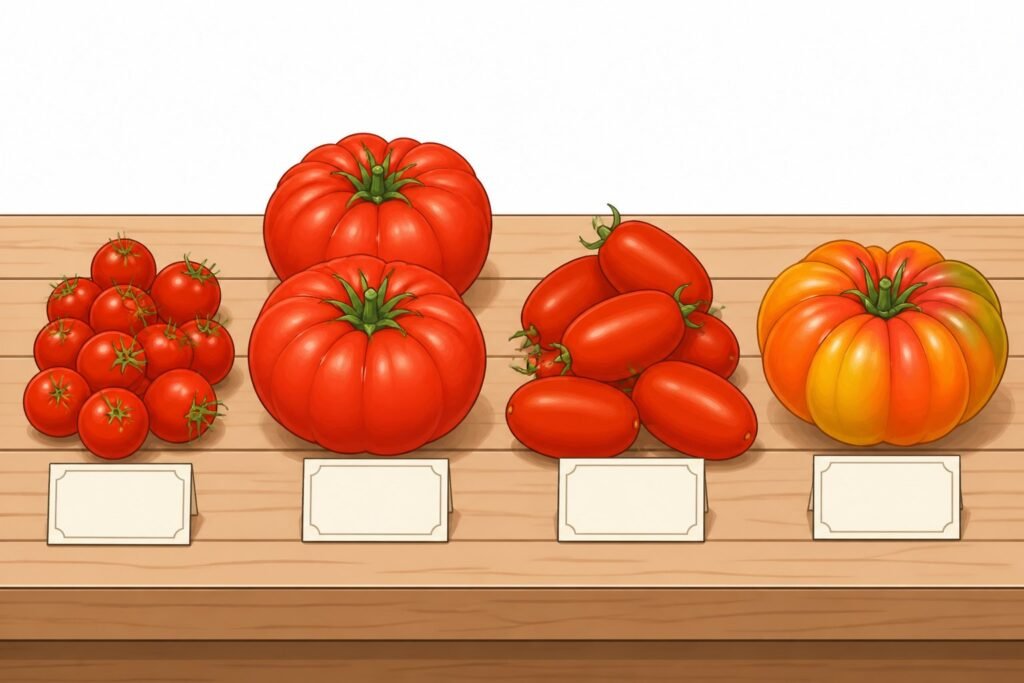
Popular Types Worth Growing
- Cherry tomatoes — Sweet, prolific, and almost impossible to kill. Great for beginners.
- Slicing tomatoes — The big, classic sandwich tomatoes. Beefsteak and Big Boy are crowd favorites.
- Plum tomatoes — Dense, meaty, low moisture. Perfect for sauce and roasting.
- Heirloom tomato varieties — Incredible flavor, wild colors, but more disease-prone. Worth the extra attention.
If you’re new to growing tomatoes, start with cherry tomatoes or a disease-resistant hybrid. You’ll get fruit faster, more of it, and with fewer headaches.
Starting Tomatoes from Seed vs. Buying Transplants
You’ve got two options: start tomatoes from seed yourself, or buy seedlings from a nursery. Both work. The right choice depends on your time, budget, and how much control you want.
Starting Tomatoes from Seed
Starting tomatoes from seed gives you access to a far wider range of varieties — especially heirlooms and specialty types you’ll never find at a garden center. It’s also cheaper at scale.
The catch: tomatoes are long-season plants. You need to start seeds indoors 6–8 weeks before your last expected frost date. Any earlier and your seedlings outgrow their pots and get leggy before you can plant them outside.
Use small pots or seed trays filled with a quality seed-starting mix. Plant tomato seeds about ¼ inch deep, keep them warm (70–80°F is ideal), and they’ll germinate in 5–10 days. Once they sprout, they need bright light — a south-facing window or grow lights work well.
Buying Transplants
If this is your first time, just buy transplants. You skip the early work, and a healthy 6-inch seedling from a good nursery will do just fine. Look for stocky, dark green plants. Avoid anything leggy, yellowing, or already flowering — those have been stressed.
How to Prepare Your Tomato Garden Bed
Tomatoes grow best in loose, well-draining soil that’s rich in organic matter. They’re heavy feeders, so what you put in the ground before planting sets the ceiling for your entire season.
Soil Prep
Start by working compost into the top 12 inches of your garden soil. A 2–4 inch layer of compost dug in before planting makes a real difference. Tomatoes want a soil pH between 6.0 and 6.8. If you’ve never tested your soil, a cheap test kit from any garden center is worth the ten minutes.
Avoid planting tomatoes in the same spot you grew them — or any nightshade family plants like peppers or eggplant — in the past two to three years. Rotating your tomato crop is one of the simplest ways to reduce disease pressure from soil-borne problems like fusarium wilt and blight.
Sunlight Requirements
Tomatoes are sun-loving plants. They need a minimum of 6 hours of direct sun per day to set fruit properly, but 8–10 hours is where they really perform. Low-light spots produce weak, unproductive plants. If your garden gets less than 6 hours, grow them in containers on a sunny patio instead.
How to Plant Tomatoes in the Ground
Timing matters here. Don’t rush it. Tomatoes need soil temperatures above 60°F to thrive. Plants put in the ground too early — when nights are still cold — will just sit there, stunned, and may result in stunted plants that never fully recover.
Wait until 2 weeks after your last frost date to transplant your tomato seedlings outdoors.
Planting Depth
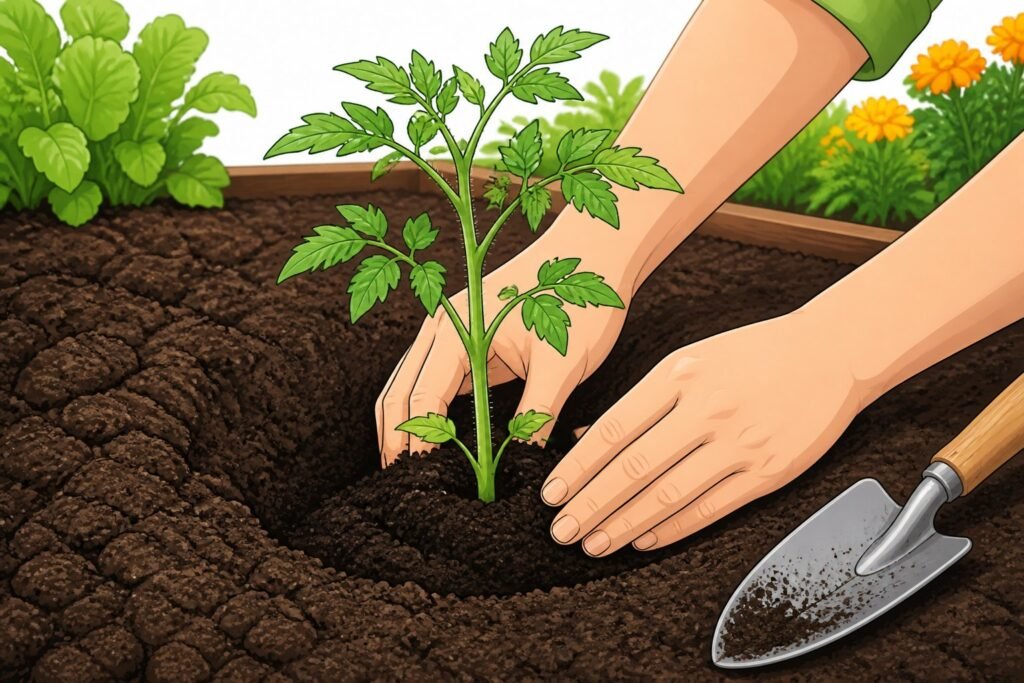
Here’s something most new gardeners skip: bury your tomato transplants deep. Really deep. You can plant your tomato transplants all the way up to the lower leaves, removing any foliage that would end up underground.
Tomato stems buried in soil grow roots along their length, which means a deeper-planted tomato develops a stronger root system and handles drought and heat better. Dig a planting hole 12 inches deep if your seedling allows it, or dig a trench at an angle and lay the stem sideways.
Spacing
Space most full-sized tomato plants 3 feet apart in the row, with rows about 4 feet apart. Cherry tomato plants can go a bit closer — 2 feet apart works. Crowding tomatoes cuts airflow and invites disease. Give them room.
Support Your Tomatoes Early
This is the step most gardeners regret skipping. Trying to set up supports after your tomato plants are already 3 feet tall and sprawling is a nightmare.
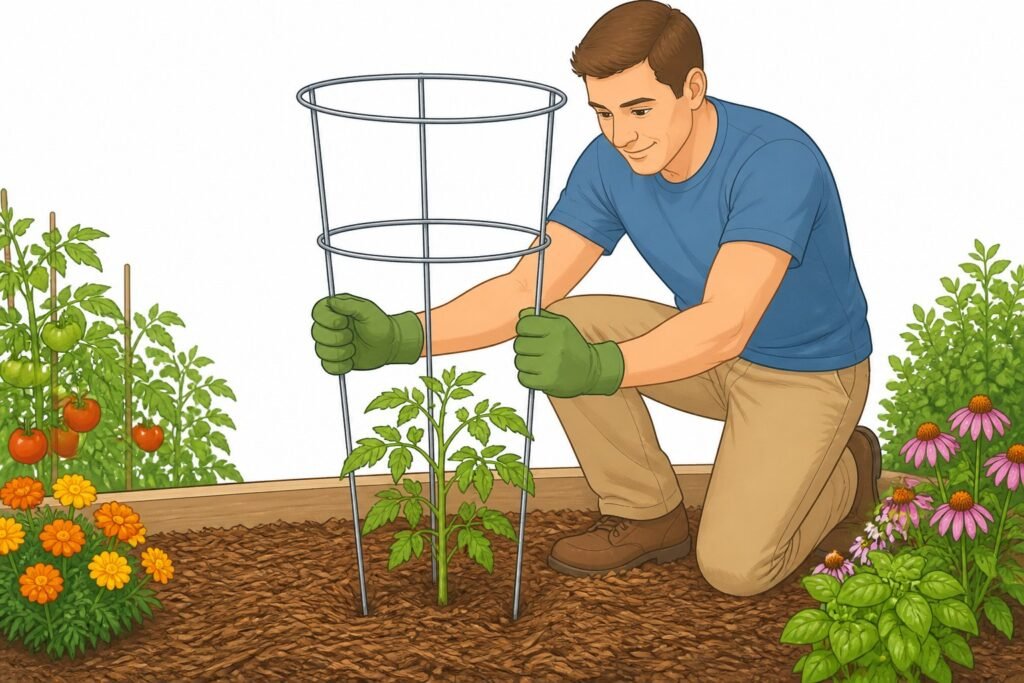
Install support before or immediately after transplanting. Your options are:
- Tomato cage — The classic choice. Works well for determinate varieties and smaller indeterminate types. A tomato cage needs to be large and sturdy; the flimsy wire ones from dollar stores collapse under a full-grown plant. Go for heavy-gauge cages at least 5 feet tall.
- Stake — Drive a 6-foot wooden or metal stake about 6 inches from the plant and tie the main stem to it as it grows. Use soft ties — old pantyhose, plant tape, or strips of cloth. Staking tomatoes this way is simple and effective for indeterminate types.
- Tomato stakes and twine — The Florida weave method strings twine between a row of stakes, supporting the plants on both sides as they grow. Efficient if you’re growing a lot.
Whatever support method you use, get it in the ground while the plant is young. Pushing stakes or tomato stakes in later risks slicing through roots.
How to Water Tomatoes the Right Way
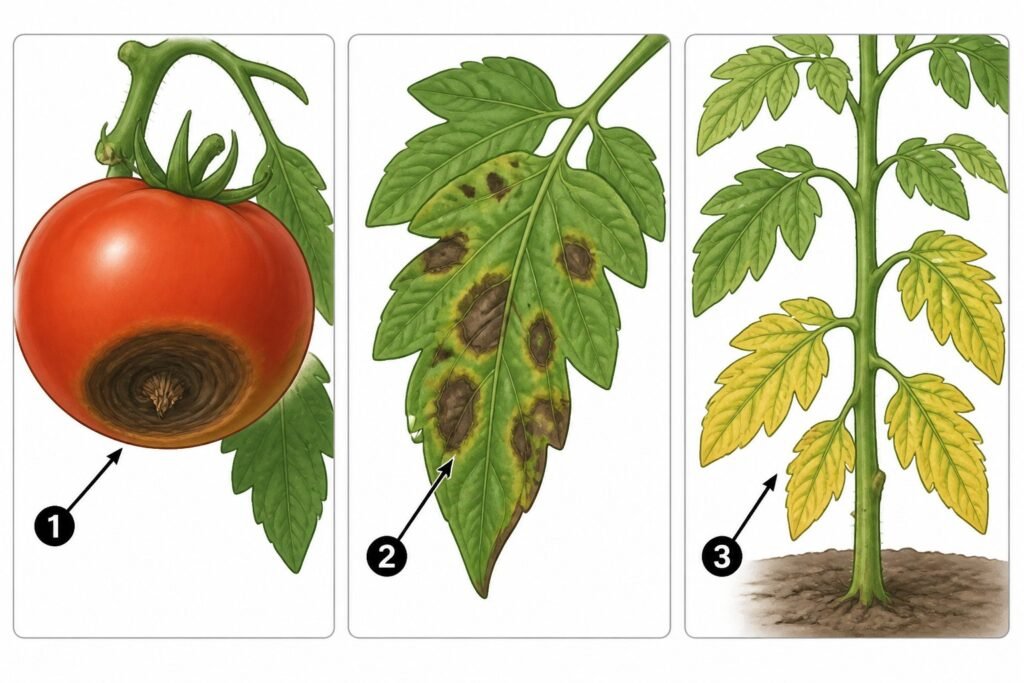
Inconsistent water is responsible for more tomato problems than almost anything else. Blossom end rot — that ugly black sunken patch on the bottom of your tomatoes — is caused by inconsistent watering that disrupts calcium uptake.
Tomatoes need about 1–2 inches of water per week. The key isn’t the amount — it’s the consistency. Deep, infrequent watering beats shallow daily splashing every time.
Watering Best Practices
- Water at the base of the plant, not overhead. Wet tomato foliage is an invitation for blight and other fungal diseases.
- Water deeply: you want moisture to penetrate 6–8 inches into the soil to encourage deep root growth.
- Mulch around the plant with 2–3 inches of straw, wood chips, or shredded leaves. Mulch holds moisture, regulates soil temperature, and keeps fruit off the ground — all good things.
- Once fruit starts forming, keep watering as even as possible. Irregular water causes the tomato fruit to crack as it expands suddenly after a dry spell.
In the heat of summer, your tomatoes may need water every 2–3 days. Check by sticking a finger 2 inches into the soil — if it’s dry at that depth, water.
Feed Your Tomato Plants Throughout the Growing Season
Tomatoes require a lot of nutrients, especially once they start flowering and setting fruit. A consistent fertilizer program through the growing season is what separates decent harvests from great ones.
What Fertilizer to Use
At planting, mix a balanced slow-release fertilizer or a few shovelfuls of compost into the planting hole. This gives the plants a steady foundation.
Once flowering starts, switch to a tomato fertilizer that’s lower in nitrogen and higher in phosphorus and potassium. Too much nitrogen at this stage produces beautiful green leaves but little fruit.
Feed your tomato plants every 2–3 weeks during the growing season. Liquid fertilizers like fish emulsion or tomato-specific liquid feeds work fast. Granular slow-release options are lower maintenance.
Common Tomato Problems and How to Handle Them
Even experienced gardeners deal with tomato problems every season. Knowing what to look for makes the difference between catching something early and losing the whole crop.
Blight
Blight is a fungal disease that shows up as dark, water-soaked spots on tomato leaves, stems, and fruit. Early blight starts on lower leaves and works its way up. Late blight spreads fast and can wipe out a plant in days under wet conditions.
Prevention is your best tool: space plants properly for airflow, water at the base, and remove any infected leaves immediately. Copper-based fungicide sprays can slow its spread. Tomatoes are susceptible to blight especially in wet, humid summers — choosing resistant varieties helps a lot.
Fusarium Wilt
Fusarium wilt is a soil-borne fungal disease that causes tomato plants to wilt and yellow, usually on one side first. There’s no cure once a plant is infected. Remove and dispose of it (don’t compost it), and don’t grow tomatoes in that spot for several years. Look for varieties marked with “F” on the tag — those are resistant.
Blossom End Rot
Dark, leathery spots on the bottom of your tomatoes. This isn’t a disease — it’s a calcium deficiency caused by inconsistent watering. Fix your watering schedule, make sure soil pH is in the right range so calcium is available, and the problem usually resolves in the next round of fruit.
Pests to Watch
- Tomato hornworms — Big green caterpillars that can strip a plant fast. Pick them off by hand or use Bt (Bacillus thuringiensis) spray.
- Tomato fruitworm — Bores into the fruit. Keep an eye on developing tomatoes and pick off any you find.
- Aphids cluster on new growth and can be blasted off with a sharp stream of water or controlled with insecticidal soap.
How to Harvest Tomatoes at Peak Flavor
You’ve done the work — now comes the good part. Knowing when and how to harvest tomatoes is worth paying attention to, because pulling fruit too early or too late both cost you.
When Tomatoes Are Ready
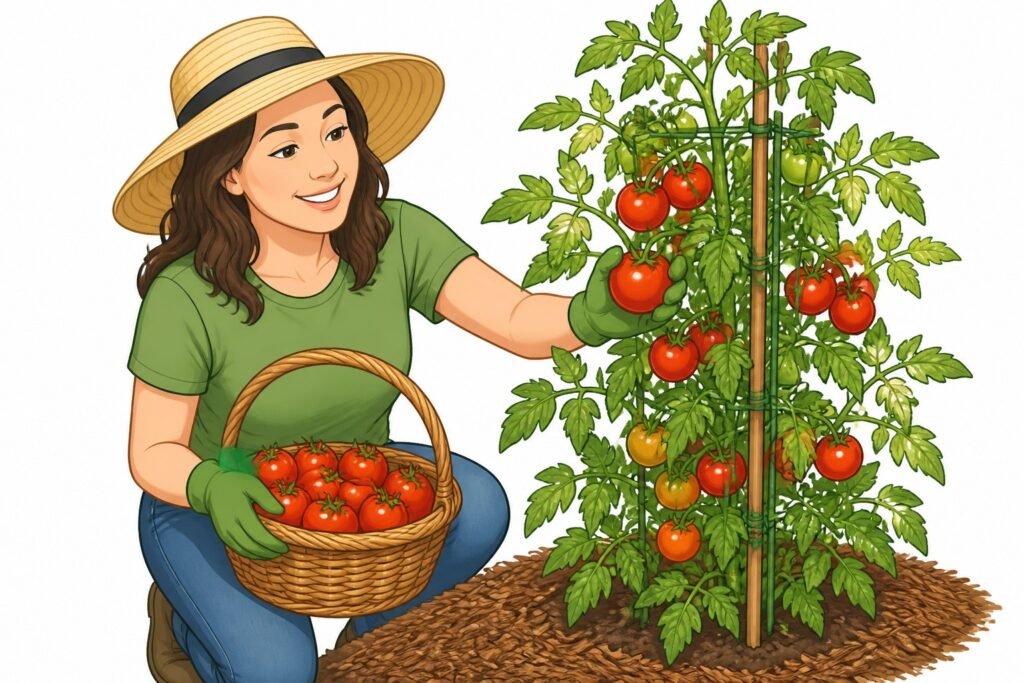
Ripe tomatoes are fully colored (red, orange, yellow, purple — depending on the variety), firm with a slight give when gently squeezed, and pull easily from the vine with a slight twist. The smell is unmistakable.
If you’re watching your tomatoes and a string of rainy days is coming, go ahead and pick any that have started to color. Green tomatoes picked at the “breaker stage” — when they’ve just started to show color — will ripen fine indoors at room temperature. Don’t refrigerate them; cold destroys the texture and kills the flavor.
Don’t Leave Ripe Fruit on the Vine
Once tomatoes ripen, pick them. Leaving ripe tomatoes on the vine too long invites pests, disease, and cracking. A regular harvest every 2–3 days during peak season also signals the plant to keep producing.
A good tomato harvest from a single well-tended plant can run into the tens of pounds over a full season. Indeterminate varieties in particular will keep producing right up until frost.
Growing Tomatoes in Containers
No garden space? No problem. Tomatoes in containers are genuinely productive if you do it right.
Use the biggest pot you can manage — at least 5 gallons for cherry tomatoes, 10–15 gallons for larger varieties. Determinate varieties and compact indeterminate types like Patio or Bush Early Girl do well in containers.
Container-grown tomatoes dry out much faster than plants in the ground, so water more frequently — sometimes daily in hot weather. They also need more fertilizer since nutrients wash out with each watering. Feed every week with a liquid tomato fertilizer.
Place your containers where they’ll get full sun. Even tomatoes in containers can yield impressively if you keep up with water and feed your tomato plants consistently.
The reality is that learning how to grow tomatoes well is a season-by-season process. Your first year you’ll make mistakes — wrong spacing, inconsistent watering, supports installed too late. That’s normal. Every gardener has stories like that.
But here’s what happens: you eat that first sun-warmed tomato from your own home garden, and you’re already planning next year’s crop before summer ends.
Start with good soil, pick a forgiving variety, water consistently, and support your plants early. Everything else you’ll figure out as you go.