Table of Contents
You’ve written the letter, signed it, folded it just right. Then you stare at the blank envelope and realize you’re not totally sure where everything goes. The return address, the recipient’s name, the stamp — do they all go where you think they do? Mail a letter with anything in the wrong place and the postal service may not be able to deliver it. Or worse, it comes back to you — if it comes back at all.
This guide covers everything you need to address an envelope correctly, from the basics of how to address a standard letter to trickier situations like mailing to a married couple, a family, a P.O. box, or sending a wedding invitation.
The Basics of How to Address an Envelope
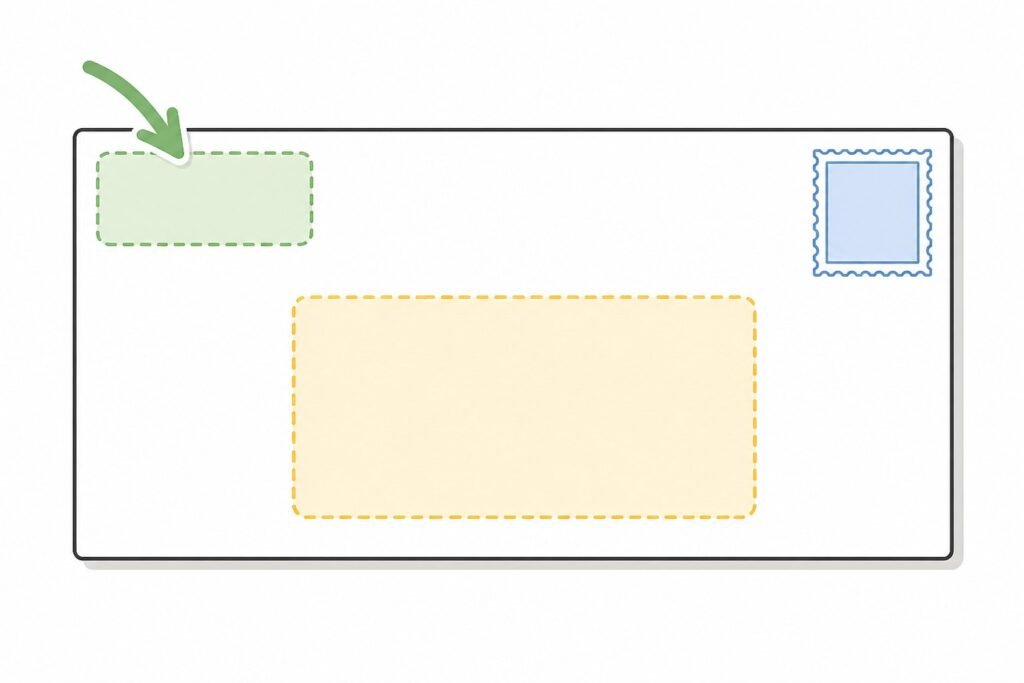
Every envelope you send through the U.S. postal service follows the same general format. Three things need to be on the front: your return address, the recipient’s address, and a postage stamp. Get those three elements in the right spots and USPS can do the rest.
Here’s where each piece goes:
- Return address — top left corner of the envelope
- Recipient address — centered on the envelope (or slightly left of center)
- Stamp — top right corner of the envelope
Simple enough. But the details inside each of those zones matter more than people think.
Writing the Recipient’s Address
The recipient’s address goes in the center of the envelope. Write the recipient’s name on the first line, using their first and last name. The second line is the street address — include an apartment number or unit number if there is one. The third line is the city, state abbreviation, and zip code, all on one line.
It looks like this:
Jane Doe
123 Maple Street, Apt 4B
Austin, TX 78701
If the full address is too long to fit on one line, break the apartment or unit number onto a separate line between the street address and the city/state/zip line.
USPS actually prefers capital letters and no punctuation for machine-readable mail, but standard mixed-case with punctuation works fine for most everyday mailing. The key is that the address is legible and correct.
Writing the Return Address
Your return address goes in the top left corner of the envelope. Use the same format as the recipient address: your name on the first line, street address on the second, city/state/zip on the third.
John Smith
456 Oak Avenue
Portland, OR 97201
The return address tells the postal service where to send the envelope back if it can’t be delivered. It’s your safety net. If you mail something without a return address and it’s undeliverable, it goes to the dead letter office — and you’ll never see it again.
Where the Stamp Goes and How Much Postage You’ll Need
The stamp goes in the top right corner of the envelope. That part most people know. Knowing how much postage you’ll need is where things get less obvious.
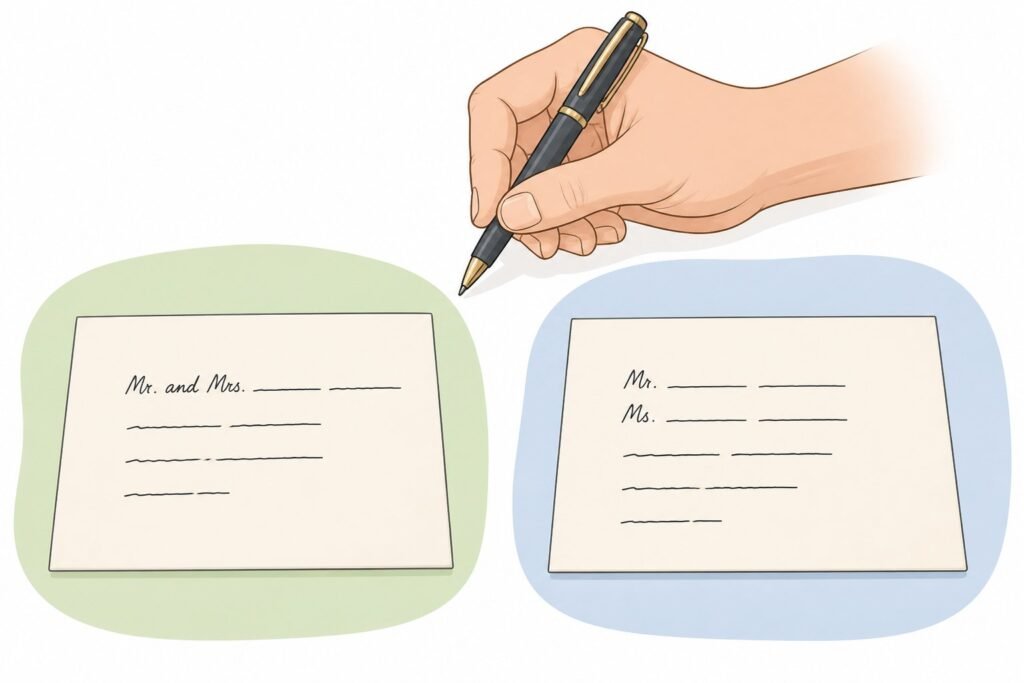
A standard Forever stamp covers a regular first-class letter up to one ounce. As of 2025, that’s 73 cents — but if you’re using Forever stamps, the exact price doesn’t matter; they’re always valid for that first-class rate regardless of when you bought them.
If your envelope is heavier, larger, or square-shaped (like many greeting card envelopes), you’ll need additional postage. Square envelopes require a non-machineable surcharge because they can’t go through USPS sorting machines. When in doubt, take the envelope to the post office and have them weigh it before you send it.
For anything internationally mailed, postage rates are higher and vary by destination country. A trip to the post office or a quick check on the USPS website will tell you exactly what you need.
How to Address an Envelope to a Family
Addressing an envelope to a family is one of those things that seems simple but has a few ways to go about it. The most common formats:
Option 1 — Use “The [Last Name] Family”
The Johnson Family
789 Birch Lane
Denver, CO 80203
Option 2 — Address the parents and imply the kids
Mark and Lisa Johnson
789 Birch Lane
Denver, CO 80203
Option 3 — List everyone individually (for formal occasions)
The Johnson Family
Mark, Lisa, Emma, and Noah
789 Birch Lane
Denver, CO 80203
For casual mail, option one or two works perfectly. For a formal event — a wedding invitation where you’re explicitly inviting the whole family, kids included — list them out.
How to Properly Address an Envelope to a Married Couple
Married couple addressing trips people up because there are several socially acceptable formats depending on the situation and personal preference.
Couple With the Same Last Name
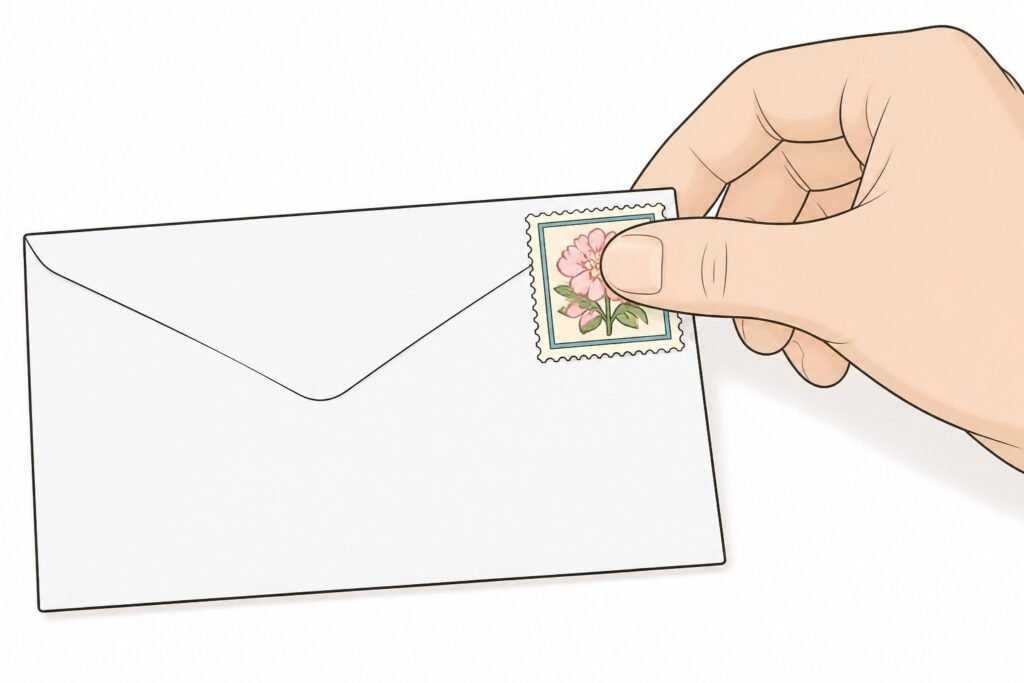
This one is easy. You can either write both first names or use “Mr. and Mrs.” followed by the shared last name:
Mr. and Mrs. David Chenor
David and Sarah ChenBoth are correct. The second is warmer and more modern.
Couple With Different Last Names
List both full names — either on one line if they fit, or on separate lines:
Sarah Okafor and David Chenor
Sarah Okafor
David Chen
Don’t hyphenate names that aren’t actually hyphenated. And if one or both partners have a professional title — Dr., for example — use it.
Dr. Sarah Okafor and David ChenUsing Honorifics
An honorific is a title like Mr., Mrs., Ms., Dr., or Prof. For formal mailing, use the appropriate honorific before the recipient’s name. For casual mail, first and last name without a title is perfectly fine.
If you don’t know someone’s preferred title or gender, use their full name with no honorific. That’s always appropriate and never wrong.
How to Address an Envelope to a P.O. Box
Addressing an envelope to a P.O. box follows the same format as a regular address — you just replace the street address line with the box number.
Jane Doe
P.O. Box 1042
Chicago, IL 60601
Write “P.O. Box” followed by the box number on the second line where the street address or P.O. would normally go. Don’t write the physical post office address — just the P.O. box number and the city/state/zip associated with that post office location.
International Envelope Addressing: What Changes
Sending mail internationally adds one more line to the standard address format: the country name. Write it on the last line, in full, in capital letters.
Marie Dupont
15 Rue de Rivoli
75001 Paris
FRANCE
The format of the address itself may differ depending on the destination country — some countries put the postal code before the city, others after. Look up the correct address format for the specific country you’re mailing to. The USPS website has country-specific guides, or you can check with the recipient directly.
Also important: international mail requires different postage than domestic mail. A Forever stamp won’t cut it. You’ll need to go to the post office or buy international postage online.
Special Situations: Military Mail, Wedding Invitations, and Sending Without a Return Address
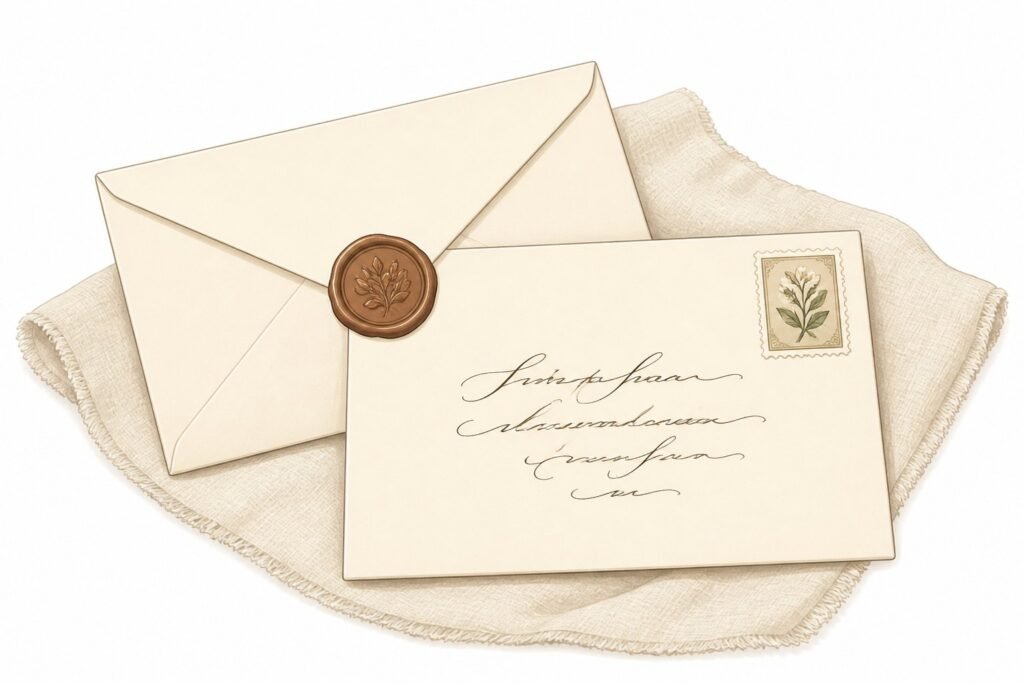
Wedding Invitation Envelope Etiquette
Wedding invitation addressing has its own set of rules — it’s one of the few contexts where envelope etiquette really gets scrutinized.
- Write out words in full: “Street” not “St.”, “Apartment” not “Apt.”
- Spell out numbers when possible: “Twelve Oak Street” instead of “12 Oak Street”
- Use formal names — avoid nicknames
- For a couple, address both partners on the outer envelope; the inner envelope can be more casual
Traditional etiquette still uses “Mr. and Mrs. [Husband’s Full Name]” for married couples, but many people today prefer both partners named individually. Go with what feels right for your relationship with the guests.
Mailing to Military Addresses
Military mailing uses special address formats. Instead of a city, you’ll use designations like APO (Army Post Office), FPO (Fleet Post Office), or DPO (Diplomatic Post Office). These replace the city in the address, and the “state” field uses a military code.
Sgt. Michael Torres
Unit 12345 Box 6789
APO AE 09001
Domestic postage rates apply to military mail sent through USPS, even if the service member is overseas.
Sending Without a Return Address
You can technically mail an envelope without a return address — it’s not required by USPS. But if the envelope can’t be delivered for any reason, it won’t come back to you. For anything important, always include a return address. For anonymous mail, understand the risk: if it’s undeliverable, it’s gone.
A Quick Checklist Before You Drop It in the Mailbox
Before sealing and sending, run through this:
- Recipient’s name — spelled correctly, on the first line of the center address
- Street address — correct house number, street name, and apartment or unit number if needed
- City, state, zip code — on one line, with the correct zip code (double-check this one)
- Return address — your full name and address in the top left corner
- Postage — stamp in the top right corner, right amount for the weight and size
- Legibility — everything written or printed clearly enough for postal machines and humans to read
[IMAGE #5] Caption: A final check before dropping an envelope into a mailbox — confirm address, stamp, and return address. Generation prompt: “WikiHow-style illustration, clean line art with soft color fills, friendly instructional style, flat illustration with minimal shading, white background, no text in image, showing a person holding an addressed envelope up and examining it carefully with a slight smile, they are standing near a blue USPS-style mailbox on a sidewalk, the envelope is held up with both hands, checklist visual feel, bright daytime outdoor setting, friendly and confident body language.”
That’s all it takes. Addressing envelopes isn’t complicated once you know the format — it’s just a matter of putting the right information in the right place, every time. Whether you’re sending a bill, a birthday card, or a formal invitation, get those basics right and your mail will get where it’s going.