Table of Contents
Your oil light just flickered on. Or maybe it’s been three months since your last oil change and you can’t remember if you topped it off. Either way, you’re in the right place.
Checking your oil takes about two minutes. You don’t need a mechanic, a lift, or any special tools. All you need is a clean rag or paper towel and the ability to open the hood. Yet most drivers go months — sometimes years — without doing it, which is how small oil problems quietly turn into expensive engine repairs.
Here’s exactly how to check your oil, what you’re looking for, and what to do if something seems off.
Why You Should Check Your Oil Regularly
Engine oil is what keeps your engine’s internal parts from grinding against each other. Without enough of it — or with oil that’s broken down — metal meets metal, and that’s a repair bill you don’t want.
Modern vehicles are better than older ones at managing oil consumption, but no car is perfect. Engines can burn oil slowly without showing any obvious symptoms. Some cars go through half a quart between oil changes. Others barely drop at all. The only way to know where yours stands is to check it yourself.
Most manufacturers recommend checking your oil every month or at every other fill-up. It takes two minutes. Make it a habit.
What You’ll Need Before You Start
Nothing complicated here:
- A clean rag or paper towel
- Your car’s owner’s manual (optional, but helpful if you need to add oil)
- The correct motor oil for your make and model
That’s it. No tools, no equipment, no mechanic required.
Step 1: Park Your Car on Level Ground and Let the Engine Cool
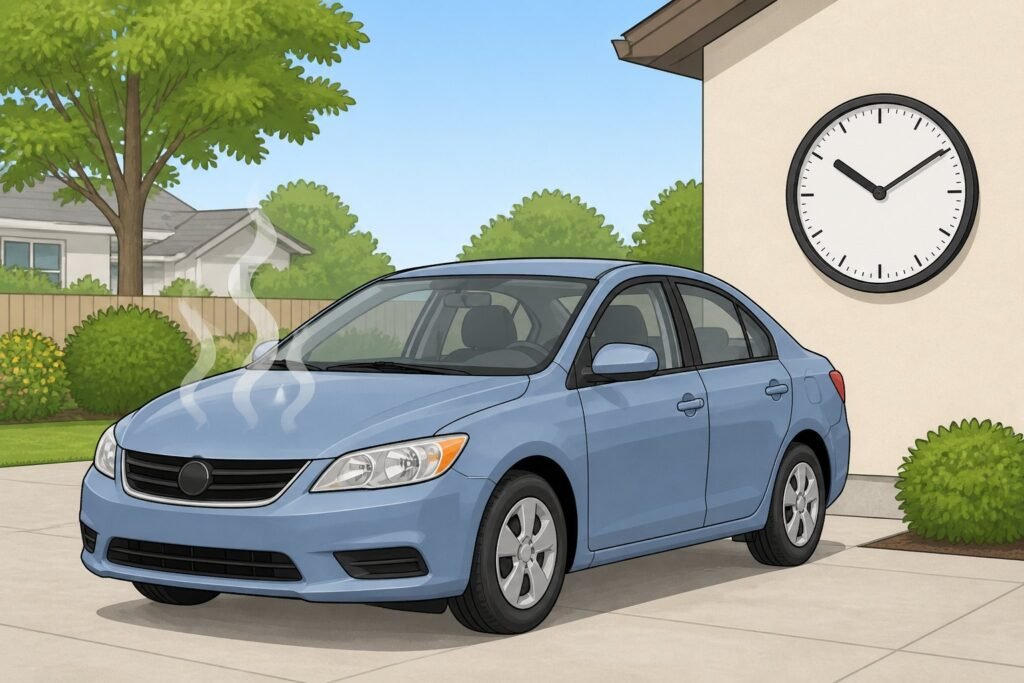
Before you do anything, park your car on level ground. If the car is tilted even slightly, the oil reading will be off and you won’t get an accurate reading. A flat driveway or parking lot works perfectly.
Turn off the engine and wait at least 5–10 minutes. Checking your oil when the engine is warm is fine, but checking it while the engine is running gives you a false reading — oil is circulating through the system, so less of it is sitting in the oil pan. For the most accurate reading, check it after the engine has had a few minutes to settle.
If the engine is cold (first start of the day), that works too. Just know the reading may look slightly different than when the engine is warm.
Step 2: Open the Hood and Locate the Dipstick
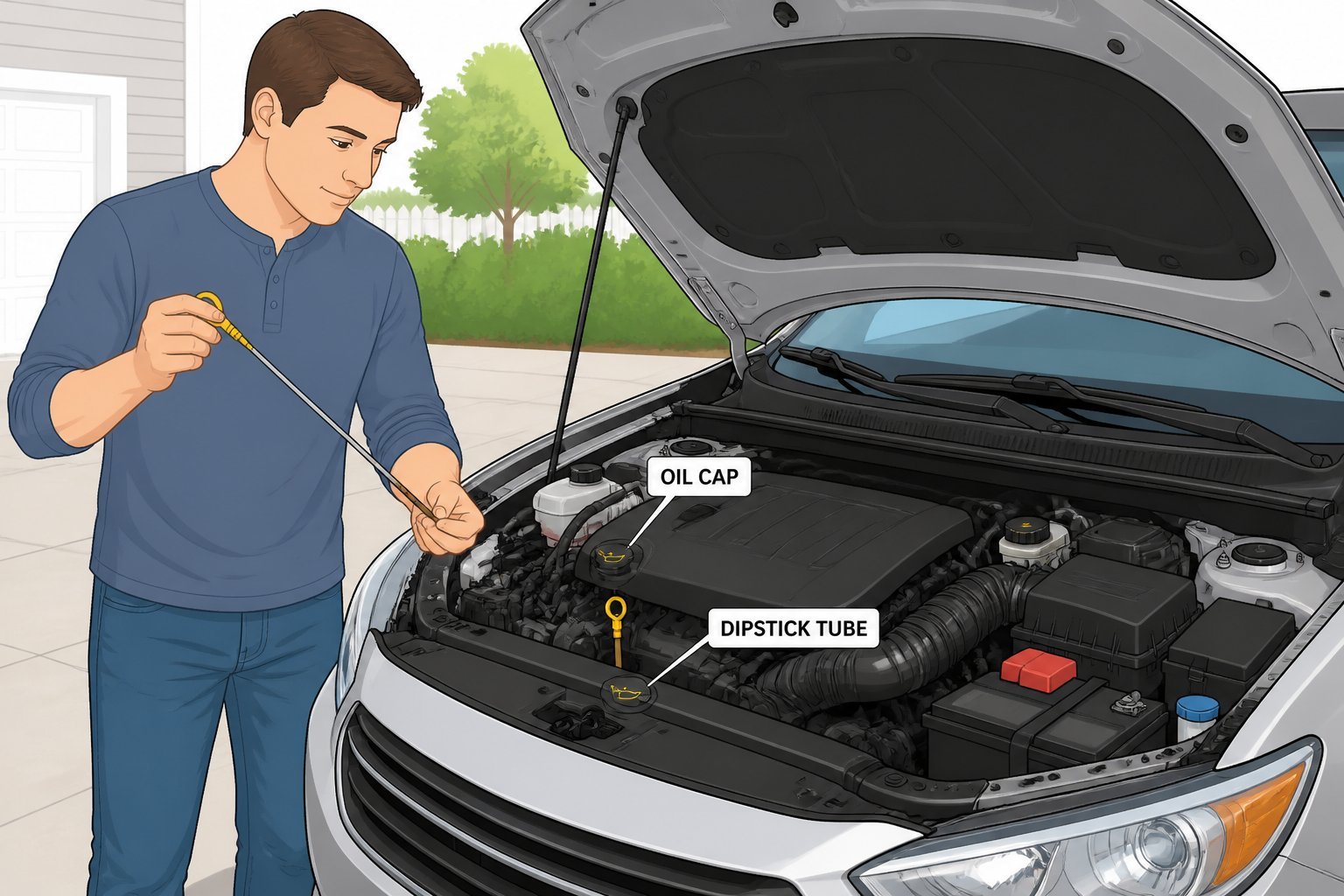
Pop the hood using the release lever usually found under the dashboard on the driver’s side. Then find and release the safety latch at the front of the hood.
Now look for the dipstick. On most cars, it has a brightly colored handle — usually yellow or orange — that sticks up from the engine. It’s designed to be easy to spot. Look for it near the front or side of the engine block.
Can’t find it? Check your owner’s manual. Every make and model is a little different, and the manual will show you exactly where to locate the dipstick.
What Is the Dipstick?
The oil dipstick is a long, thin metal rod that reaches down into the oil pan at the bottom of your engine. The oil in the engine coats the tip of the dipstick when you pull it out, letting you see how much oil is in the engine and what condition it’s in.
Step 3: Pull the Dipstick and Wipe It Clean
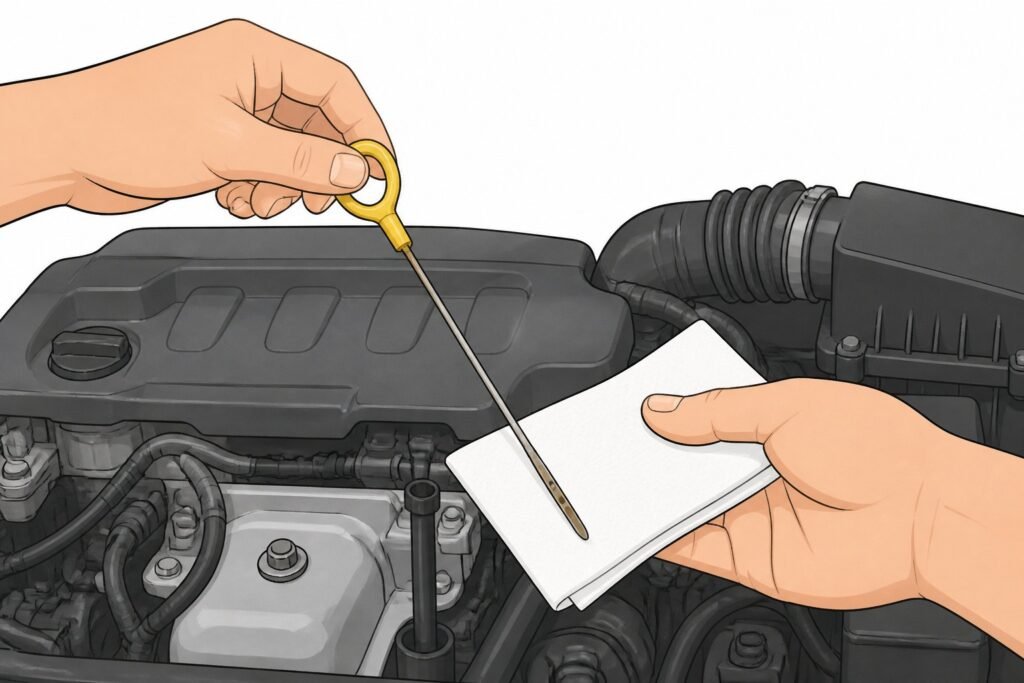
Grip the handle and pull the dipstick all the way out. It’ll slide out easily.
Wipe the dipstick completely clean using your rag or paper towel. Don’t try to read it yet — the oil on the dipstick right now splashed around while you were driving and won’t give you an accurate reading.
Once it’s clean, push the dipstick back into its tube all the way. Make sure it’s fully seated before you pull it again.
Step 4: Read the Dipstick
Now pull the dipstick out again — slowly this time — and hold it flat or tilted slightly downward.
Look at the end of the dipstick. You’ll see two marks: a minimum line and a maximum line. Sometimes these are labeled MIN and MAX. Other dipsticks use dots, lines, or a crosshatched area. The oil should reach somewhere between those two marks.
What a Good Oil Level Looks Like
The oil on the dipstick should reach somewhere between the two marks — ideally closer to the max line. That’s your target zone. If it’s sitting right in the middle, you’re fine. If it’s close to the min line or below it, you need to add oil.
Also check what the oil looks like:
- Amber or light brown: Healthy, clean oil
- Dark brown or black: The oil is dirty and you’re likely overdue for an oil change
- Milky or foamy: This is a red flag. It can indicate coolant mixing with the oil — get to a mechanic
What If There’s No Oil Showing on the Dipstick?
If there’s no oil on the dipstick at all — or the end of the dipstick is completely dry — your oil level is critically low. Don’t drive the car until you add oil. Running an engine with no oil will cause serious, often irreparable damage.
Step 5: Put the Dipstick Back and Close the Hood
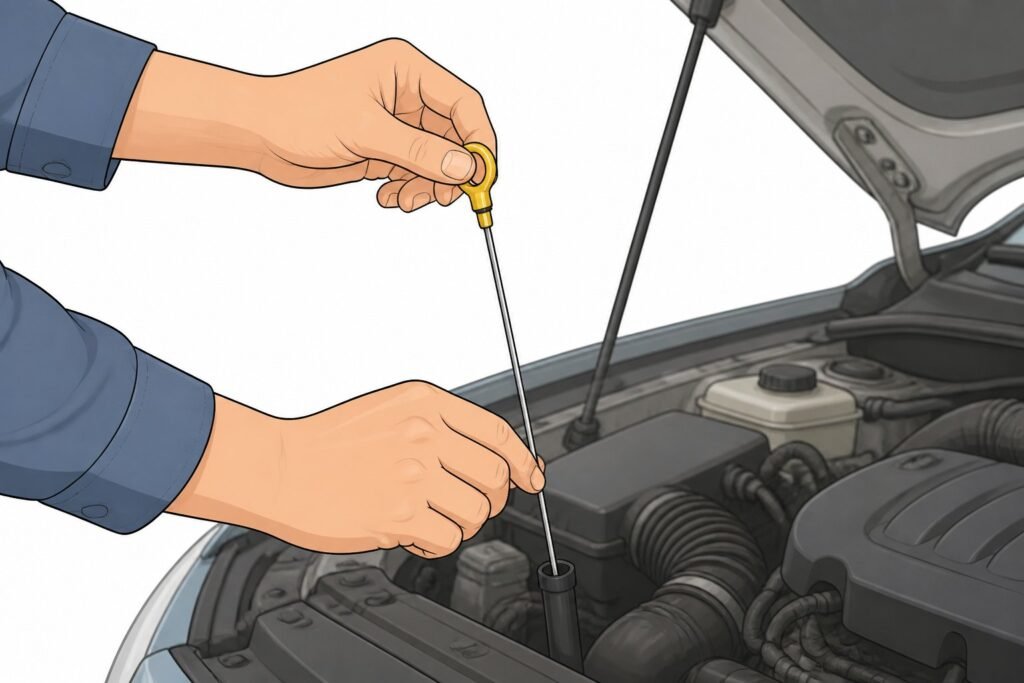
Once you’ve read the dipstick, put it back into its tube. Push it all the way in until it clicks or seats fully. If you don’t return it to its tube properly, you risk oil spray inside the engine bay the next time the engine runs.
Close the hood securely. Give it a firm push until it latches.
What to Do If Your Oil Is Low
If the oil level is below the minimum mark or close to it, you need to add oil before driving.
How to Add Oil
- Find the oil filler cap on top of the engine — it usually shows an oil can symbol
- Unscrew the cap and set it somewhere clean
- Pour in about half a quart of oil using a funnel
- Wait a minute, then check the dipstick again
- Repeat until the oil level is in the safe zone between the marks
Add oil slowly. It’s easy to overfill, and an oil level that’s too high can cause its own problems — excess pressure, foaming, and potential damage to seals.
What Type of Oil Should You Use?
Check your owner’s manual. It will list the recommended oil viscosity — something like 5W-30 or 0W-20. Using the correct oil matters. Synthetic oil is what most modern vehicles require, but some older engines still run on conventional.
If you’re in a pinch and need to add oil immediately, use whatever is specified. Don’t mix oil types if you can avoid it.
What If the Oil Level Is Too High?
Too much oil is also a problem. An oil level that’s too high can cause the crankshaft to whip the oil into foam, which doesn’t lubricate properly. It can also put excess pressure on seals and gaskets.
If your oil level is clearly above the max line on the dipstick — not just slightly over, but noticeably past it — you’ll want to drain a small amount. A mechanic can do this quickly, or you can use a hand pump to remove oil through the dipstick tube.
A little over the max isn’t usually an emergency, but consistently running with too much oil can shorten engine life.
When It’s Time for an Oil Change (Not Just a Top-Off)
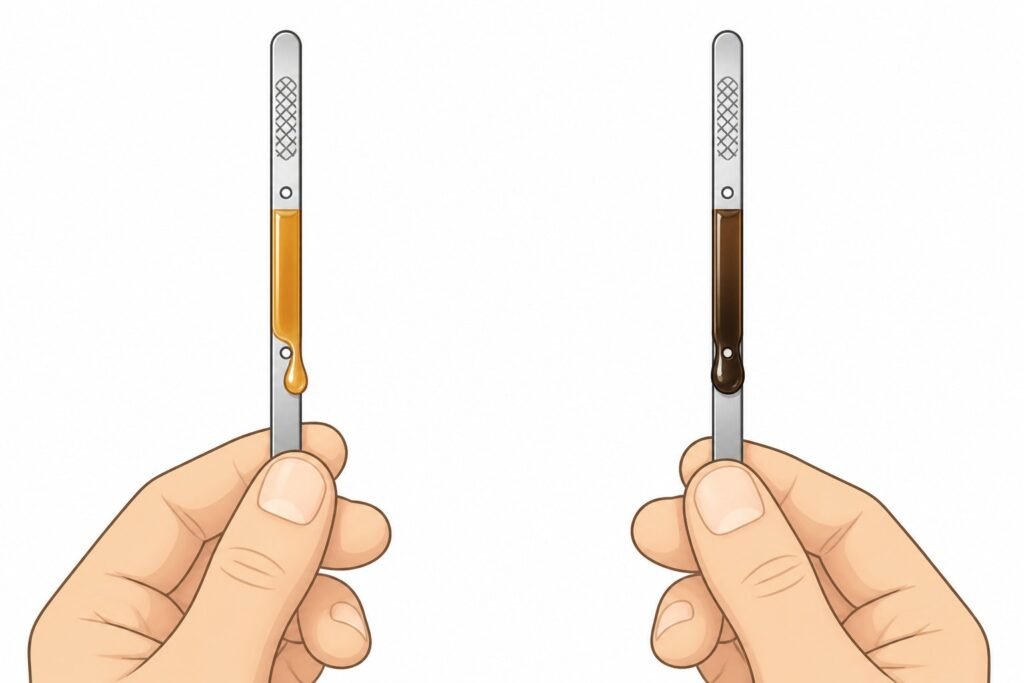
Topping off your oil when it’s low is not the same as doing an oil change. Adding a quart of oil doesn’t clean out the old, degraded oil already in the engine — it just dilutes it slightly.
Here’s when you need a full oil change rather than just adding oil:
- The oil is very dark or black on the dipstick
- You’ve hit the mileage interval recommended by your manufacturer (often every 5,000–7,500 miles for synthetic oil)
- The oil looks or smells burnt
- You’re consistently losing oil between checks, which could signal a leak or an engine burning oil
If the oil is low and looks dirty, don’t just add oil — schedule an oil change soon.
Quick Tips for a More Accurate Reading
A few things that can throw off your dipstick reading:
- Checking on a slope: Always check your oil on level ground. Even a gentle incline affects where the oil settles in the oil pan.
- Checking right after you turn the car off: Wait a few minutes so the oil drains back down from the engine.
- Not seating the dipstick fully: If the dipstick isn’t all the way in, you’ll get a false reading when you pull it out again.
- Checking while the engine is running: Never check your oil level manually with the engine running. The oil is actively circulating, and the dipstick reading won’t reflect what’s actually in the pan.
Some vehicles have digital oil level indicators on the dashboard — but these aren’t a substitute for pulling the dipstick. They can lag or malfunction, and nothing beats a direct check.
How Often Should You Check Your Oil?
Once a month is a solid habit for most drivers. If your car is older, uses synthetic oil, or tends to run low between changes, check it more often.
Make it part of your fill-up routine. Pull into the gas station, start pumping gas, open the hood, pull the dipstick. By the time you’re done reading it, the pump is probably still running.
This two-minute oil check can save you from a multi-thousand-dollar engine repair. Your engine needs clean oil at the right level to protect your engine and keep it running well. Don’t skip it.
Check your oil today — before you forget. And if it’s been more than 5,000 miles since your last oil change, book one this week.