Table of Contents
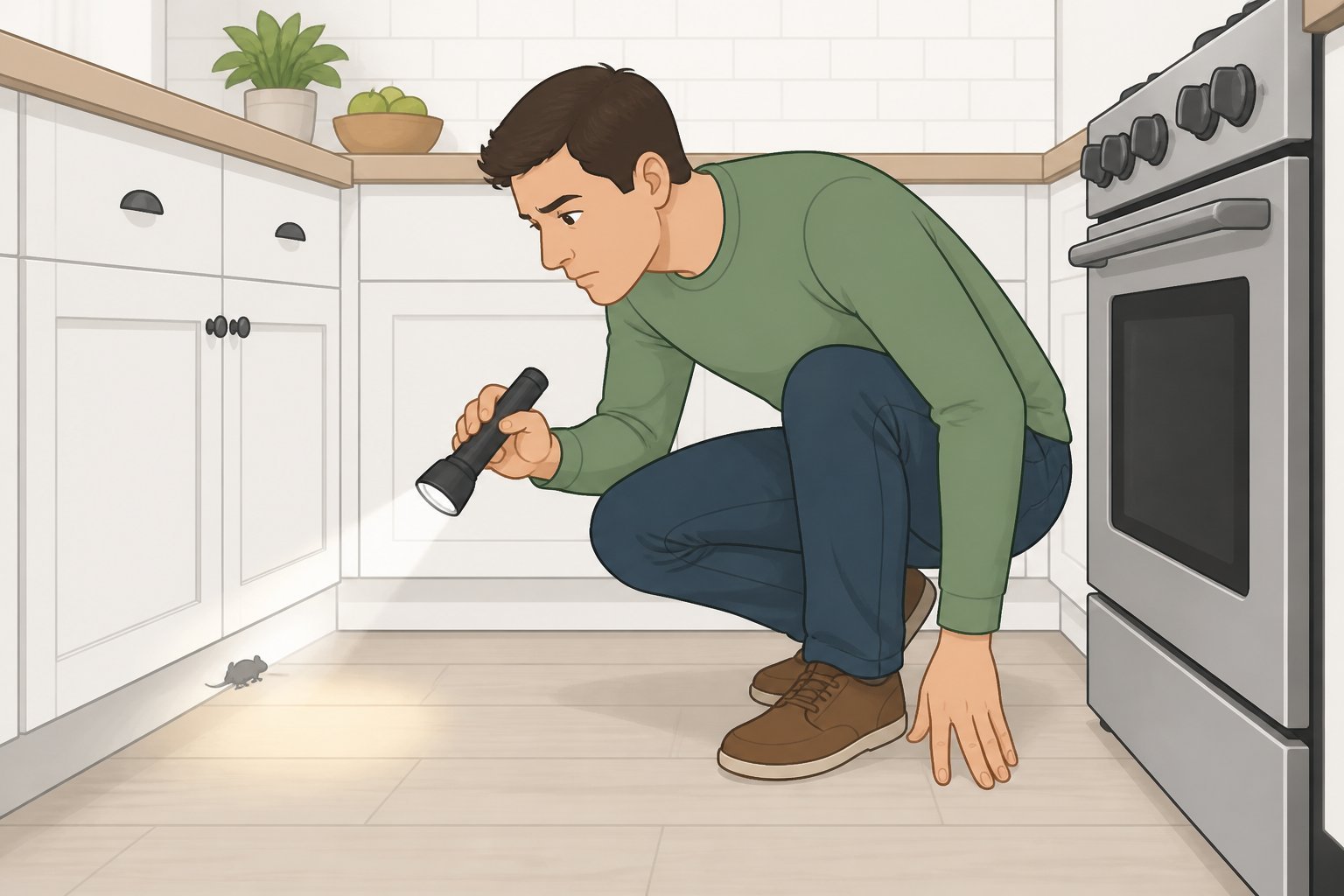
You wake up, walk into the kitchen, and spot it — a small dark dropping near the back of the cupboard. Or maybe you hear scratching behind the wall at 2 a.m. Either way, you’ve got a mouse problem, and “hoping it goes away” is not a plan.
Mice are small, fast, and stubborn. A single house mouse can squeeze through a hole the size of a dime, reproduce at alarming speed, and contaminate everything they touch. The good news? Knowing how to get rid of mice is straightforward once you understand what actually works — and why some popular methods fall flat. This guide covers everything: traps, natural deterrents, sealing entry points, and how to make sure they don’t come back.
Why Mice in Your House Are a Serious Problem
Before you decide to just set one trap and call it done, it helps to understand what you’re actually dealing with.
Mice in the home aren’t just a nuisance — they spread disease through their urine and feces. Deer mice, in particular, are associated with hantavirus. House mice can carry salmonella, listeria, and other pathogens that contaminate food prep surfaces and stored food. Their urine and droppings leave behind invisible contamination that’s genuinely dangerous, especially in kitchens.
The health risks don’t stop there. Mouse urine and dander trigger allergies and asthma, particularly in children. And because mice are nocturnal and cautious, if you’re seeing one during the day, there’s a good chance you have more than one.
One more thing: mice and rats chew through wiring. That’s not a hypothetical — rodent-gnawed wires are a documented cause of house fires. A mouse infestation left unchecked is an expensive problem.
How to Identify a Mouse Infestation
You need to know what you’re dealing with before you start placing traps.
Signs to Look For
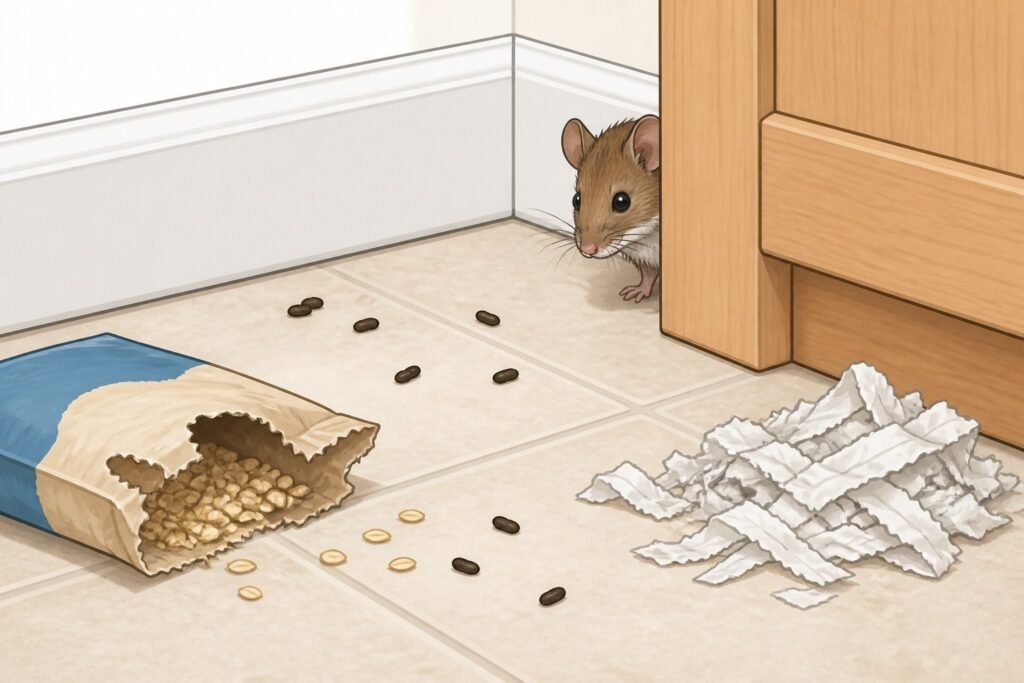
- Droppings: Small, dark, pellet-shaped droppings (about 3–6mm) near food sources, along walls, and inside cupboards
- Gnaw marks: Fresh chew marks on food packaging, wood, or wiring look light-colored; older marks darken with time
- Nests: Mice build nests from shredded paper, fabric, and insulation — look behind appliances and in storage boxes
- Urine trails: Mouse urine glows under UV light; you may notice a musky smell in enclosed spaces
- Tracks: Dusty areas along walls may show tiny footprints or tail drag marks
Mouse activity tends to cluster along walls and behind large appliances. Mice travel the same routes repeatedly, which is actually useful information when you start placing traps.
The Best Ways to Get Rid of Mice Fast
There’s no single magic fix for mice in your house. The best approach combines active removal (traps) with prevention (sealing gaps, removing food). Here’s what works.
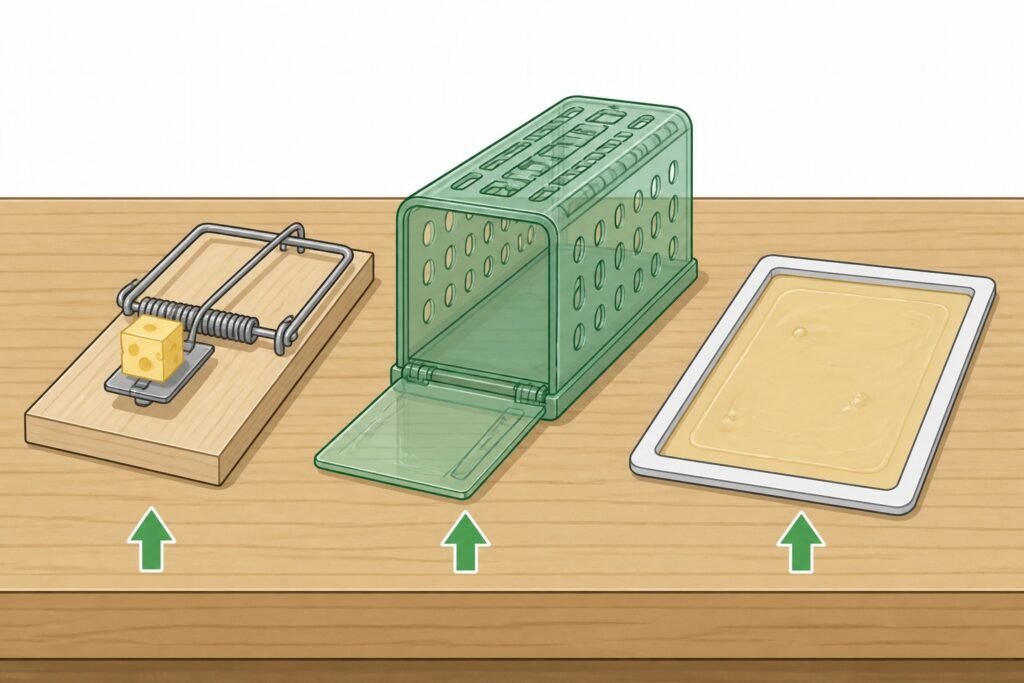
Snap Traps
Snap traps are still the most effective and widely recommended method. They’re cheap, reusable, and kill quickly — which matters if you care about minimizing suffering.
Place snap traps perpendicular to walls, with the bait side facing the baseboard. Mice travel along edges, not through open space. The best bait isn’t cheese (that’s a myth) — peanut butter, Nutella, or a small piece of chocolate works better because it’s sticky and aromatic.
You’ll need more traps than you think. For a typical infestation, set 6–12 snap traps throughout the affected area. Check and reset them daily.
Glue Traps
Glue traps catch mice but don’t kill them, which creates a problem — you still have to deal with a live, panicking mouse. They’re also ineffective in dusty or wet environments where the adhesive stops working. Most pest control specialists advise against them as a primary method.
Live Traps
Live traps catch mice humanely without killing them. The catch: you need to release any mice you catch at least a mile away from your home, or they’ll find their way back. Mice have strong homing instincts. If you want to deal with mice humanely, live traps work — just commit to the release step.
Bait Stations
Bait stations contain rodenticide in a tamper-resistant container. They’re highly effective for larger infestations, but come with tradeoffs: a mouse that eats rodenticide may die in your walls, which creates an odor problem. They’re also a serious hazard around pets and children. Use them strategically, not as a first resort.
How to Get Rid of Mice Naturally
If you’d rather not use poison or traditional traps — or you want to supplement them — there are natural methods that genuinely deter mice.
Peppermint Oil
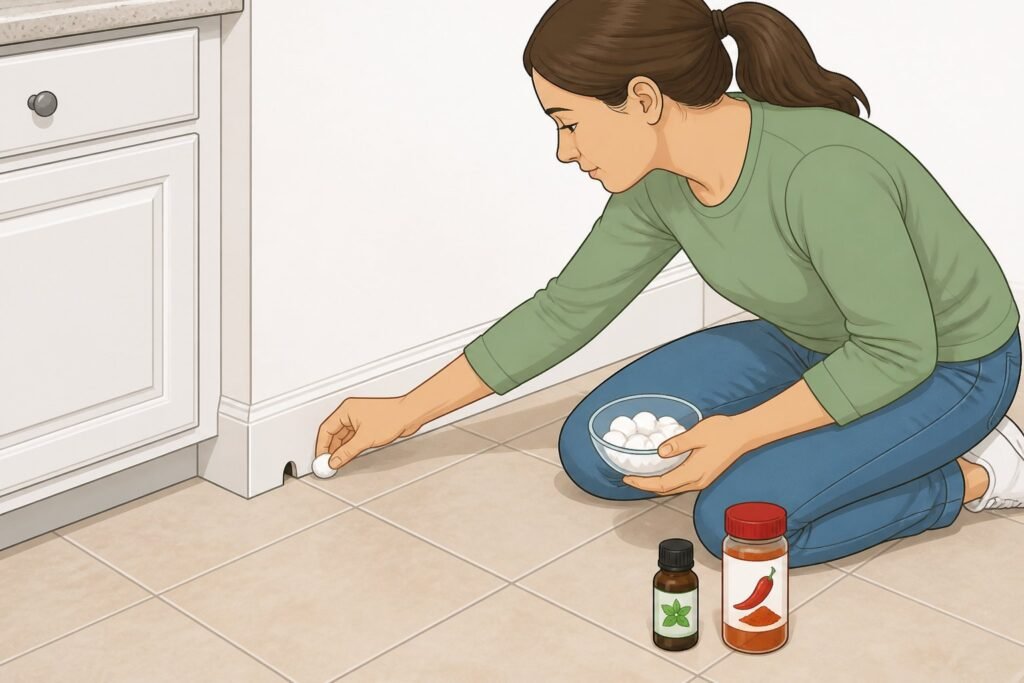
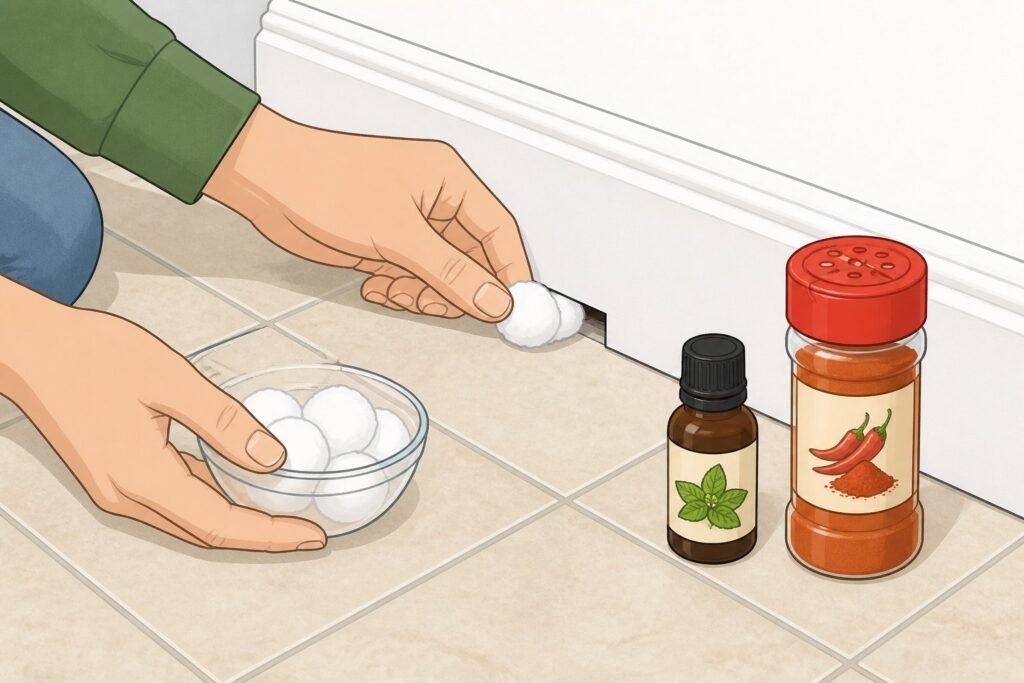
Mice dislike strong menthol scents. Soak cotton balls in peppermint oil and place them in areas where mice have been active — behind appliances, in cupboard corners, and near entry points. You’ll need to replace them every few days as the scent fades.
It won’t eliminate an active infestation on its own, but it’s a solid deterrent and a good preventative tool once the mice are gone.
Clove Oil
Clove oil works similarly to peppermint oil. Mice do not like the sharp, spicy scent. Use it the same way — soak cotton balls and place them in problem areas.
Cayenne Pepper
Sprinkling cayenne along baseboards and around entry points can deter mice. Like the essential oils, this is more of a preventative measure than a cure for an existing infestation.
Consider Getting a Cat
This one sounds obvious, but it works. A cat’s scent alone — even without active hunting — can keep mice from entering an area. Mice can smell predator urine and will avoid those zones. If you have the lifestyle for a cat, it’s a genuinely effective long-term solution.
How to Find and Seal Entry Points
Trapping mice without sealing entry points is a losing game. You’ll catch some, but more will replace them. Mice can squeeze through a gap as small as a dime — that’s about 6–7mm. If you can fit a pencil through a hole, a mouse can get through it.
Where to Inspect
- Foundation gaps: Look for cracks and gaps around pipes or at the back of cabinets where utility lines enter
- Door gaps: Gaps around entry points at the bottom of exterior doors are one of the most common ways mice come in
- Utility penetrations: Gaps around pipes, cables, and conduit where they pass through walls
- Vents: Unscreened or damaged crawl space and dryer vents
- Garage doors: The rubber seal at the bottom deteriorates over time and leaves gaps
How to Seal Them
- Steel wool: Pack steel wool tightly into gaps — mice can’t chew through it
- Caulk: Use caulk to seal smaller cracks around windows, doors, and foundation lines
- Hardware cloth: Use 1/4-inch hardware cloth to cover larger openings like vents
- Weather stripping: Replace worn weather stripping on exterior doors
Don’t use foam spray alone for mouse-proofing. Mice chew through it easily.
How to Remove Food and Nesting Sources
Mice love three things: food, warmth, and shelter. Cut off access to any of these and you make your home far less attractive.
Food Storage
Store all dry goods — grains, cereals, pet food — in airtight containers. Cardboard and thin plastic don’t stop mice. Glass and hard plastic do. Don’t leave pet food out overnight.
Wipe down counters nightly. Even crumbs matter. Mice are small and don’t need much to sustain themselves.
Outdoor Attractants
Keep firewood stacked away from the house — it’s a favorite nesting spot. Pick up fallen fruit from trees in your yard. Keep garbage cans sealed and away from the house. Bird feeders are a significant attractant — if you have a serious rodent problem, consider moving feeders far from your home or taking them down temporarily.
Declutter Storage Areas
Mice nest in undisturbed piles of stuff. Cardboard boxes in garages, basements, and attics are ideal nesting material. Switch to sealed plastic bins. Keep areas where mice are small enough to hide well organized and regularly disturbed.
Prevent Future Infestations
Getting rid of mice once is satisfying. Making sure they don’t come back is the real goal.
Rodent Repellent Maintenance
After you’ve removed mice, continue using natural rodent repellent methods — peppermint oil near entry points, cayenne in vulnerable corners. Refresh them regularly.
Regular Inspections
Do a walk-around of your home’s exterior every few months. Look for new cracks, gaps, and damage. Catching a potential entry point early is far easier than dealing with an infestation later.
Pest Control for Persistent Problems
If you’ve done everything right — sealed gaps, removed food sources, set traps — and you’re still seeing signs of mouse activity, it’s time to call a pest control specialist. A professional can identify entry points you missed, assess the scale of the infestation, and implement methods of getting rid of mice that aren’t practical to do yourself.
There’s no shame in calling in help. A serious mouse infestation in walls or crawlspaces often requires professional rodent removal to fully resolve.
When to Call a Pest Control Specialist
Most minor mouse problems — one or two mice in the kitchen — can be handled with snap traps and gap sealing. But some situations call for professional pest control:
- You’re catching mice consistently for more than two weeks with no sign of reduction
- You hear extensive activity in walls or ceiling spaces
- You find multiple nests in different areas of your home
- You’re seeing droppings in multiple rooms simultaneously
- You have pets or small children and need safer removal methods
A pest control specialist will also be able to identify whether you’re dealing with house mice, deer mice, or rats — which matters for choosing the right approach and understanding the health risks involved.
Knowing how to get rid of mice is one thing. Actually doing it — systematically, without gaps in your approach — is what gets results. Start with traps placed correctly along walls, seal every entry point you can find, remove food sources, and keep natural deterrents in place once the mice are gone. Do all of it at once, not one step at a time.
Mice are persistent. So is a homeowner who doesn’t leave them anywhere to hide, eat, or nest.