Table of Contents
You’ve got a flight in 12 hours. Your suitcase is open on the bed, half your wardrobe is on the floor, and you’re pretty sure none of it is going to fit. Sound familiar?
Most people never learn how to pack a suitcase properly — they just wing it, sit on the lid, and hope for the best. The result? Wrinkled clothes, forgotten essentials, and a bag that weighs more than it should.
These packing tips will change that. Whether you’re heading out with a carry-on for a weekend trip or a large suitcase for two weeks abroad, this guide walks you through exactly what to do, in the right order, so you can pack efficiently and actually enjoy the process.
Start With a Packing List, Not Your Closet
The biggest packing mistake people make is opening their suitcase before they’ve thought anything through. You end up throwing in “just in case” items until the bag is stuffed — and you still forget your phone charger.
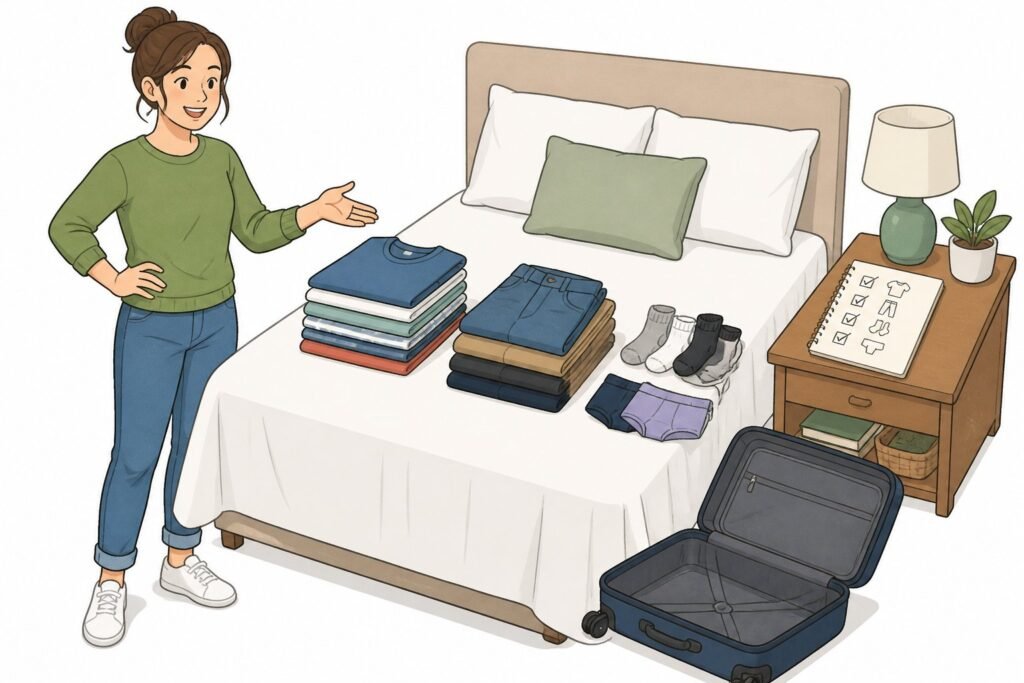
Start with a packing list. Write down your itinerary first: how many days, what activities, what climate. Then build your list around that.
A simple formula that works:
- Tops: one per day, minus one (you’ll repeat more than you think)
- Bottoms: one pair of pants per 3–4 days; mix and match
- Pairs of underwear: one per day, plus one spare
- Shoes: two pairs of shoes maximum — three pairs of shoes is almost always too many
- Layers: one scarf or light jacket depending on the destination
Once your list is done, pull everything out, look at it honestly, and cut 20%. You won’t miss what you left behind.
Choose the Right Luggage for the Trip
Not every trip needs a checked bag. One of the best packing decisions you can make is picking the right luggage before you even start.
Carry-On vs. Checked Luggage
For trips under 7 days, a carry-on is almost always enough — especially with the right packing method. Carry-ons save you baggage fees, wait time at the carousel, and the anxiety of lost luggage.
For longer trips or destinations where you’ll need bulky gear (ski equipment, formal wear, beach stuff for a vacation to the beach), checked luggage makes more sense.
Suitcase Size Matters
A large suitcase is a trap if you’re a chronic overpacker. The more space you have, the more you fill it. If you’re trying to travel light, go one size smaller than you think you need — it forces better decisions.
If you’re flying with carry-ons, know your airline’s dimensions. Most allow one carry-on that fits in the overhead bin and one personal item (like a backpack or tote). Don’t assume — check before you pack.
The Best Way to Pack Clothes (And Prevent Wrinkles)
This is where most people go wrong. The way you fold — or don’t fold — your clothes directly affects how much fits and how bad everything looks when you arrive.
Rolling vs. Folding Clothing
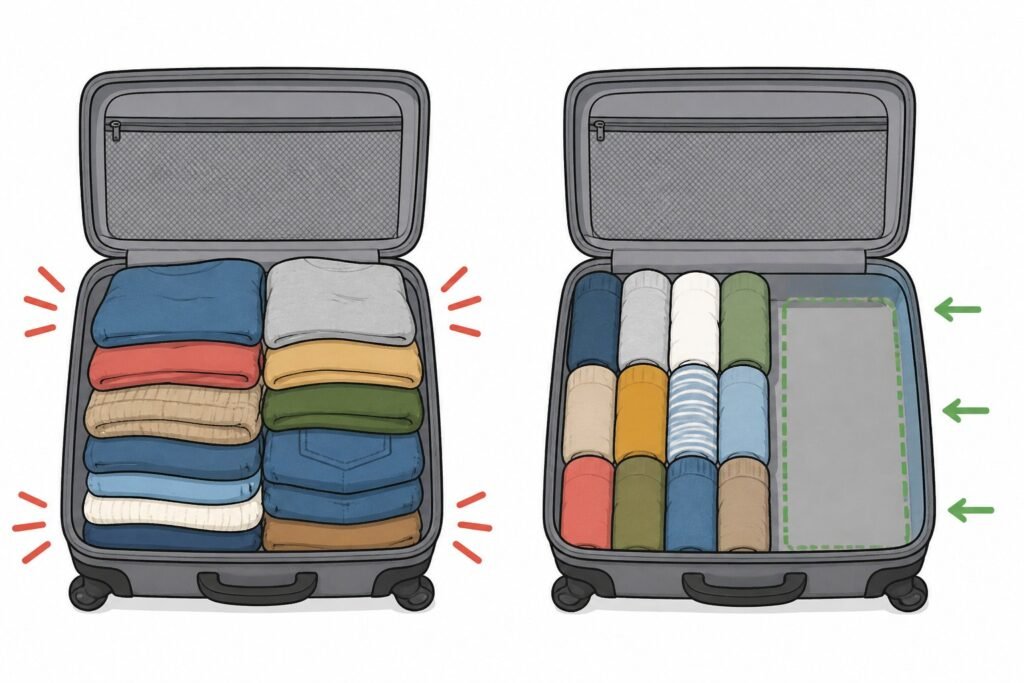
Rolling is better for most items — t-shirts, jeans, casual trousers, underwear. It saves space and actually reduces wrinkles on most fabrics because there are no hard fold lines.
Folding clothing works better for structured pieces: blazers, dress shirts, anything with a collar. Lay them flat on top of everything else as the last layer.
For delicate fabrics prone to creasing, try wrapping them in tissue paper before packing. It sounds fussy, but it genuinely works.
The Bundle Method
If wrinkle prevention is your priority, look up the bundle packing method. You wrap clothes around a central core (usually a pouch of soft items), creating one large bundle instead of individual pieces. It’s fiddly to learn, but it’s the best way to pack a suitcase when you need everything to arrive crease-free.
Use Packing Cubes to Stay Organized
If you’ve never used packing cubes, this is the upgrade your travel life has been missing.
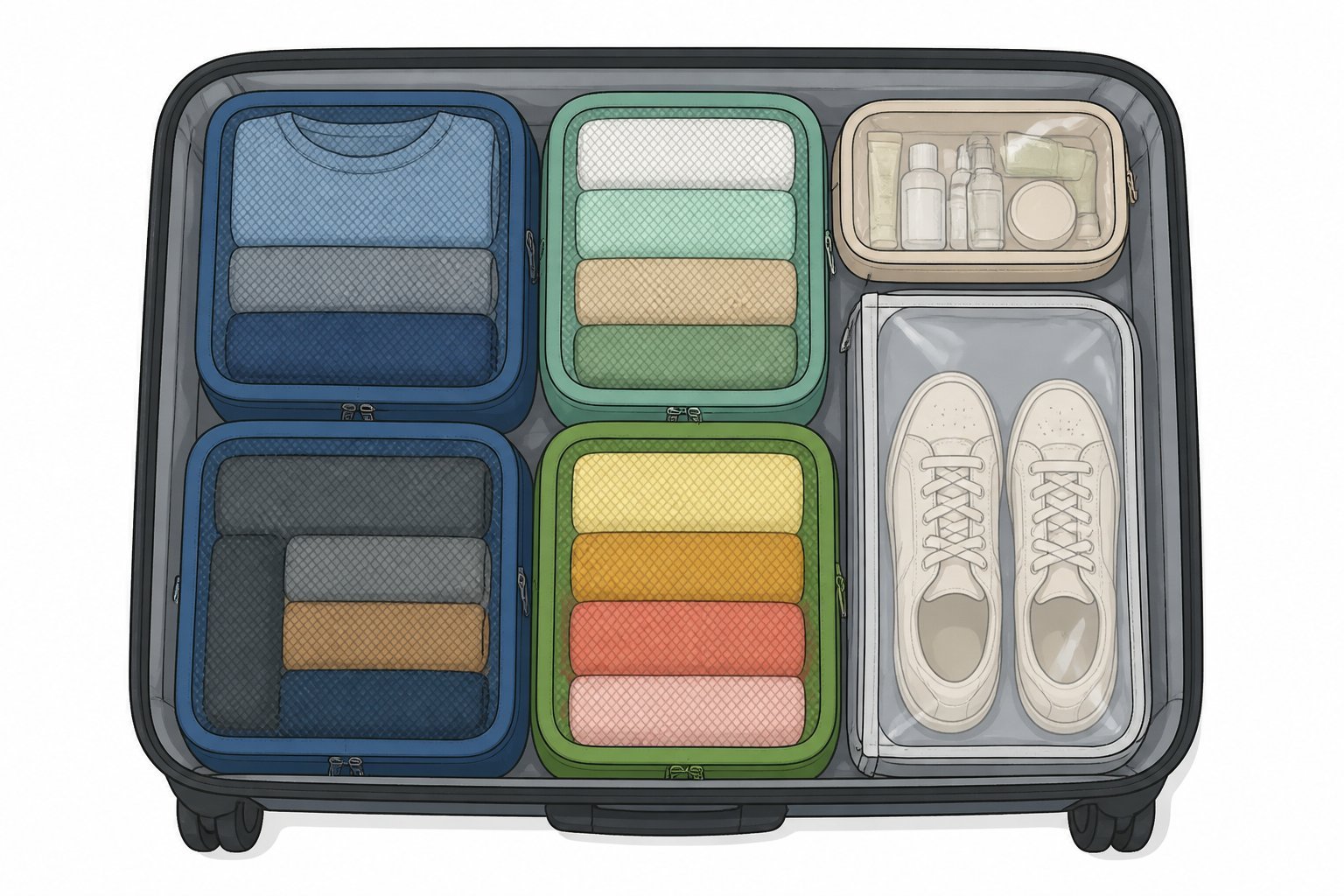
A packing cube is essentially a fabric container — usually a zip-up rectangle — that lets you group clothes by category inside your suitcase. You use cubes to separate tops from bottoms, clean clothes from dirty clothes, or outfits for different days.
Why They Work
Packing cubes don’t magically create more space, but they make your suitcase dramatically easier to use. You can pull out one cube to find what you need without unpacking everything. And when it’s time to pack up and leave a hotel, it takes about 90 seconds.
They also help with compression. A compression cube or compression bags with a zip seal let you squeeze out extra air from bulky items like sweaters or a down jacket, which can save several inches of space in your suitcase.
How to Use Packing Cubes
- One cube for tops, one for bottoms, one for underwear and socks
- A separate small cube or toiletry pouch for personal care items
- A dedicated bag or cube for dirty laundry as the trip goes on
Stack the cubes upright (like files in a drawer) rather than flat — you’ll see everything at once and access it without digging.
How to Pack Shoes Without Wasting Space
Shoes on the plane with you? Fine. But inside your suitcase, shoes are the most space-hungry items you’re carrying.
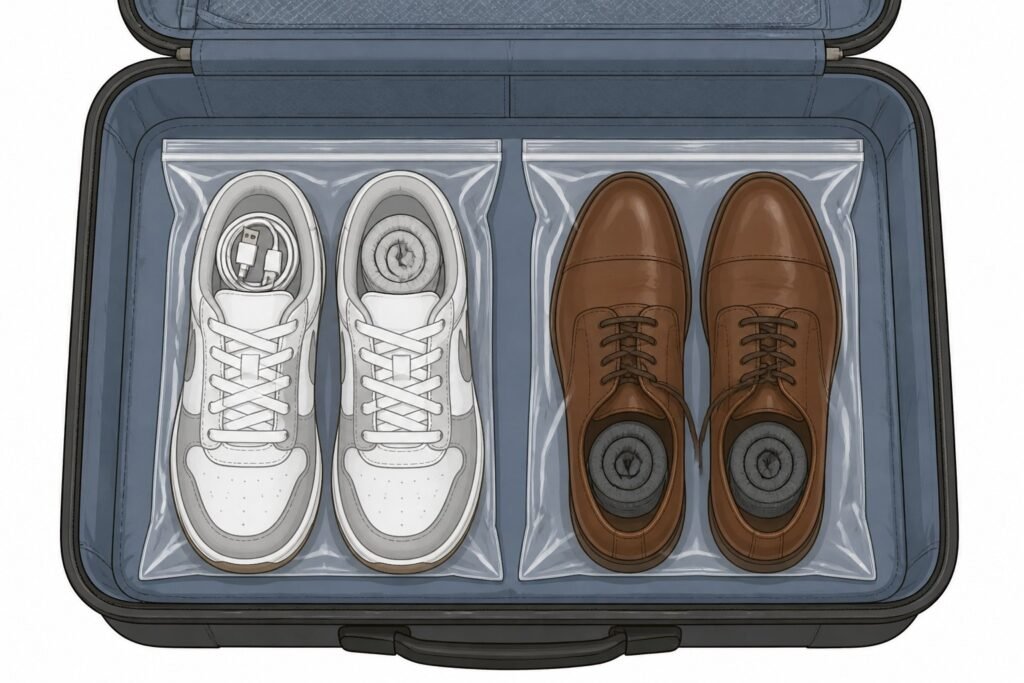
Pack shoes along the bottom of the suitcase — the end closest to the wheels when upright. This keeps the weight low and balanced. Put each pair in a separate plastic bag or a shoe bag to keep the rest of your clothes clean.
Stuff the inside of shoes with small items: rolled socks, a charger, a Ziploc bag of small accessories. This fills dead space that you’d otherwise lose.
Remember the rule: two pairs of shoes is almost always enough. One for walking, one for going out. Three pairs of shoes is a want, not a need.
Pack Your Toiletry Bag the Right Way
Toiletries are where people burn the most suitcase space — and cause the most security headaches on carry-on trips.
The 3-1-1 Rule for Carry-Ons
If you’re flying with carry-on luggage, you need to follow the 3-1-1 rule: all liquids must be in containers no larger than 3.4 ounces (100ml), all in one quart-sized clear bag, and one bag per person. Anything larger than 3.4 ounces gets confiscated.
If you have products you love that come in large bottles, either buy travel sizes or decant them into small refillable containers before you leave.
What to Actually Pack
Essentials only:
- Toothbrush and toothpaste (travel size)
- Deodorant, face wash, moisturizer
- Any medications you need — in their original packaging if possible
- A small liquid container for shampoo/conditioner (or use the hotel’s)
Leave the full-size stuff at home. Your toiletry bag shouldn’t weigh more than a pound.
For checked luggage, you have more flexibility, but still keep liquids together in a toiletry bag inside a zip-lock bag. Bottles leak in transit — it’s not a matter of if, it’s when.
How to Pack a Suitcase Efficiently: The Right Loading Order
Order matters. Pack in the wrong sequence and you’ll spend 20 minutes re-doing it.
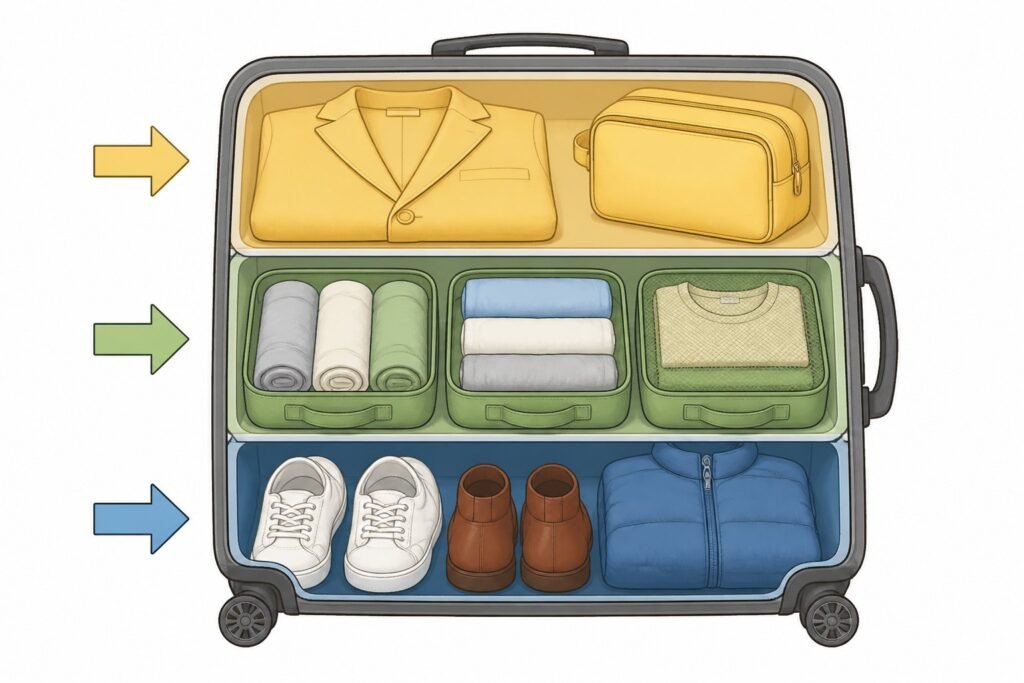
Here’s the sequence to pack your suitcase efficiently:
- Bottom of the suitcase: Shoes (heels together, toes facing the suitcase walls), heavy items, bulky items like a denim jacket
- Middle layer: Packing cubes with clothes — roll what you can, cube everything
- Fill gaps: Socks, underwear, small accessories — stuff them into every corner and pocket
- Top layer: Wrinkle-prone items laid flat — blazers, dress shirts, anything you want to arrive looking good
- Outer compartments: Charger, travel documents, anything you’ll need at the airport or on arrival
Don’t save room in your suitcase for souvenirs by leaving your bag half-empty. Pack what you need. If you buy things on the trip, ship them home or check a bag on the return leg.
Carry-On Packing Tips for Overhead Bin Success
Carry-on luggage has an art to it. You’re working with limited space in your suitcase and every centimeter counts.
A few things that make carry-on packing work:
Wear your bulkiest items on travel day. Your heaviest shoes on the plane, your thickest jacket, your jeans. It’s uncomfortable for a few hours, but it opens up valuable space in the bag.
Use every compartment. The outer pockets on your carry-on are prime real estate — charger, earbuds, passport, snacks. Don’t waste them.
Know your airline’s personal item rules. Most airlines allow one carry-on plus one personal item. A structured backpack used as a personal item can hold a surprising amount — treat it like a secondary suitcase.
Don’t check in late. If the overhead bin fills up, gate agents will check your carry-on for free — but your stuff ends up in the cargo hold anyway. Board early if overhead space matters to you.
The Final Check Before You Zip Up
You’ve packed everything. Before you close the suitcase, do one last pass.
Pick up the bag. Does it feel heavier than you expected? Something probably doesn’t need to be in there. Open it and find the heaviest non-essential item. Remove it.
Check your essentials: passport, phone charger, any medications, wallet. These should never be in checked luggage — always in your carry-on or on your person.
Make sure you haven’t packed anything that’ll get flagged at security: liquids over the limit, sharp objects, lighters in checked bags (yes, there are rules).
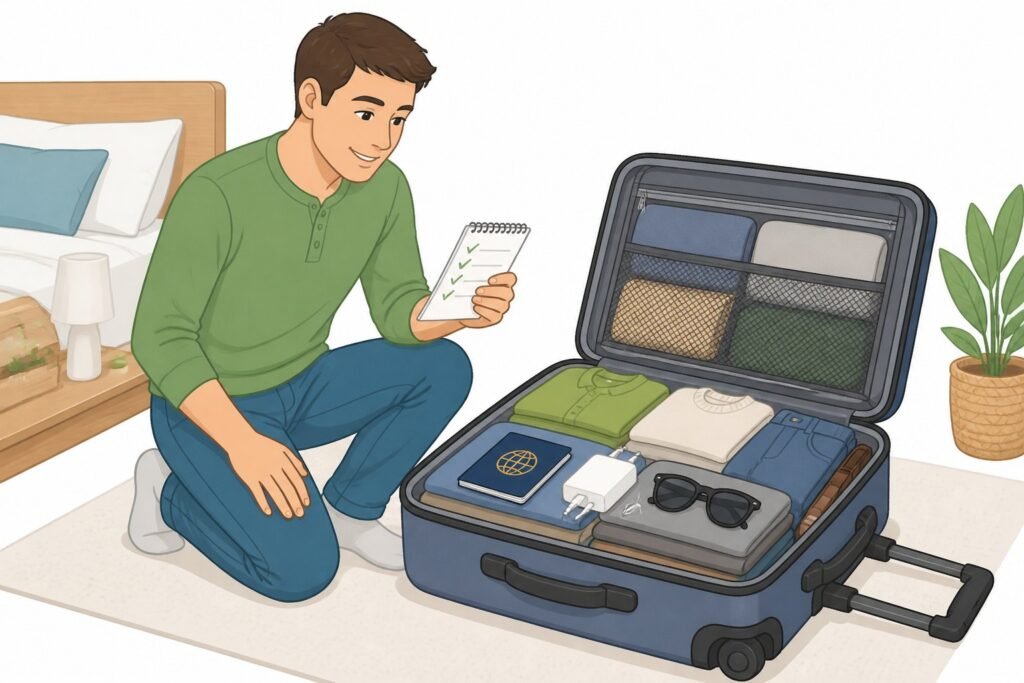
Then zip it up. You’re done.
The whole point of knowing how to pack a suitcase is getting to your destination without stress — not with a perfectly arranged bag that took three hours. Start with your list, use packing cubes, roll your clothes, put shoes at the bottom, and leave the “just in case” items at home. You can always buy a toothbrush. You can’t buy back the hour you spent repacking at midnight.
Pack smart. Travel light. Enjoy the trip.Share