Table of Contents
You already know the habit is bad. You’ve known for months, maybe years. And you’ve probably tried to stop more than once. So why does it keep pulling you back?
That’s not a willpower problem. It’s a wiring problem. Bad habits don’t stick around because you’re weak — they stick around because your brain has literally restructured itself around them. The good news: that wiring can change. But it takes more than motivation and good intentions. It takes a system.
Here’s what actually works.
Why Bad Habits Form in the First Place
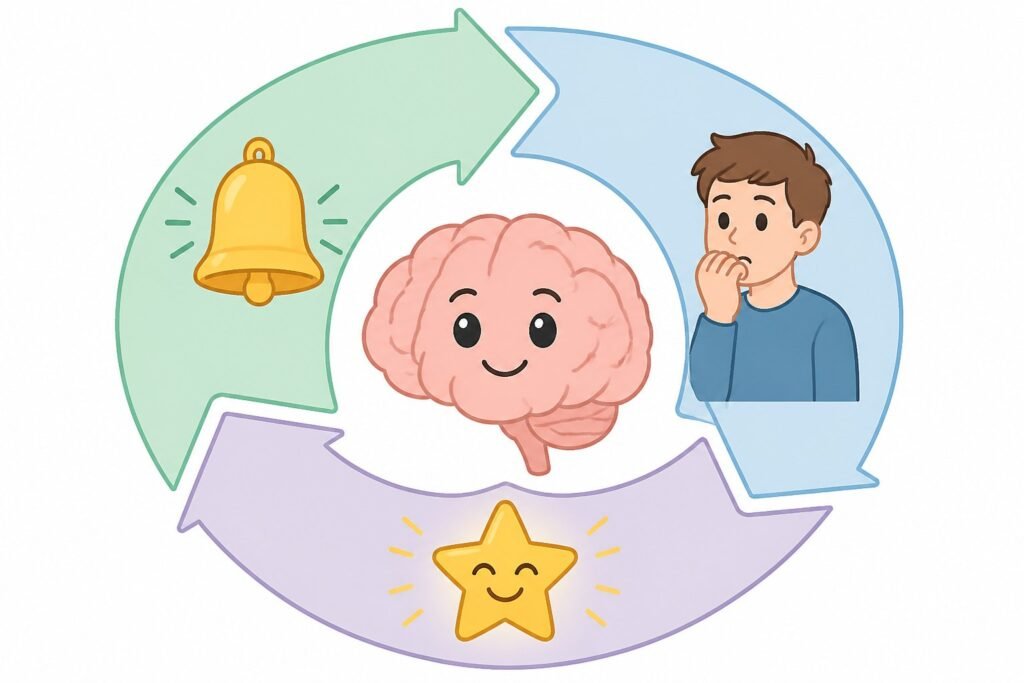
Your brain is obsessed with efficiency. Every time you repeat a behavior — scrolling through social media when you’re bored, reaching for junk food when you’re stressed, biting your nails during a tense meeting — your brain files it away as a shortcut. Do this, feel better. Simple.
This is the habit loop: a cue triggers a routine, and the routine produces a reward. Over time, that loop gets worn into your neural pathways like a groove in an old record. The behavior becomes automatic. You’re not deciding to do it anymore — you’re just doing it.
The tricky part is the reward. Habits form because they work, at least in the short term. Eating junk food when you’re stressed does produce a hit of dopamine. Procrastination does offer temporary relief from anxiety. Your brain isn’t broken — it’s doing exactly what it’s designed to do.
That’s why you can’t just “stop.” You have to replace.
Know Your Triggers Before You Try to Change Anything
This is where most people skip ahead and fail. They decide to quit smoking or stop impulse shopping and just… try harder. No groundwork, no plan. And when the urge hits, willpower collapses because the trigger was never identified.
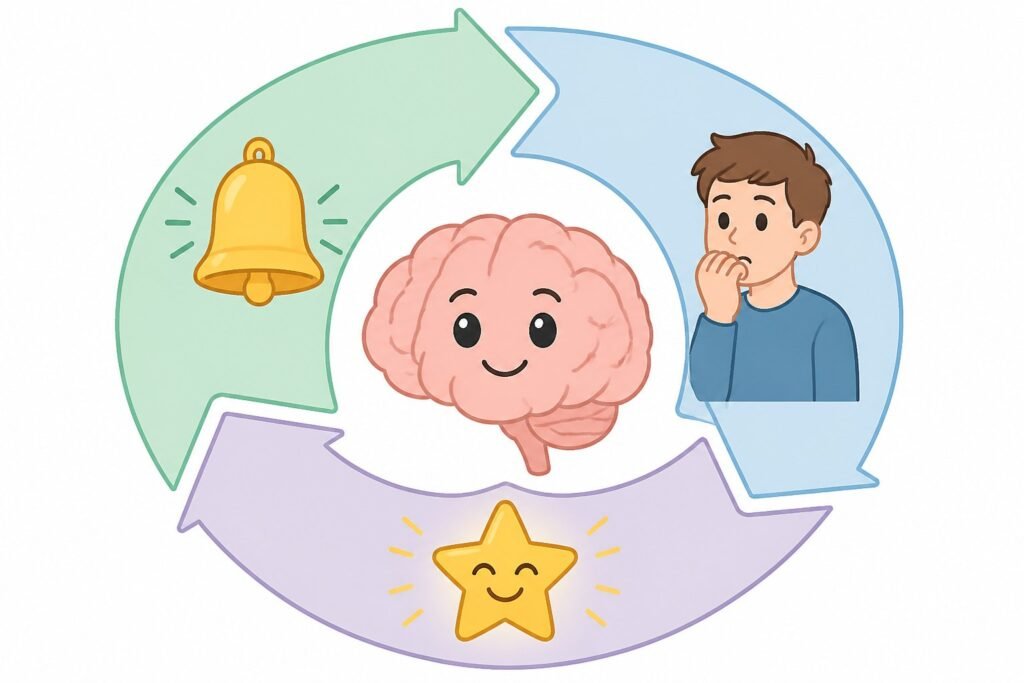
Before you try to break a bad habit, spend at least one week just observing it.
Ask yourself every time the behavior shows up:
- What just happened before this?
- How was I feeling — bored, anxious, tired, lonely?
- Where was I?
- What time was it?
You’ll start to see patterns. Maybe you reach for a cigarette every time you get off a stressful call. Maybe you start scrolling through social media the second you sit on the couch. Maybe you bite your nails in traffic.
These are your habit cues — and knowing them is the most powerful tool you have. You can’t intercept a trigger you haven’t spotted.
The Habit Loop You Need to Interrupt
Once you know your triggers, you can start working with the habit loop instead of just fighting it.
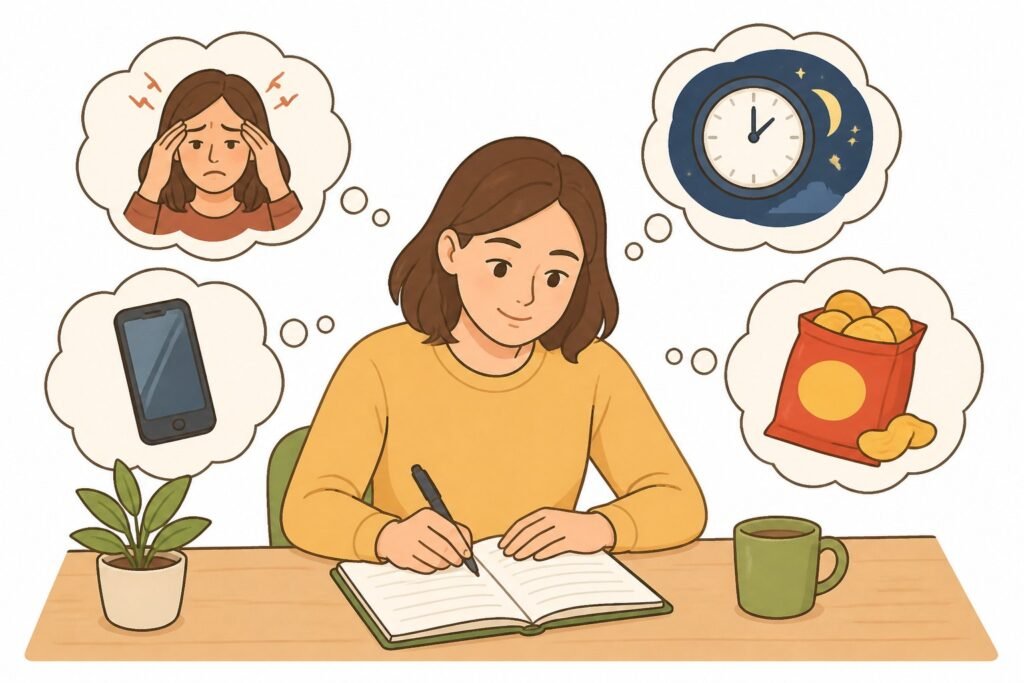
The loop has three parts: cue → routine → reward. The cue and reward are usually harder to change. The routine is where you have leverage.
Replace, Don’t Just Remove
Trying to simply stop a bad habit leaves a gap. And gaps get filled — usually by the old behavior, especially when you’re stressed. This is why cold-turkey attempts often fail without a replacement strategy.
The goal is to keep the cue and the reward but swap the routine for something less destructive.
Feeling anxious and reaching for your phone? The cue is anxiety. The reward is distraction. The routine — scrolling — is what you want to change. Replace it with a five-minute walk, a quick breathing exercise, or even just a glass of cold water. You’re still answering the cue, still getting some version of the reward, but the old behavior is no longer the vehicle.
This is how you replace a bad habit without white-knuckling through every urge.
Make the Old Behavior Harder
Friction is underrated. If you’re trying to stop eating junk food, don’t keep it in the house. If impulse shopping is the problem, delete the apps or remove saved payment info so checkout takes effort. If you tend to fall back into old patterns on your phone at night, leave it in another room.
You’re not relying on discipline alone — you’re making it harder to fail without even thinking about it.
Why Habits Are So Hard to Break (And Why That’s Not Your Fault)
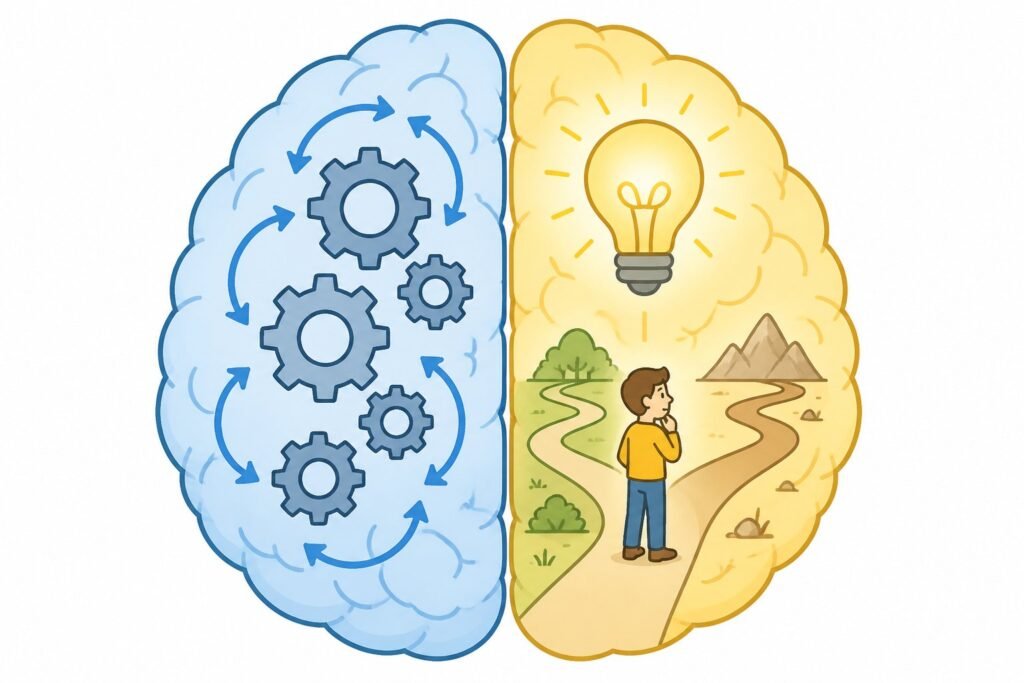
Many bad habits are deeply ingrained — some from childhood, some from years of repetition, some tied to deeper underlying emotional needs. When repeated behaviors become automatic, they don’t live in your conscious decision-making brain anymore. They live in the basal ganglia, a much older, more stubborn part of the brain that doesn’t respond well to logic.
This is why you can know intellectually that something is bad for you and still do it. The knowing part and the doing part are in different neighborhoods.
Habits formed around strong emotional states — like using alcohol to manage anxiety, or overeating when you’re stressed — are especially harder to break because the reward is powerful and immediate. That’s also how many bad habits edge toward addiction, where the brain’s reward system gets so calibrated to the behavior that stopping creates genuine discomfort.
None of this means you’re stuck. It just means you need a smarter approach than “try harder.”
How Long Does It Actually Take to Break a Bad Habit?
You’ve probably heard “21 days.” That number is largely a myth — it came from a plastic surgeon’s casual observation in the 1960s and got repeated until it felt like fact.
A more grounded figure comes from research published in the European Journal of Social Psychology: on average, it takes about 66 days for a new behavior to become automatic. Some habits take less. Some take much more. The range in that study ran from 18 to 254 days.
The point isn’t to fixate on a number. It’s to understand that habit formation takes real time, and early discomfort doesn’t mean failure — it means you’re in the middle of the process.
One Habit at a Time
One of the fastest ways to guarantee failure is to try to overhaul everything at once. You want to quit smoking, start exercising, fix your sleep, and cut out junk food — all starting Monday. By Wednesday, you’ve done none of it.
Pick one habit. One. Work on it for two months before adding anything else. This isn’t lack of ambition. It’s how lasting change actually happens.
The Role of Environment in Breaking Bad Habits
Your environment is shaping your behavior more than you realize. This is one of the clearest lessons from behavioral science and from books like Atomic Habits by James Clear: routines and habits don’t just live inside you, they live in your context.
If you always smoke on the back porch after dinner, the back porch is a trigger. If you always scroll before bed because your phone is on the nightstand, the nightstand is a trigger. Change the environment and you weaken the cue even before the craving shows up.
This might mean rearranging your workspace to reduce distraction. It might mean taking a different route home if you pass a fast food spot every day. It might mean setting up your gym bag the night before so the prompt to exercise is sitting right in front of you in the morning.
You’re not relying on remembering to do the right thing. You’re building an environment that makes the right thing easier and the old habit harder.

What to Do When You Slip Up
You will slip up. This isn’t pessimism — it’s just how habit change works.
The problem isn’t the setback itself. The problem is what most people do after a setback: they spiral. One missed day becomes a week off. One bad meal becomes a binge. This is the all-or-nothing trap, and it kills more habit-change attempts than anything else.
Research on habit change consistently shows that the people who succeed aren’t the ones who never slip — they’re the ones who get back on track faster when they do.
When you fall back into an old behavior, treat it like a data point rather than a verdict. What triggered it? Were you more stressed than usual? Was there a situation you hadn’t planned for? Use the information. Adjust. And extend yourself the same self-compassion you’d offer a friend.
Missing once doesn’t make you someone who can’t change. It makes you someone in the middle of changing.
Use Accountability to Strengthen Your Resolve
Trying to break bad habits alone is harder than it needs to be. Telling someone what you’re working on — a friend, a partner, even an online group — adds a layer of social accountability that quietly raises the stakes.
When you know someone else is paying attention, the cost of slipping goes up slightly. Not because you fear judgment, but because saying you’re going to do something out loud makes you more likely to follow through. That’s well-documented in behavior research.
Find someone who’s trying to make a similar change and hold each other accountable. Check in weekly. Share wins and setbacks without dramatizing either. A small, consistent connection does more than a big accountability system that you’ll abandon in two weeks.
Visualize Yourself Succeeding
This sounds soft, but it works. Mentally rehearsing the new behavior — especially in the context of your usual trigger — primes your brain for the alternative response. If you know you’re stressed after work and that’s when you tend to reach for a cigarette, spend thirty seconds in the morning picturing yourself getting home, feeling the stress, and going for a walk instead.
You’re not just hoping it happens. You’re rehearsing it.

Building Good Habits to Replace the Bad Ones
The most durable way to break a bad habit isn’t elimination — it’s substitution backed by a new routine.
Once you know your trigger and you’ve chosen a replacement behavior, build a new routine around it. Set a timer if you need structure. Attach the new habit to something you already do (after my morning coffee, I’ll take a five-minute walk instead of checking my phone). Stack the behaviors until the new one feels as natural as the old one did.
Good habits take time to feel automatic — remember, we’re talking weeks to months, not days. But every time you choose the new behavior over the old one, you’re strengthening that neural pathway. Willpower works like a muscle in the sense that you build it by using it, but smart habit design means you rely on it less and less over time.
You’re not trying to white-knuckle your way through every temptation forever. You’re building a system where the better choice is also the easier one.
The One Thing Most People Miss
People spend a lot of energy trying to stop an unwanted habit. Far fewer spend time figuring out what need the habit was meeting.
Many bad habits exist because they solve a real problem — even if badly. You scroll to escape boredom. You eat junk food to comfort yourself. You procrastinate to avoid the discomfort of starting something hard. You want to change the behavior, but if you don’t address the underlying need, something else will fill that space.
This doesn’t mean you need years of therapy to quit a bad habit. It means being honest with yourself about what the habit is doing for you — and making sure your replacement strategy actually answers that same need in a healthier way.
That’s the difference between breaking a bad habit for a few weeks and leaving it behind for good.
Start with one habit. Learn how to break it properly — by understanding why it exists, spotting the trigger, swapping the routine, and designing your environment to support the change. Be patient with the timeline and honest when you slip.
You don’t need to be a different person. You just need a better process.