Table of Contents
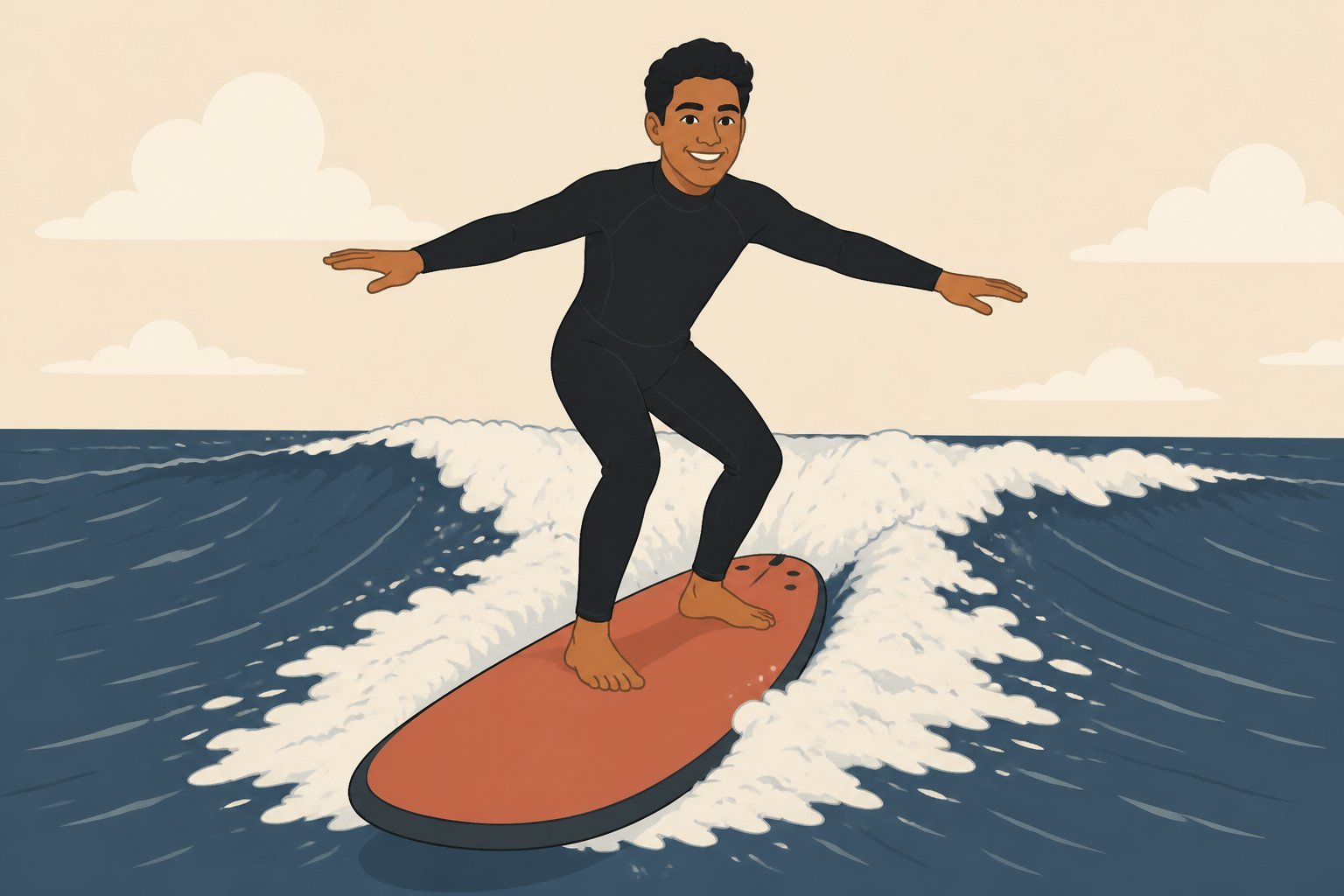
The first time you stand up on a surfboard — even for three seconds on a tiny white water wave — something clicks. You get it. You understand why people rearrange their entire lives around surf.
But getting to that moment takes knowing what you’re doing. Most beginners waste their first sessions fighting the wrong board, paddling at the wrong angle, or trying to catch waves they have no business being on. The learning curve is real, but it’s not as steep as it looks from the beach. With the right approach, you can catch your first rideable wave in your first session.
Here’s everything a beginner surfer needs to know before hitting the water — from gear and technique to reading the ocean and surf etiquette.
Choose the Right Surfboard Before You Do Anything Else
Picking the wrong board is the number one mistake beginners make. A shortboard looks cool. It’s also almost impossible to learn on.
Start with a foam board — also called a foamie or soft-top. These are wide, thick, and buoyant, which means they paddle easily, catch waves with far less effort, and won’t hurt when they hit you (and they will hit you). The best beginner surfboards are soft-tops in the 8–9 foot range.
Longboards are another strong option once you’ve got a few sessions in. They paddle fast, glide through smaller surf, and give you more time to find your footing on the wave. A big board isn’t a beginner crutch — plenty of experienced surfers ride longboards their whole lives.
What you want to avoid: shortboards, fish shapes, and anything narrow or low-volume until you’re consistently riding unbroken waves and have your pop-up dialed in.
If you’re not buying gear yet, rent from a local surf shop or sign up for a surf lesson — they’ll put the right board under your feet automatically.
Wetsuit or Rash Guard — What You Actually Need
What you wear in the water depends entirely on where you’re surfing.
A wetsuit keeps your body insulated in cold water. If you’re surfing in the UK, Northern California, or anywhere with water under about 18°C (65°F), a wetsuit isn’t optional — it’s what makes staying in the water physically possible for more than ten minutes. For cold conditions, a 3/2mm full suit is the standard starting point. Wetsuit keeps your body warm through a thin layer of water that heats up against your skin.
A rash guard is what you wear in warm water — think tropical surf spots, summer surf on the East Coast, or anywhere the water is comfortable. It protects your skin from friction with the water and from sunburn. A lot of surfers wear a rash guard under a thin wetsuit as well.
For your first surf session, find out the local water temperature and gear up accordingly. Being cold kills your focus and cuts your time in the water short.
The Basics of Surfing: Paddling, Positioning, and the Pop-Up
Before you catch a wave, you need to get comfortable with three fundamentals.
Paddling
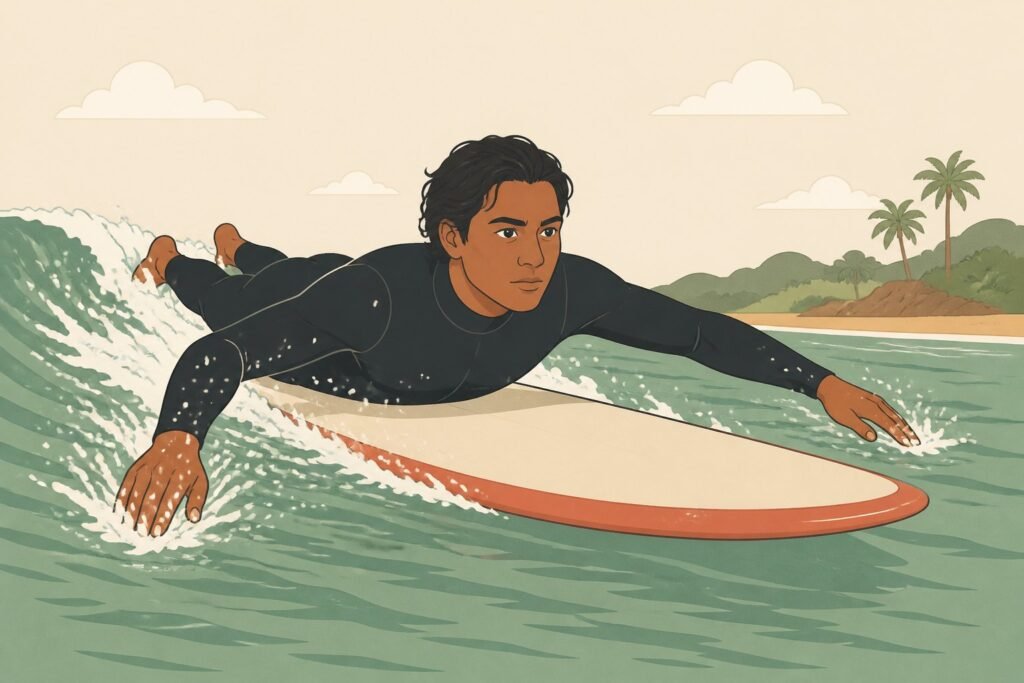
Lie on your board with your body centered — not too far back on the board (the nose goes up and you stall) and not so far forward that the nose dips underwater. You want the nose sitting about 2–3 inches above the water surface.
To paddle, cup your hands and pull through the water with long, even strokes — alternate arms, similar to freestyle swimming. Keep your head up and look where you’re going. Your feet and legs stay together and still. A smooth, steady paddle beats frantic splashing every time.
Positioning on the Board
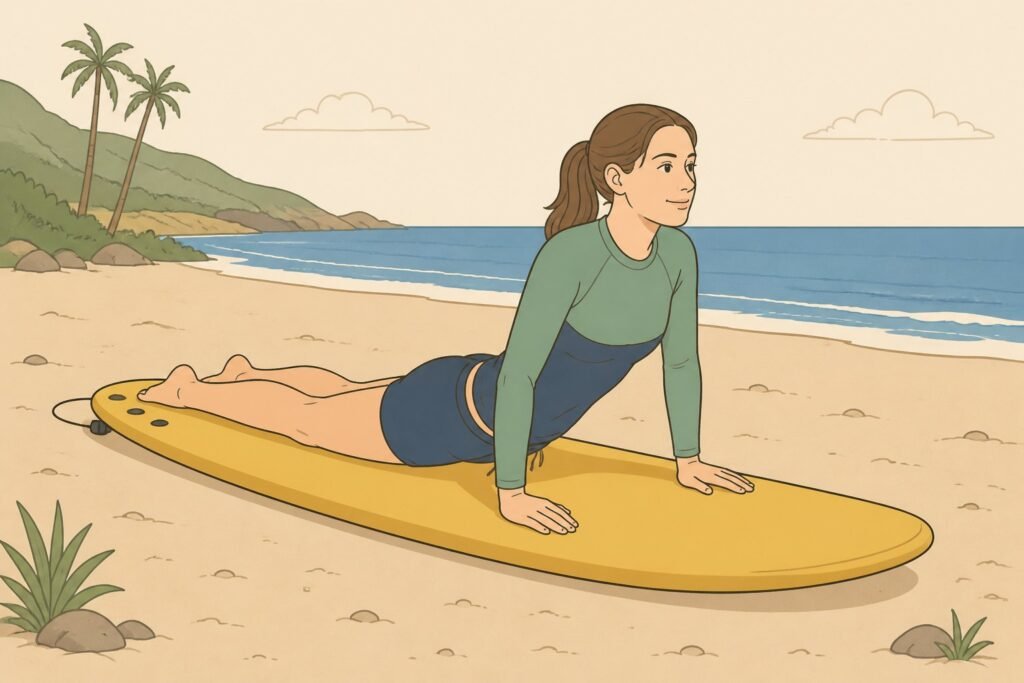
Hands under your shoulders, chest lifted slightly off the board, eyes forward. Getting your positioning right on dry sand before you paddle out is the single best way to practice before you’re dealing with moving water.
The Pop-Up
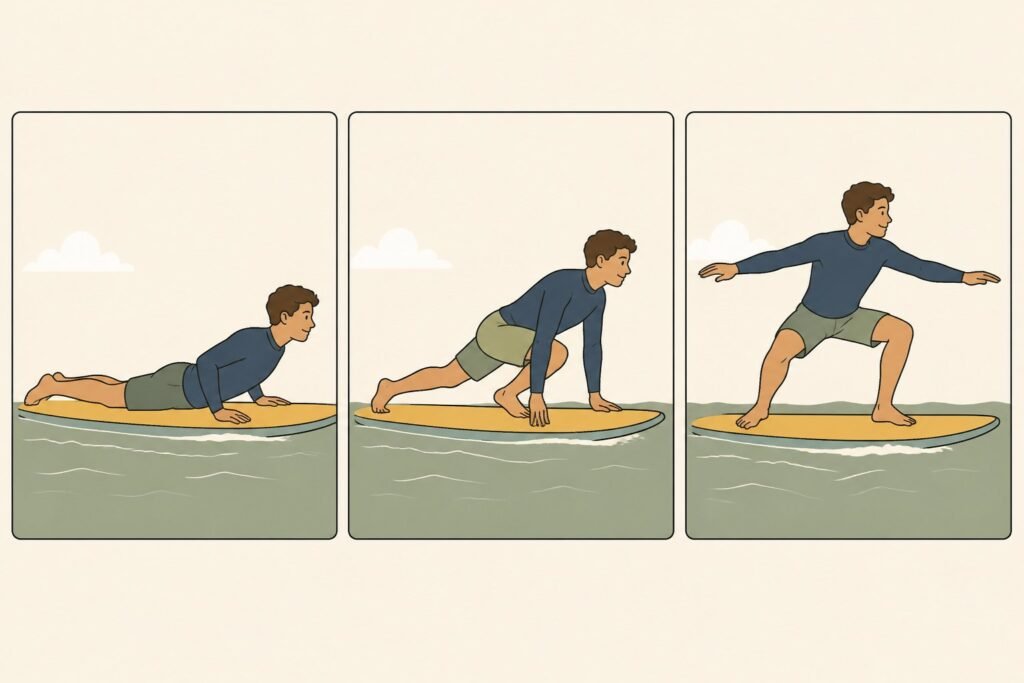
The pop-up is the motion that gets you from lying flat to standing. It needs to be one fast, explosive movement — not a slow climb.
Here’s how:
- From lying position, place your hands flat under your shoulders (not too wide, not at your hips).
- Push your chest up while simultaneously pulling your back knee forward and planting your front foot between your hands.
- Land in a low, wide stance — feet roughly shoulder-width apart, knees bent, parallel to the shore.
- Keep your knees bent and your weight centered. Arms out for balance.
Practice the pop-up on dry land until it’s automatic. That means doing it 20–30 times before you even go near the water. A slow, thought-out pop-up becomes a fumbled mess when a wave is moving underneath you.
How to Catch Your First Waves in the Whitewater
Don’t paddle out past the breaking waves on your first day. The white water — the already-broken foam that rolls toward shore — is where beginners belong, and there’s nothing wrong with that.
Here’s how to catch your first waves in the whitewater:
- Wade out until the water is about waist to chest deep.
- Point your board toward shore and wait for a wave to come.
- When a wave is about 2–3 seconds away, start paddling hard toward the beach.
- As the wave reaches you and the back of your board lifts, keep paddling — two or three more strokes. This is where most beginners give up too early.
- Once you feel the wave carrying you, do your pop-up.
The key timing insight: you want to be already moving when the wave hits. A wave can’t push a stationary board. You match its speed, then it takes over.
Don’t worry about riding the wave face or trimming yet. Just focus on standing up and riding the white water straight back to shore. Do that ten times and you’ll have more foundational skill than most people who’ve tried surfing a few times.
Learn How to Read a Surf Forecast and Choose the Right Conditions
Going to the wrong surf spot in the wrong conditions as a beginner is miserable. Waves that look manageable from the parking lot can be overhead and powerful in the water.
What to Look For as a Beginner
- Wave height: 1–3 feet is ideal for a beginner. Knee-to-waist high. Anything over head-high is beyond beginner territory.
- Wave type: Beach break — where waves break over sand — is the safest and most forgiving. Reef breaks, where waves break over coral or rock, are for experienced surfers.
- Wind: Offshore wind (blowing from land toward sea) makes wave faces clean and rideable. Onshore wind (blowing from sea to land) makes surf choppy and unpredictable.
Surf forecasting websites like Surfline and Magic Seaweed give you swell height, period, and wind direction for any spot. Learn how to read a surf forecast before your first surf trip — it saves you from driving an hour to find unsurfable conditions.
Surf Etiquette: The Unwritten Rules Every Surfer Follows
Surf etiquette isn’t optional. Break it and you’ll make enemies in the lineup fast — and more seriously, you can cause real injury.
The Priority Rule
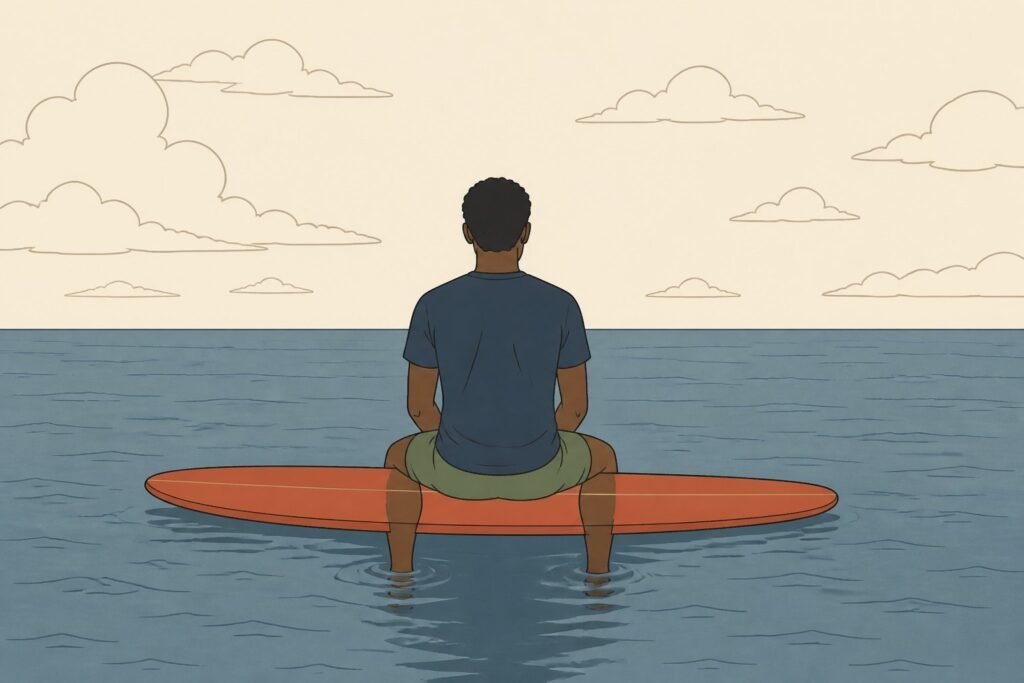
The surfer closest to the breaking part of the wave — the peak — has priority. If someone is already up and riding, do not paddle for the same wave. This is the fundamental rule of the lineup.
As a beginner, you’ll likely be surfing whitewater or small reforms away from the main crowd, so this matters less in your first sessions. But knowing the rule before you paddle out means you won’t accidentally drop in on an experienced surfer and end up in an ugly situation.
Other Key Rules
- Don’t ditch your board. When a wave comes and you’re not ready, hold onto your board or try to duck under the wave. A loose board is a projectile. Your leash helps, but don’t rely on it to stop your board from hitting someone else.
- Paddle wide around breaking waves rather than straight through the lineup. When paddling back out, go around the breaking waves — not through other surfers who are riding.
- Wait your turn. In a crowded lineup, good surf goes to those who are patient and positioned well, not those who paddle aggressively for every wave.
Surf with a buddy on your first few sessions — both for safety and because having someone to observe the lineup with makes learning the social dynamics much faster.
Tips for Beginner Surfers Who Want to Progress Faster
Time in the water is the only thing that truly improves your surfing. There’s no shortcut. But there are ways to make each session count more.
Take a surf lesson first. One 90-minute lesson with a qualified instructor from a real surf school is worth five unguided sessions. They’ll put the right board under you, watch your pop-up, and correct the small errors you can’t see yourself. Surfing for the first time with proper instruction means you’re building good habits from day one instead of spending months unlearning bad ones.
Surf small waves consistently rather than waiting for bigger surf. Small, clean waves are where you build the muscle memory. Once your pop-up is automatic and your balance is solid, bigger surf is a natural step — not a leap.
Watch other surfers. Time spent sitting on the beach watching the lineup teaches you a huge amount: how surfers position themselves, when they start paddling, how they adjust their weight on the wave face. Even a professional surfer will tell you that study outside the water is part of the game.
Keep your knees bent. Every beginner’s instinct is to stand straight up when they first get to their feet. Keep your knees bent. Always. It’s the difference between riding the wave and falling off your board immediately.
Don’t skip the beginner surf tips you think you already know. The basics of surfing feel obvious until you’re actually in the water with a wave moving under you. Trust the fundamentals.
Your First Surf Session: What to Actually Expect
You will fall. A lot. Everyone does. The first session is mostly about getting comfortable in moving water, learning how the ocean pushes you around, and getting a feel for your board. If you pop up once and ride even briefly, that’s a genuinely good day.
Don’t measure your surf session against what you see in videos or on Instagram. Surfing on film is professional surfers on great waves — that’s not where anyone starts.
Set one specific goal: get to your feet and ride something back to shore, even if it’s tiny whitewater. That’s it. Build from there every session.
The art of surfing takes years to develop. But the moment you catch your first wave — even a knee-high foamy little thing rolling toward the sand — you’ll already understand why people keep coming back.
Get out there. The water’s waiting.