Table of Contents
Recruiters spend an average of seven seconds scanning a resume. A cover letter gets even less — unless it’s actually good. Most aren’t. Most are a paragraph-by-paragraph restatement of the resume sitting right next to it, which tells the hiring manager nothing they couldn’t read themselves in half the time. A well-crafted cover letter does something different: it explains why you want this specific job, at this specific company, and what you’d bring to it that the resume alone can’t show. Done right, a cover letter helps you stand out in a crowded applicant pool. Here’s exactly how to write one that earns its place in your job application.
What’s the Actual Purpose of a Cover Letter?
A cover letter isn’t a formality. It’s your first real conversation with a potential employer — before any interview, before any phone screen. The resume lists your qualifications. The cover letter explains them.
Think of it this way: your resume and cover letter work together. The resume answers what you’ve done. The cover letter answers why it matters for this role. That distinction is worth keeping in mind every time you sit down to write one.
A well-written cover letter also signals something the resume can’t easily show: that you can communicate clearly, that you’ve actually read the job description, and that you’re genuinely interested in the role rather than mass-applying to anything open. Hiring managers notice. Many of them will tell you they read the cover letters precisely to see who bothered to write something real.
Not every employer requires cover letters. But when the job application gives you space for one, use it. Leaving it blank when your competitors didn’t is a quiet self-elimination.
How to Research Before You Write a Single Word
The biggest mistake job seekers make is opening a blank document and starting to type before they’ve done any homework. A generic cover letter — one that could be sent to any company for any role — reads exactly like what it is. Hiring managers can spot them instantly.
Study the Job Description
Read the job listing closely. Twice. Look for:
- The exact skills and experience they’re emphasizing
- Language they repeat (companies often telegraph their culture in job ads)
- Specific problems the role is meant to solve
- Qualifications listed as “required” versus “preferred”
Your cover letter should speak directly to the job requirements. If the job posting uses the phrase “cross-functional collaboration” three times, that’s a signal. Address it explicitly.
Research the Company
Spend 20 minutes on the company’s website, LinkedIn profile, and any recent news. What are they working on? What’s their stated mission? Have they recently launched a product, entered a new market, or gone through a leadership change? This context lets you write something specific instead of something generic — and specificity is what makes a cover letter memorable.
The Right Cover Letter Format and Structure
A cover letter shouldn’t run longer than one page. Three to four short paragraphs is the target — enough to make your case without overstaying your welcome. Here’s the letter format that works.
Header and Greeting
Include your name, contact information, the date, and the hiring manager’s name and title if you can find it. “Dear Hiring Manager” is acceptable when you genuinely can’t locate a name. “To Whom It May Concern” is dated — avoid it.
Finding a name isn’t hard. Check the job posting, the company’s LinkedIn, or the team page on their website. Addressing someone by name is a small thing that signals effort.
The Opening Paragraph
The first paragraph needs to do two things: tell them what role you’re applying for and give them an immediate reason to keep reading. Don’t open with “I am writing to apply for the position of…” — every cover letter in the pile starts that way.
Open with something specific. Why this company, why now? A sentence about a recent project of theirs you admire, a genuine reason you’re drawn to the work they do, or a direct statement of the value you’d bring. Make it real.
The Middle Paragraph(s)
This is the body of your cover letter — one or two paragraphs where you connect your relevant experience to what the employer is looking for. Pull examples from your past, not just job titles. Quantify where you can.
Instead of: “I have five years of experience in project management.”
Try: “Over five years managing cross-functional product launches, I’ve cut average delivery timelines by 20% while keeping stakeholder alignment intact — something I’d bring directly to [Company]’s upcoming platform expansion.”
That version shows, it doesn’t just tell. It connects your years experience to a concrete outcome and ties it to their context. That’s the work of a good cover letter.
The Closing Paragraph
Keep it tight. Restate your enthusiasm for the specific position, mention that your cover letter and resume are enclosed or attached as part of your application materials, and close with something direct. “I look forward to hearing from you” is fine — clear and professional without being stiff.
Don’t beg. Don’t undersell. Close like someone who knows they’d be a strong candidate for the position.
Writing Your Cover Letter Paragraph by Paragraph
Knowing the structure is one thing. Actually writing it is another. Here’s how to approach each section when you’re staring at a blank page.
Starting Without Freezing Up
Write a rough draft first — don’t try to write a perfect cover letter in one pass. Get your thoughts down in any order, then shape it. A clunky first draft is infinitely more useful than a blank document.
One useful trick: write the opening paragraph last. Start with the middle — your qualifications and examples — then write the intro once you know what you’re building toward.
Making Each Paragraph Earn Its Place
Every paragraph in your cover letter should do a specific job:
- Paragraph 1: Hook the reader, name the role, signal genuine interest
- Paragraph 2: Show your most relevant qualifications with a concrete example
- Paragraph 3 (optional): Address a second qualification or explain something the resume doesn’t — limited experience, a career pivot, why you’re relocating
- Paragraph 4: Close with confidence and a clear next step
If a sentence doesn’t advance one of those goals, cut it. A cover letter shouldn’t have filler any more than a good resume does.
When You Have Less Experience
If you’re applying for internships or early-career roles, or if you have limited experience in the specific field, lean on transferable skills and genuine enthusiasm for the company’s work. Use your cover letter to explain what you’d contribute and why you’re motivated — not to apologize for what you don’t yet have.
Less experience doesn’t mean a weaker cover letter. It means a different emphasis.
Common Cover Letter Mistakes That Kill Your Chances
You can write a technically correct cover letter and still get it wrong. Here’s what separates a cover letter that gets read from one that gets skipped.
Retelling the resume. A cover letter doesn’t exist to repeat your resume. It exists to add context. If your cover letter is just a prose version of your work history, it gives the hiring manager no reason to read both documents.
Going too long. A cover letter that runs to two pages signals poor judgment about what matters. One page, three to four paragraphs, done. Use your cover letter to make one strong case, not every possible argument.
Being vague about why you want the role. “I have always been passionate about marketing” tells the recruiter nothing. Why this company? Why this specific position? Generic enthusiasm is easy to write and impossible to believe.
Using a template without customizing it. Cover letter templates are starting points, not finished products. If you use the same one cover letter for every job you apply to, it’ll read that way. Tailor your letter for each application — at minimum, customize the opening paragraph and any company-specific references.
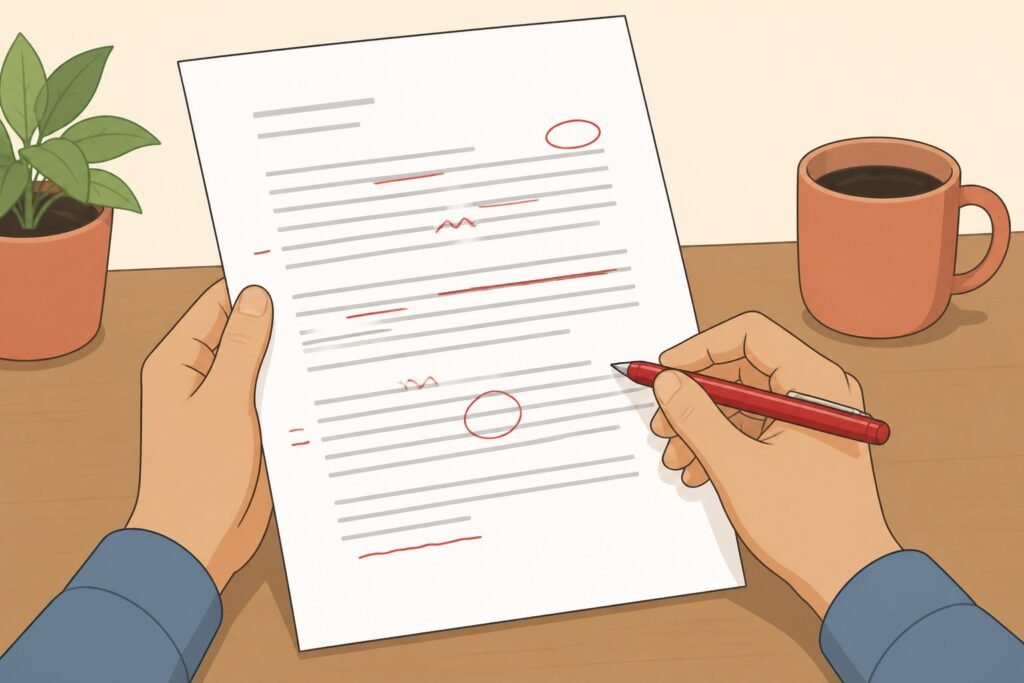
Typos. Read the draft of your letter out loud. Then read it backward. Then have someone else read it. A single typo in an application letter for a writing-heavy role is often an immediate disqualifier.
Should You Use ChatGPT to Write Your Cover Letter?
Honestly? Use it carefully. Plenty of applicants now use ChatGPT to draft their cover letters, and many of the resulting letters read exactly like what they are — smooth, generic, and devoid of any actual personality. Hiring managers who read cover letters regularly are getting very good at spotting them.
Where AI tools genuinely help: overcoming the blank page, checking your letter format, tightening wordy sentences, or generating a first draft you then rewrite in your own voice.
Where they hurt: if you paste in a job description and let the output go out unedited, you’ll end up with something that hits all the right keywords but sounds like nobody in particular wrote it. That’s not a cover letter — it’s a cover letter-shaped object.
Use it as a tool, not a ghostwriter. The goal is a cover letter that sounds like you, only sharper.
Cover Letter Tips for Specific Situations
A standard cover letter works for most applications. But a few situations call for a slightly different approach.
Applying Through LinkedIn
When you apply through a LinkedIn job posting, a cover letter is often optional. Write one anyway — most applicants won’t. Keep it concise and mention your LinkedIn profile so they can see your full professional history in one click.
Career Changes and Gaps
If you’re changing industries or returning after time away, use the cover letter to address it directly rather than hoping nobody notices. A brief, confident explanation is far better than leaving a hiring manager to draw their own conclusions. Frame your background as an asset: different experience often means a different perspective that the team doesn’t already have.
Roles With Specific Writing Skills Requirements
If writing skills are listed in the job requirements, your cover letter is a writing sample. Every sentence is being evaluated. Take extra time on the draft, be selective about word choice, and make sure the structure is tight.
One Final Check Before You Send
Before any cover letter goes out as part of your job application, run through this:
- Correct company name and role title — more people send cover letters with the wrong company name than you’d expect
- Addressed to the right person — double-check the spelling
- No resume repetition — every sentence in the cover letter should add something the resume doesn’t say
- Under one page — if it’s running long, cut the weakest paragraph
- Read aloud — if it sounds stiff or formal in a way you’d never actually talk, rewrite those sentences
The job market is competitive. Your job application materials matter. A good cover letter won’t save a weak resume, but a weak cover letter can absolutely cost you an interview that a strong one would have earned.
Write it like it matters, because it does.