Table of Contents
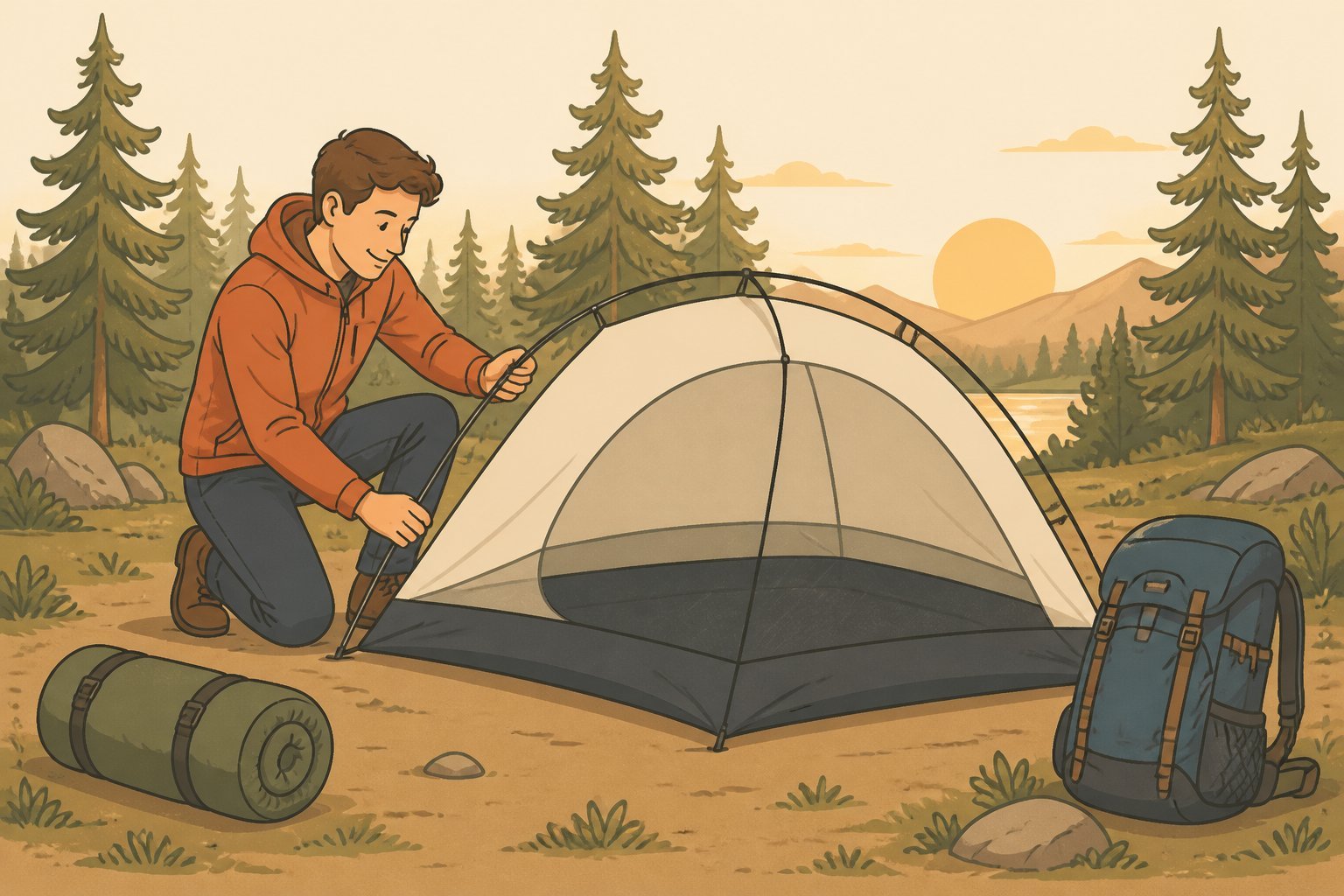
The first night sleeping outdoors, a lot of people lie there thinking: why didn’t I do this sooner? Then they hear a sound in the dark and immediately change their minds. Both reactions are completely normal — and both pass. Camping for beginners has a short, steep learning curve, and almost everything that goes wrong on a first camping trip comes down to skipping the preparation. Pick the wrong campsite, forget a key piece of gear, or show up without a meal plan, and you’ll be miserable. Get it right, and you’ll be booking your next trip before you’ve even packed up. Here’s everything you need to know to camp for the first time without the beginner disasters.
The Main Types of Camping (Pick the Right One First)
Not all camping is the same, and choosing the wrong type of camping for your first time is one of the fastest ways to have a bad experience. Before you buy anything or book anywhere, figure out which version you’re actually signing up for.
Car Camping
Car camping is exactly what it sounds like — you drive to a campground, park next to your campsite, and carry your gear a few feet from the car. You’re not roughing it across miles of trail; you’re setting up camp within walking distance of a bathroom and, in many cases, a picnic table and fire ring. This is hands-down the best starting point for any beginner.
Backpacking
Backpacking means carrying everything you need on your back and hiking to your campsite. It’s physically demanding, requires lighter (and more expensive) gear, and has a much steeper learning curve. Save this for after you’ve got a few car camping trips under your belt.
Dispersed Camping
Dispersed camping is camping outside of a designated campground — usually on public land managed by the Forest Service or BLM. There are no amenities, often no cell service, and you need to already know what you’re doing. Not a beginner move.
For a first-time camping experience, stick with car camping at a developed campground. Get comfortable with the basics first.
How to Find the Right Location for Your First Camping Trip
Where you camp matters as much as how prepared you are. A crowded campground with poor facilities will sour even the most enthusiastic new camper.
State Parks Are Your Best Bet
State parks typically offer clean bathrooms, maintained fire rings, flat tent pads, and staff on-site. They’re well-regulated, affordable, and genuinely beginner-friendly. Search your state’s parks system — most let you book campsites online months in advance.
What to Look for When You Find a Campground
Once you’ve found a campground, check the specific campsite details before booking. Look for:
- A flat, shaded tent pad or clearing
- Proximity to (but not directly next to) the bathroom
- Availability of a fire ring and picnic table
- Reviews mentioning noise levels and crowd density
Booking a campsite without checking these details is how you end up sleeping on a slope next to the generator hookup section.
Check the Weather Before You Go
Seriously, check it multiple times in the week leading up to your trip. Weather changes the gear you pack, the clothes you bring, and whether your plans are even viable. A surprise rainstorm with no rain fly properly staked out is a genuinely miserable camping experience.
Essential Camping Gear for Beginners
You don’t need to spend a fortune to go camping. But there are a handful of items where cutting corners will cost you sleep, warmth, or comfort in ways that ruin the trip.
Sleep System
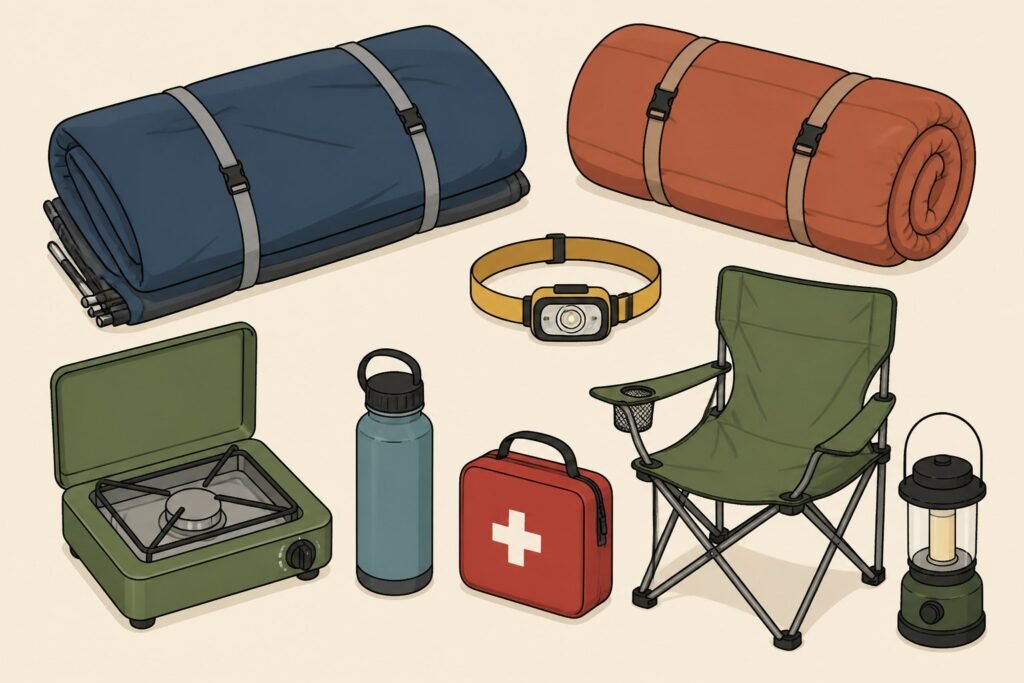
Your sleeping bag and sleeping pad are the two most important things you’ll pack. Together they’re your sleep system, and a bad one means a cold, uncomfortable night that colors your entire opinion of camping.
- Sleeping bag: Match the temperature rating to your expected lows — if overnight temps will hit 45°F, don’t bring a bag rated for 60°F. Most beginners go with a 20°F or 30°F synthetic bag, which handles most three-season conditions and dries faster than down if it gets wet.
- Sleeping pad: A sleeping pad insulates you from the cold ground far more effectively than extra blankets. Don’t skip this. A basic foam pad works; a self-inflating mattress is more comfortable. An air mattress is fine for car camping if that’s what you have.
The Tent
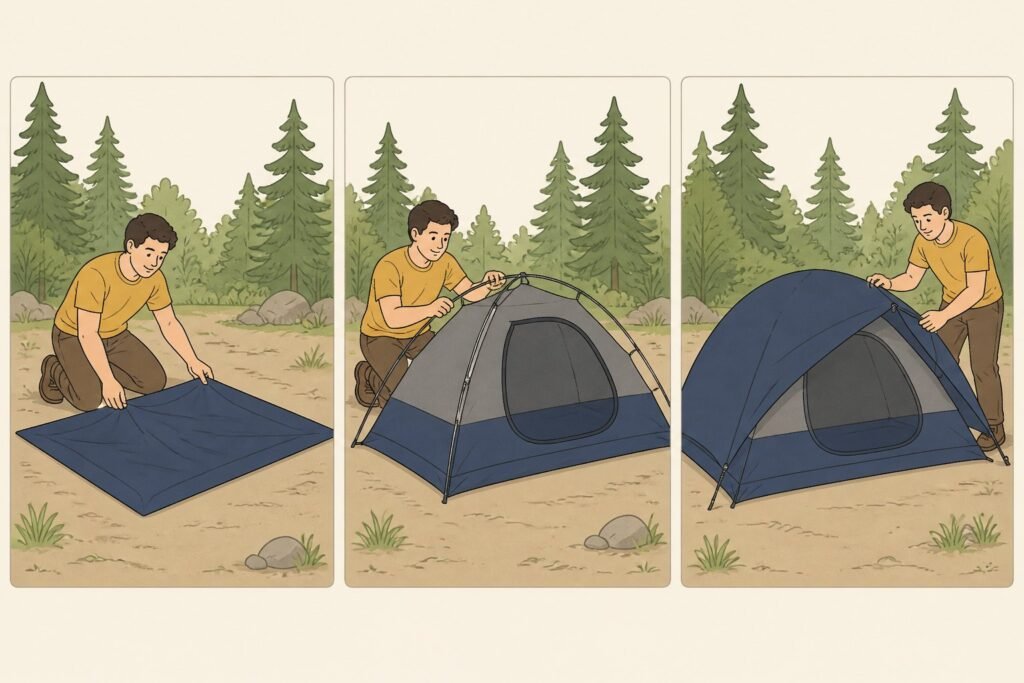
Buy or borrow a tent rated for more people than you have. A “2-person tent” is realistic for one person with gear; two people in a 2-person tent will feel like sardines. A 3-person tent for two people gives you actual breathing room.
Practice how to set up your tent before you go camping. Do it in your backyard or living room. There’s nothing more frustrating than trying to figure out a pole system in the dark after a long drive.
Lighting
Bring a headlamp — not just a flashlight. Headlamps keep your hands free for cooking, setting up, or navigating to the bathroom at 2am. Bring a lantern too if you want ambient light around the campsite. Pack extra batteries.
Clothing and Layers
Temperatures at a campground can swing 30 degrees between afternoon and midnight. Layer up: a moisture-wicking base layer, a fleece or insulation mid-layer, and a waterproof shell. Cotton is a trap — it absorbs moisture and takes forever to dry. Synthetic or wool keeps you warm even when damp.
Don’t forget: sunscreen, a hat, and sturdy closed-toe shoes or hiking boots.
The Rest of Your Essential Gear
- Camp chairs (at least one per person — you’ll be sitting around the campfire for hours)
- Cooking setup: camp stove, fuel canister, a pot, utensils, and a lighter
- Cooler with ice for perishable food and drinks
- Reusable water bottles and a water filter if your campground water is questionable
- First aid kit
- Trash bags (leave no trace — pack out everything you bring in)
How to Plan Your Camping Meal Strategy
Food at a campsite tastes better than almost anywhere else. That’s not nostalgia — it’s real. But camping meals do require planning because you won’t have a grocery store nearby and you’re working with limited cooking setup.
Keep It Simple for the First Trip
Beginners who try to recreate restaurant meals at a campsite usually end up hungry and frustrated. Pick meals that are easy, don’t require much refrigeration, and actually taste good cooked over a flame.
Good beginner camping meals:
- Breakfast: oatmeal, eggs and bacon, pre-made breakfast burritos wrapped in foil
- Lunch: sandwiches, trail mix, crackers and cheese (no cooking required)
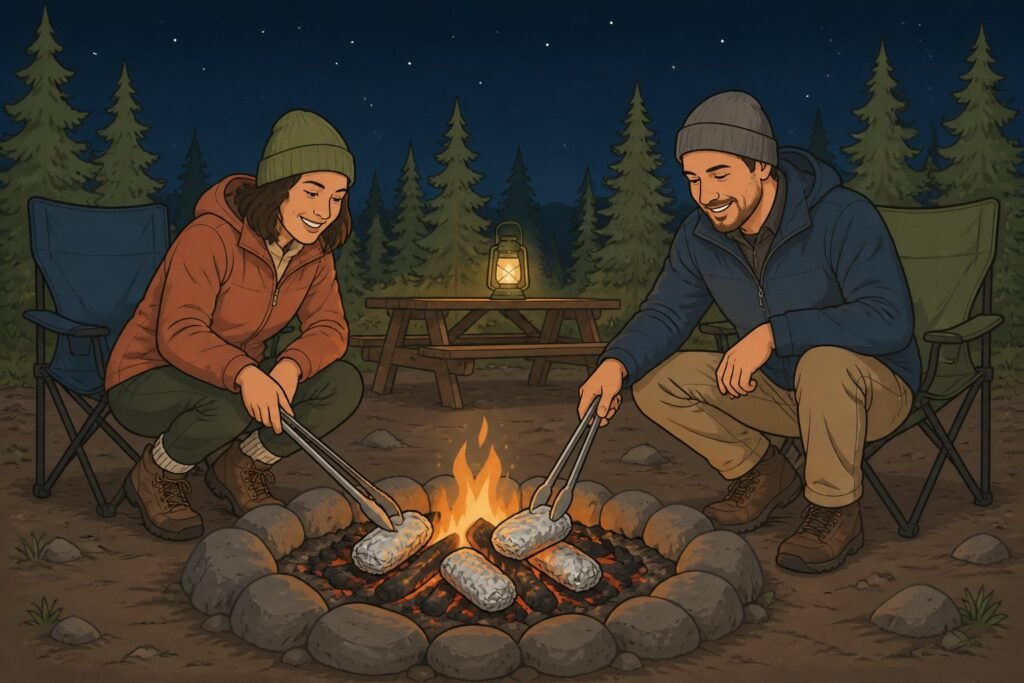
- Dinner: foil packet meals (protein + vegetables + seasoning wrapped in foil and placed in the coals), pasta, hot dogs on sticks
Food Storage and Safety
Keep your perishable food in a cooler with enough ice to actually keep things cold — aim for a 2:1 ice-to-food ratio. Store the cooler in the shade. In bear country, your food and cooler go in a bear box or hung from a tree at night — the campground will have instructions. Never keep food in your tent.
The S’mores Are Not Optional
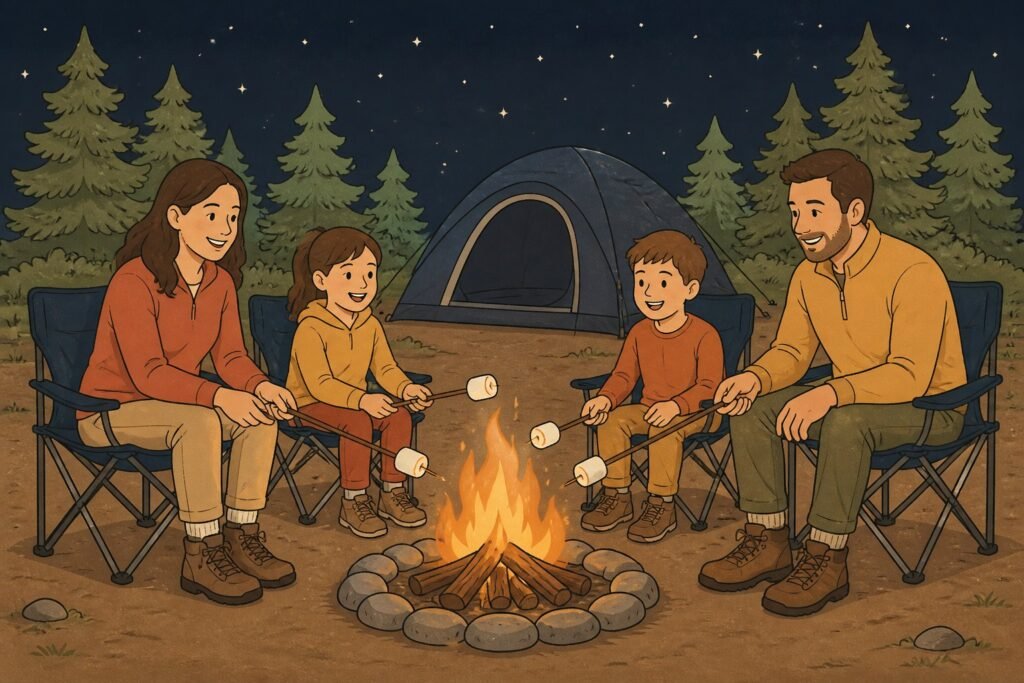
S’mores aren’t a camping cliché — they’re an event. Graham crackers, chocolate, marshmallows. Build a campfire down to coals, not flames, and take your time. It’s one of those small rituals that makes a camping trip feel complete.
How to Set Up Camp Like You Know What You’re Doing
Arriving at your campsite and setting up efficiently makes the whole trip feel more relaxed. Fumbling with gear in fading light is the opposite of relaxing.
Pick Your Tent Spot First
Find the flattest, most level spot within your campsite. Clear any rocks or sticks before you lay down your footprint. Your tent door should ideally face away from the prevailing wind. If rain is possible, check that your tent isn’t sitting in a natural low spot where water will pool.
Set Up Camp Before Dark
Give yourself at least 90 minutes of daylight to set up camp. Pitch your tent first, then get your sleep system inside and your gear organized. Once shelter is sorted, get your cooking and camp kitchen set up next. Save the campfire for when everything else is handled.
Build Your Campfire Safely
Use the established fire ring — don’t build a new one. Start with tinder (dry leaves, paper, small dry twigs), then add kindling, then larger logs. Never leave a campfire unattended. Before you sleep, drown the fire completely with water, stir the ash, and repeat until everything is cold to the touch. If it’s still warm, it’s not out.
Things to Do While Camping (Beyond Sitting There)
A lot of people don’t realize how much of camping is just… being somewhere. No notifications, no commute. That’s the whole point. But if you want structure, here are some genuinely good ways to spend your time at a campsite.
- Hiking: Even short trails near your campground are worth doing. Bring water, snacks, and a trail map or downloaded offline map.
- Stargazing: Most campgrounds away from cities have genuinely dark skies. Lie back and look up for an hour. You’ll see more stars than you thought were there.
- Reading: A hammock, a book, and nobody needing anything from you for three hours. Underrated.
- Wildlife watching: Learn to identify a few local birds or plants before you go. You’ll notice more.
- Around the campfire: This is where camping actually happens — talking, not talking, roasting things, watching the fire. Don’t rush it.
Beginner Camping Tips That Experienced Campers Wish Someone Had Told Them
Most first-time camping mistakes are completely avoidable. Here’s the condensed version of what usually goes wrong and how not to let it happen to you.
Arrive early. If your campsite is available from 2pm, get there by 3. Setting up in daylight is ten times easier than setting up in the dark, and you’ll actually enjoy your evening.
Bring more layers than you think you need. You can always take off a jacket. You can’t add warmth you didn’t pack.
Pre-cook and prep what you can. Chop vegetables, marinate meat, and pack meals into portions before you leave home. Camp cooking is more pleasant when you’re not doing a full mise en place at a picnic table.
Tell someone where you’re going. Share your campground name, site number, and expected return date with someone at home. Basic safety that many beginners skip.
Leave your campsite cleaner than you found it. Pack out all your trash. Douse your fire completely. Leave the campsite in at least as good a shape as it was when you arrived — ideally better.
Accept that something will go wrong. A tent stake will bend, rain will show up unexpectedly, you’ll forget one thing. None of it is a crisis. The best camping stories all start with something going wrong.
Now Go Book Something
Reading a camping guide for beginners is useful. Actually going is better. Pick a state park within two hours of home, book a campsite for one night, and test your gear before you commit to a full weekend. A single overnight car camping trip teaches you more than any amount of prep reading.
You don’t need perfect gear, perfect weather, or the perfect location for your first camping trip. You need to show up. The rest works itself out around the campfire.