Table of Contents
Everyone struggles with confidence at some point. The person who looks completely at ease giving a presentation? They practiced that. The friend who seems to make new friends effortlessly in every room they walk into? They felt awkward too, and they did it anyway.
Confidence isn’t a personality trait you’re born with or without. It’s a skill — and like any skill, it gets stronger the more you use it. If you’ve been wondering how to be confident without faking it or waiting until you somehow “feel ready,” this is for you. True confidence comes from action, not from waiting around for the feeling to arrive first.

Understand What Self-Confidence Actually Is (and Isn’t)
Confidence doesn’t mean never feeling scared. Confident people feel fear, doubt, and uncertainty too — they’ve just stopped waiting for those feelings to go away before they act.
Confidence isn’t about being louder, bolder, or more extroverted either. Quiet people can be deeply self-confident. It’s also not about being arrogant or having much confidence in everything you do. Plenty of people have confidence in some areas of life and feel shaky in others. That’s normal.
Self-confidence, at its core, is the belief that you’re capable of handling what comes your way. It’s your sense of value and worth as a person, separate from how any single situation turns out. Self-esteem sits underneath it — the feeling of being worthy of confidence, of being enough even when you fail.
The two feed each other. Build one and you’ll often see the other grow too.
Stop Comparing Yourself to Others
Comparing yourself to others is one of the most reliable ways to feel terrible about yourself — and one of the hardest habits to break.
Social media makes this worse. You’re comparing your unedited daily reality to someone else’s highlight reel. The person you’re measuring yourself against is almost certainly doing the same thing with someone else. Nobody wins this game.
That doesn’t mean you can’t be inspired by other people. The difference is whether you use someone else’s success as fuel (“they figured it out — maybe I can too”) or as evidence against yourself (“they have it together and I don’t”). One helps build confidence. The other quietly chips away at your self-esteem every day.
When you catch yourself comparing, redirect the question: Compared to where I was six months ago, how am I doing? That’s the only comparison that actually tells you something useful.
Set Achievable Goals and Follow Through
One of the fastest ways to build confidence is also the most straightforward: do what you say you’re going to do. Not some of it. Actually finish it.
Start Smaller Than You Think You Should
Low self-confidence often comes from a pattern of setting goals that are too large, not following through, and then taking that as evidence that you can’t be trusted to do things. The cycle is brutal and completely fixable.
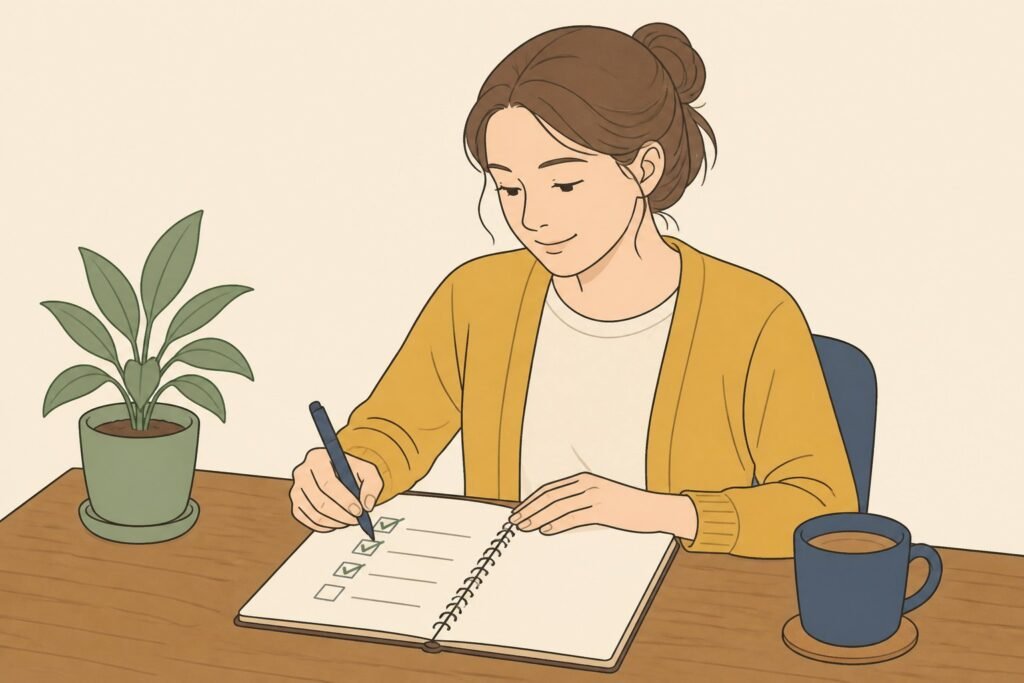
Set achievable goals — genuinely achievable, not just theoretically achievable. Then hit them. Then set slightly harder ones. The process of setting achievable goals and completing them rewires your sense of what you’re capable of faster than almost anything else.
Each small win adds a data point that says: I said I’d do this, and I did it. Over time, that stack of evidence becomes the foundation of real self-confidence.
Don’t underestimate this. It sounds unglamorous, but the ability to handle challenges and succeed — even small ones — builds confidence in a way that no amount of positive thinking alone can replicate.
Fix Your Self-Talk Before It Fixes You
Negative self-talk is often so automatic that people don’t even register it as a choice. You make a mistake and your inner voice immediately says of course you did or you’re so stupid. You’d never speak to a friend that way. But you do it to yourself constantly.
That voice matters. Research in cognitive behavioral therapy consistently shows that negative thinking patterns shape how you feel about yourself, how you perform, and how you interact with others. The reverse is also true: changing your self-talk — really changing it, not just pasting affirmations over the top — can genuinely shift your confidence levels over time.
How to actually do this:
- Notice the pattern first. When do you talk badly to yourself? Under what circumstances? Start observing without trying to fix it.
- Challenge the thought. Is it true? Is it the whole story? What would you tell a friend in the same situation?
- Replace it with something honest. Not “I’m amazing and this went great” — something realistic like “that didn’t go well, and I can handle what comes next.”
Norman Vincent Peale said it plainly decades ago: the way you think about yourself has a direct effect on how you perform and how others perceive you. He wasn’t wrong.
Face Your Fears Directly
Avoiding things that scare you feels like relief in the short term. Long-term, avoidance tells your brain that the thing you avoided was genuinely dangerous — and your fear grows stronger, not weaker.
The only way to develop self-confidence in something is to do it, repeatedly, until your nervous system updates its threat assessment. This works for public speaking, for social confidence, for talking to strangers, for job interviews, for anything you currently avoid because it makes you anxious.
Start with lower-stakes versions of the thing that scares you. If social situations feel hard, you don’t have to walk into a room of 200 people. Talk to one person at the coffee shop. Make eye contact with the barista. Build from there.
Fear of failure keeps a lot of people stuck. But here’s what’s actually true: failing at something you tried doesn’t lower your self-worth. Not trying — and spending years wondering what would have happened — does far more damage.
Be willing to try new things, take risks, and accept that not everything will go well. That willingness is what separates people who gain confidence over time from people who stay stuck.
Take Care of Your Body
This one gets treated as secondary. It isn’t.
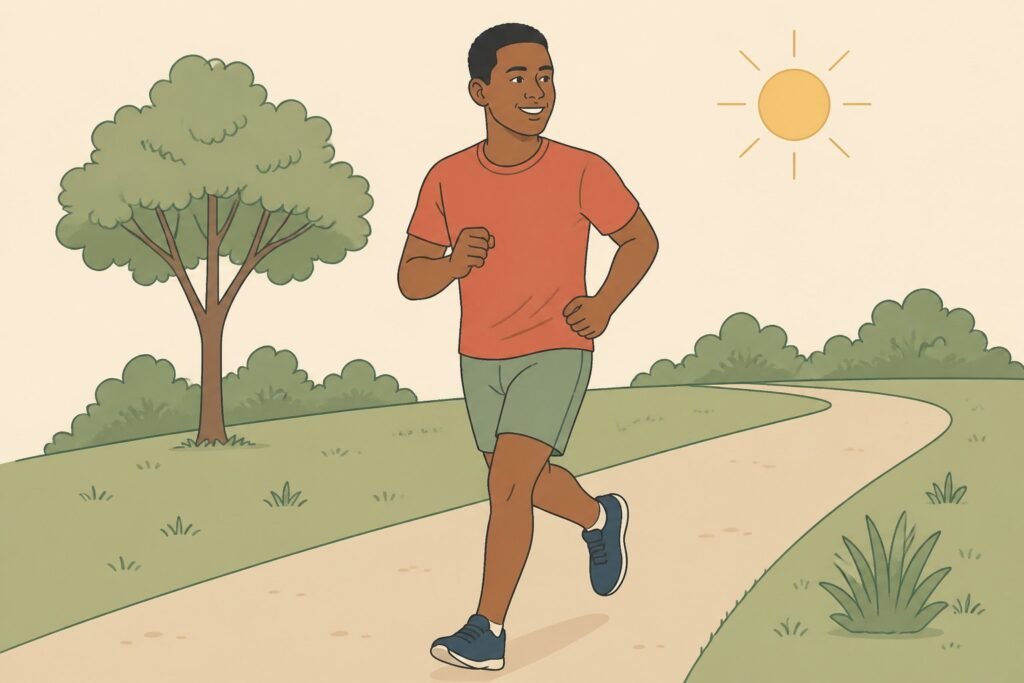
How you feel physically affects how you feel about yourself in direct and immediate ways. Regular exercise is one of the most well-documented confidence boosts available — it improves body image, raises energy, reduces anxiety, and shifts your sense of yourself as someone who is capable and in control of your life.
Sleep deprivation, on the other hand, consistently makes people feel worse about themselves, more reactive, and harder to be confident. So does a poor diet — blood sugar crashes don’t exactly put you in a self-assured headspace.
Taking care of your body also includes posture. Keep your shoulders back, lift your chin slightly, take up a little more space. This isn’t just performance. Research suggests that body language influences not only how others perceive you but how you feel internally. Act with confidence physically, and your mental state tends to follow.
Surround Yourself With Positive People
The people you spend the most time with shape your self-perception more than most people want to admit.
Spend most of your time around people who criticize, dismiss, or constantly one-up you, and your lack of confidence will have plenty of material to work with. Positive people — not relentlessly cheerful people, but people who genuinely support you and believe in your ability to handle things — create an environment where building self-confidence is a lot easier.
This doesn’t mean cutting everyone out who challenges you. Good friends challenge you. The difference is whether someone is pushing you forward or pulling you down.
Pay attention to how you feel after spending time with different people. Do you feel more capable, more energized, more like yourself? Or do you feel smaller? That’s useful information.
Help Others and Watch Something Shift
Helping others is a confidence builder that most self-help content glosses over, and it shouldn’t.
When you help someone — teach them something, support them through a hard time, contribute to something bigger than yourself — a few things happen. You gain a sense of competence and usefulness that’s hard to manufacture any other way. You take the focus off your own insecurities for long enough to remember that you have things to offer. And you build real connections, which help build inner security over time.
This is especially useful when your self-confidence is low. Low self-confidence tends to be very self-focused — a loop of what do they think of me, am I good enough, am I doing this right? Getting out of that loop by genuinely focusing on someone else’s needs is one of the quickest ways to feel more grounded.
Practice Mindfulness and Keep a Gratitude Journal
Here’s something developing confidence requires that nobody talks about enough: you have to learn to tolerate discomfort without immediately running from it.
Mindfulness helps with this. It’s not about being positive or relaxed all the time — it’s about observing what you’re feeling without immediately reacting to it. That space between feeling something and acting on it is where you start to feel secure rather than driven by anxiety.
Keep a gratitude journal while you’re at it. Not because positivity fixes everything, but because a lack of self-confidence tends to run on a diet of worst-case thinking. Writing down three things that went okay — or that you’re genuinely grateful for — trains your brain to register evidence on the other side of the ledger. Small practice. Real effect.

Learn New Skills — and Give Yourself Credit for Them
One of the quietest drivers of low self-confidence is the sense that you don’t have much to offer. Picking up new skills dismantles that directly.
It doesn’t have to be dramatic. A new skill can be learning to cook three meals well, getting better at a sport, picking up a language, finishing an online course, or learning to maintain your car. What matters is that you stretch into something unfamiliar, stay with it through the awkward early stages, and come out the other side with evidence that you can figure things out.
That evidence stacks. Social confidence, confidence in professional settings, confidence in relationships — all of it draws from the same reservoir of self-worth that gets built every time you take something on and follow through.
You Don’t Need Permission to Start
Confidence isn’t something you develop by thinking about it. You build it by acting — imperfectly, inconsistently, and in the face of doubt.
You don’t need to feel confident in order to be confident requires showing up anyway. Every time you face something that makes you uncomfortable and do it anyway, you’re adding to the foundation. Increase your self-confidence gradually, brick by brick, and one day you’ll notice that the voice that used to say I can’t handle this has gotten much quieter.
Start today. Pick one thing on this list. Do it once. That’s it.