Table of Contents
You step out of the pool, shake your head, and still — that muffled, sloshing feeling doesn’t go away. Water trapped in your ear is one of those minor annoyances that can turn genuinely uncomfortable fast. Your hearing sounds like you’re underwater, and the pressure makes it hard to focus on anything else.
Most of the time, water in the ear drains on its own within a few minutes. But sometimes it gets stuck in your ear canal, sits there for hours, and if it stays long enough, it can create the right conditions for an ear infection. Knowing how to get water out of your ear quickly means you don’t have to wait and hope.
Here are the methods that actually work — and a few things you should stop doing immediately.
Why Water Gets Stuck in Your Ear Canal
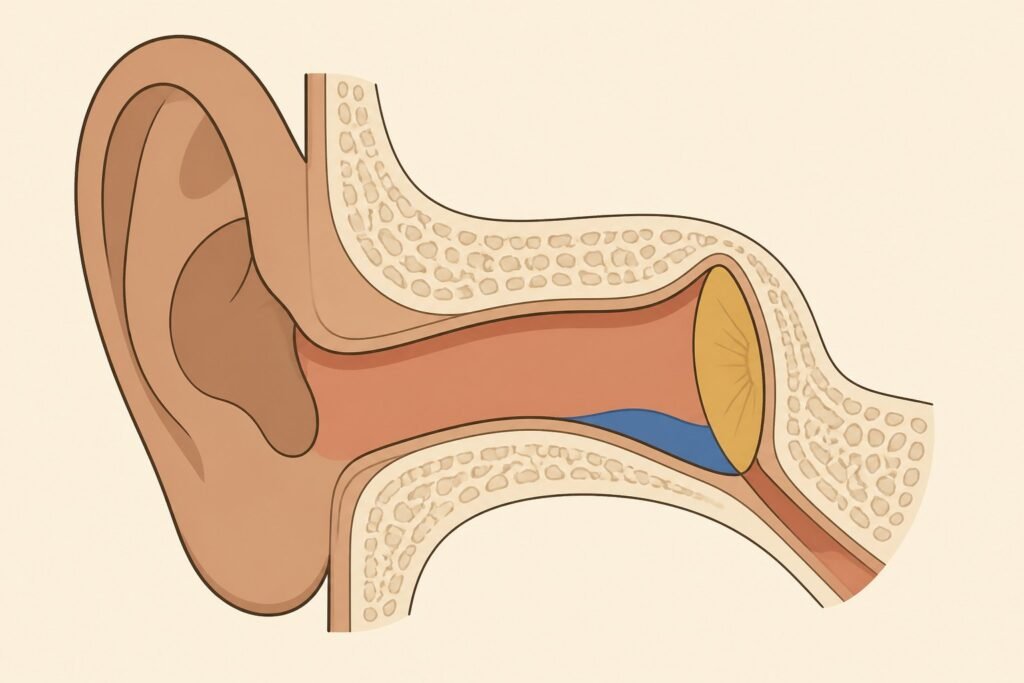
The ear canal isn’t a straight tube. It curves slightly from the opening of the ear to the eardrum, and that curve is exactly where water can get stuck. Earwax, narrow ear canals, or the angle of your head when you’re in the water all affect whether water drains freely or gets trapped in the ear.
Water can get into the outer ear canal from swimming, showering, surfing, or even just washing your hair. The middle ear is protected by the eardrum, so water rarely gets stuck in the middle ear unless there’s a rupture or another issue — that’s a different problem entirely and requires a doctor.
The sensation — that muffled, full, sometimes crinkly feeling — comes from water sitting against the eardrum or along the skin of the ear canal. It can feel like water is trapped even hours after you’ve been in the pool.
The Best Ways to Get Water Out of Your Ear
Tilt and Gravity
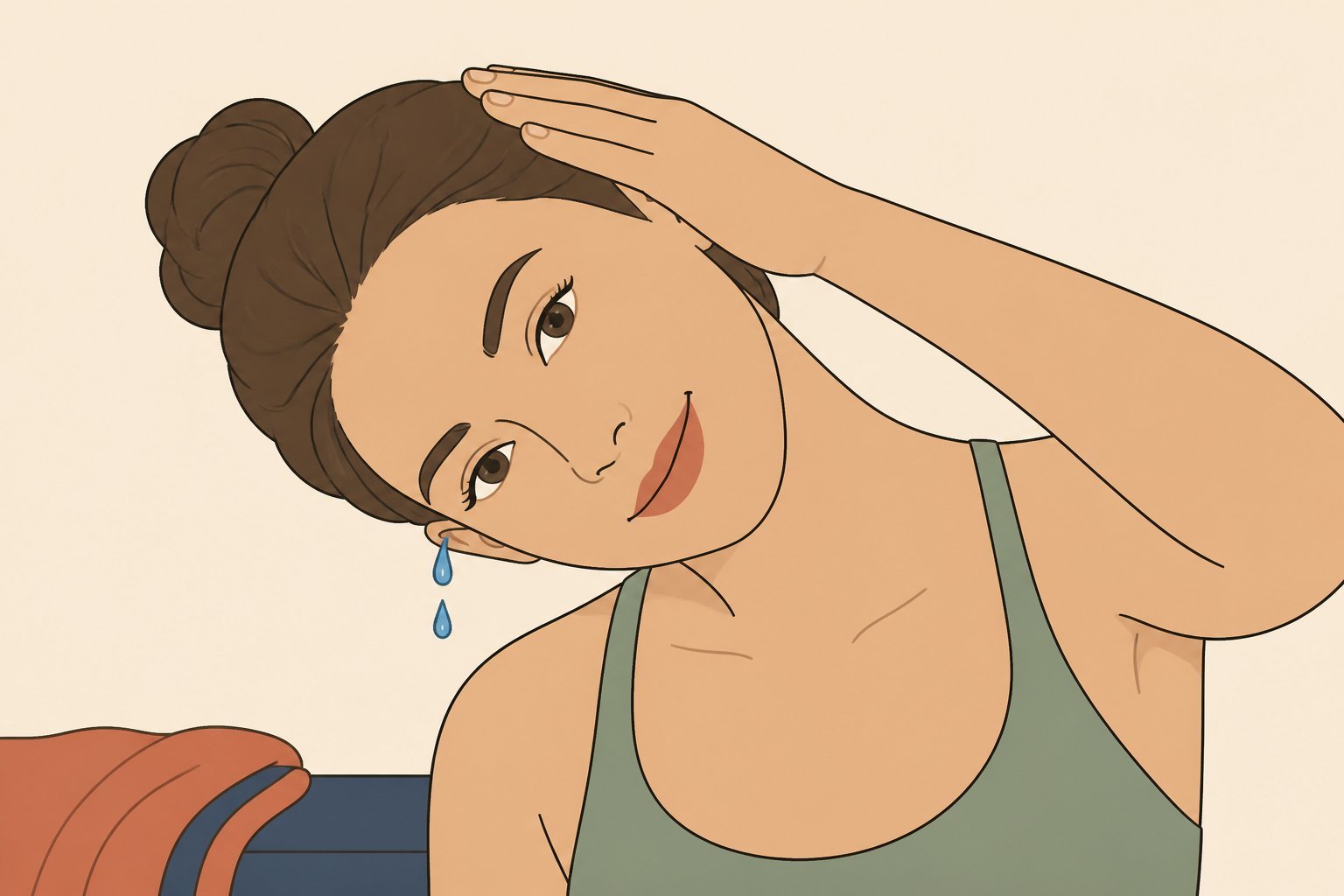
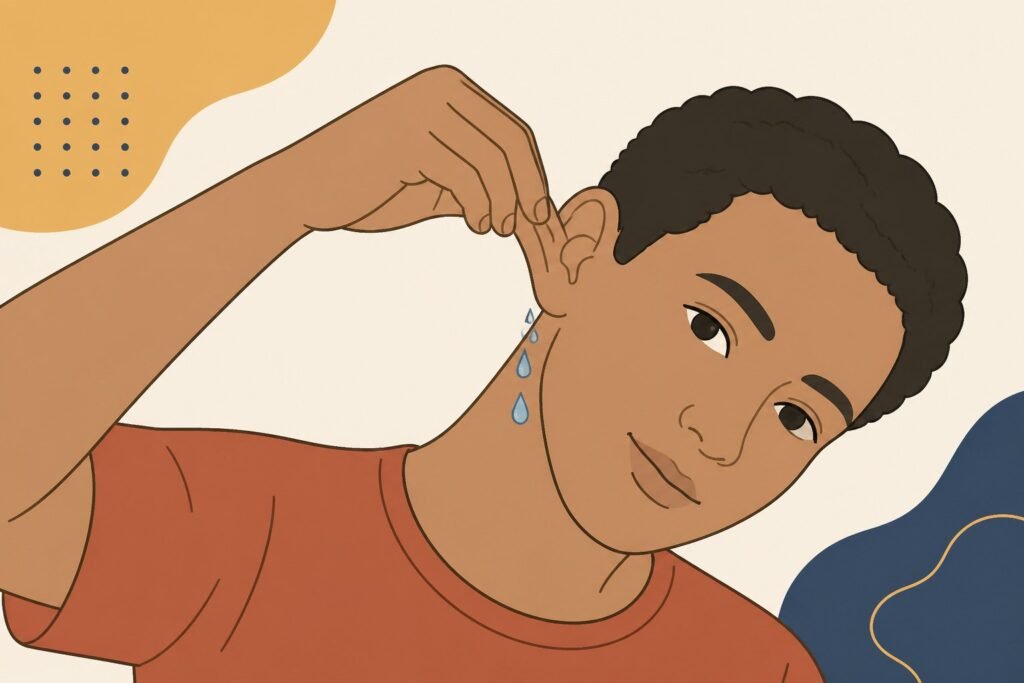
The simplest method first: tilt your head to the side with the affected ear facing downward. Tug the outer ear gently downward and backward to help straighten the ear canal, then hop on one foot or jiggle your head slightly. This motion often helps water drain without any tools or products.
Hold the position for 30 seconds. If nothing comes out immediately, try lying on your side with the affected ear facing downward on a clean towel for a few minutes. Gravity does most of the work.
The Palm Pressure Method
Cup your palm tightly over the ear and press gently, then release rapidly in a pumping motion. This creates a brief vacuum effect that can pull the water toward the opening of the ear. Do this 4–5 times with your head tilted toward the affected ear facing downward. You’ll often feel or hear the water shift.
Don’t use a finger inside the ear for this — the palm over the ear creates the right pressure without pushing anything deeper.
Yawn, Chew, or Swallow
Moving your jaw changes the shape of the ear canal slightly. Yawning wide, chewing gum, or making exaggerated swallowing motions can be enough to shift trapped water in the ear and let it work its way out. It sounds too simple, but it works surprisingly well on mildly trapped water.
Using a Blow Dryer to Dry the Ear Canal
A hair dryer set to the lowest heat setting can help evaporate water trapped in the ear canal. Hold it at least 12 inches from your ear and direct the airflow toward the opening. Move it in a slow back-and-forth motion for 20–30 seconds.
The warm air helps dry the outer ear canal without the risks that come with sticking things inside your ear. Keep it on the lowest setting — heat too close to the ear can burn the delicate skin inside the ear or cause discomfort.
This method works best after trying the gravity and palm techniques first. It’s especially useful when water stays in your ear after the bulk of it has drained and you still feel that residual dampness in the canal.
Ear Drops That Help Remove Water From Your Ear Canal
Over-the-Counter Ear Drops
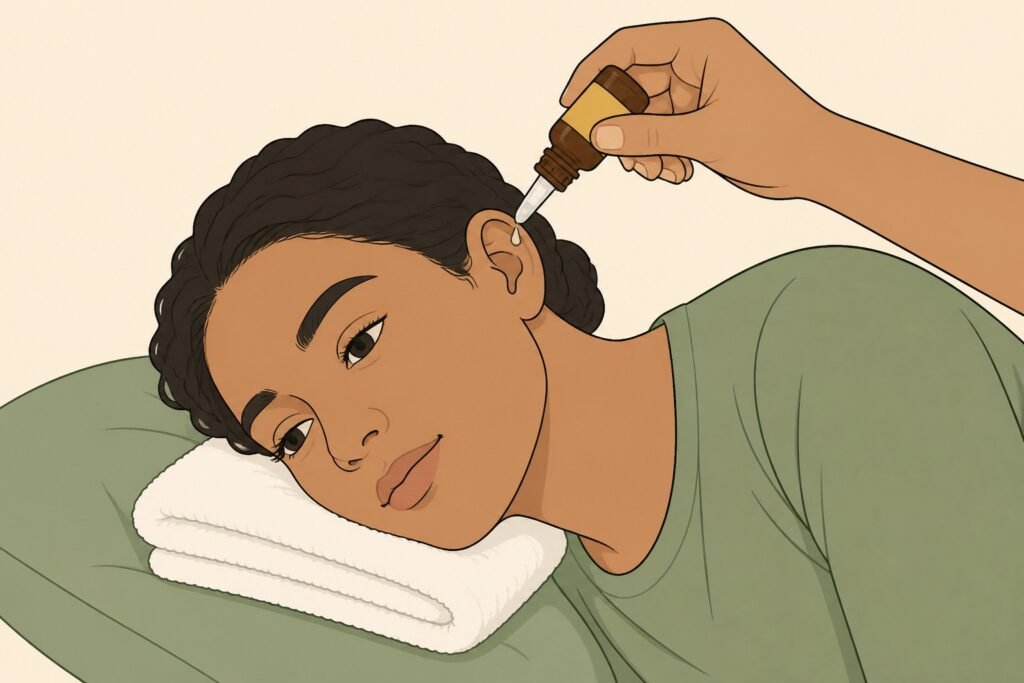
Over-the-counter ear drops designed to remove trapped water typically contain isopropyl alcohol, sometimes combined with glycerin. The alcohol helps evaporate the water quickly and also dries the ear canal walls, which prevents bacterial growth. These are the same drops marketed for swimmer’s ear prevention.
To use them: tilt your head so the affected ear faces upward, squeeze the recommended number of drops into the ear canal, wait about 30 seconds, then tilt your head the other way to let everything drain out.
Hydrogen Peroxide in Your Ear
A diluted hydrogen peroxide solution (3% concentration, available at any pharmacy) can help loosen any earwax that’s trapping water deeper in the canal. Use a dropper to put a few drops of hydrogen peroxide in your ear, wait for the fizzing to stop — usually about a minute — then tilt to drain. Don’t use this method if you have any ear pain, a history of ear infections, or a perforated eardrum.
What Not to Use
Skip cotton swabs. Everyone does it, and it’s consistently the worst approach. Q-tips don’t absorb water — they push it further into the ear canal and can scratch your ear canal walls, which creates tiny openings for bacteria to enter. They also compact earwax against the eardrum, which makes everything worse.
Swimmer’s Ear: When Trapped Water Becomes an Infection
Swimmer’s ear is the most common complication from water that stays in your ear too long. It’s an outer ear infection — specifically, an inflammation of the ear canal caused by water exposure that creates a warm, moist environment where bacteria thrive.
The symptoms of swimmer’s ear start subtle: itching inside the ear, mild discomfort when you pull on the outer ear, and a feeling that the ear is slightly blocked. Left alone, it escalates to significant pain, swelling, and sometimes discharge. Dealing with swimmer’s ear at the early stage is easy. Ignoring it until stage two or three is miserable.
If you spend a lot of time in the water — competitive swimming, surfing, even frequent showering — prevent swimmer’s ear by drying the ear canal thoroughly after every water exposure and using preventive ear drops after swimming. Custom earplugs designed for water are worth the investment if this is a recurring problem.
See a doctor if:
- Ear pain develops or worsens after water exposure
- You have any discharge or fluid coming from the ear
- Water is still trapped in your ear after 2–3 days
- You have any hearing loss that doesn’t resolve
What to Do if Water Is Stuck in the Middle Ear
True middle ear buildup is different from outer ear canal water, and the symptoms are different too. Water or fluid stuck in the middle ear (behind the eardrum) typically follows an upper respiratory infection or allergy flare-up — not just swimming. The sensation is pressure or a feeling of fullness that doesn’t shift with head tilting.
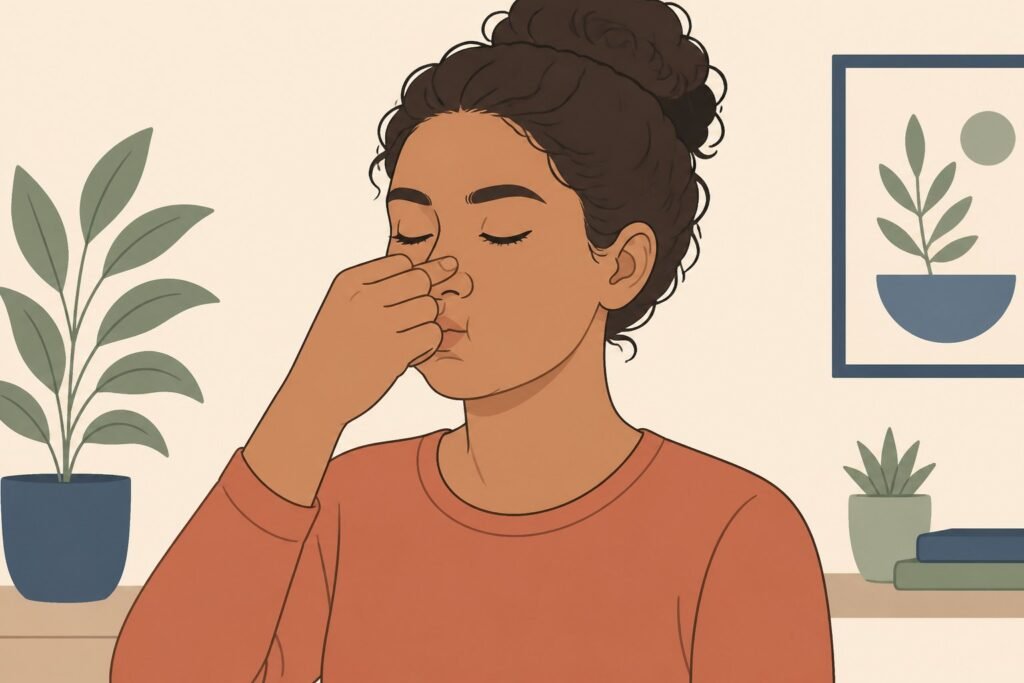
The Valsalva maneuver can help: pinch your nose closed, close your mouth, and gently blow as if you’re trying to pop your ears. This builds pressure from the middle ear to the back of the throat, which can open the Eustachian tube and release water or equalize ear pressure. Do it gently — too much force can cause problems.
If you feel like water is trapped in your ear and none of the standard draining methods help, this might be what’s going on. Ear canal techniques won’t solve a middle ear issue. That kind of fluid buildup in the middle ear should be evaluated by a doctor if it persists longer than a few days.
How to Prevent Water From Getting Trapped in the Ear
Getting water in your ear is hard to avoid entirely, but you can make it much less likely with a few consistent habits.
Wear Earplugs
Swim earplugs are the most reliable way to prevent water from entering the ear canal during time in the water. Silicone moldable earplugs form a seal against the outer ear canal and work well for casual swimmers. Custom-fitted earplugs from an audiologist are better for people who swim regularly or competitively.
Dry Your Ears After Swimming
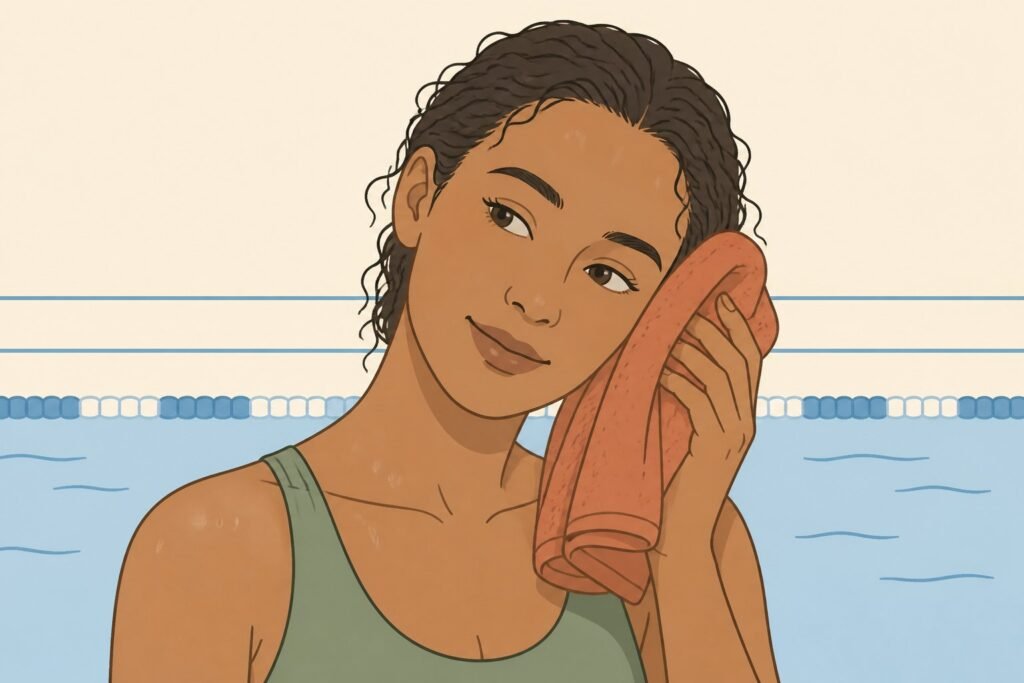
After every swim or shower, tilt your head side to side and gently dry the outer ear with the corner of a towel. Don’t rub inside the ear — just pat the visible outer ear area and let gravity handle the rest. This one step prevents most of the water that would otherwise linger in the ear canal.
Use Preventive Ear Drops
A few drops of isopropyl alcohol-based solution after water exposure dries the ear canal and discourages bacterial growth. This is especially worth doing if you’ve had previous outer ear infections or if you notice you’re prone to getting water that stays in your ear after swimming.
The Methods That Make Things Worse
A few popular suggestions are worth skipping entirely:
Cotton swabs. Already covered above, but it bears repeating: do not use Q-tips to remove water from your ear. They push water deeper into the ear canal and can scratch the delicate skin inside.
Ear candles. There’s no evidence they remove water, and they carry a real burn risk. Skip them completely.
Sticking a finger in your ear. Your finger can’t reach the trapped water, and pushing at the ear canal wall can cause irritation or shift earwax in a way that makes drainage harder.
Very hot air from a blow dryer. High heat too close to the ear is a fast way to burn the sensitive skin inside the ear canal. Low setting, held at least 12 inches away, moved constantly.
In most cases, water in the ear clears up quickly with gravity, the right head tilt, and a few minutes of patience. When it doesn’t, ear drops designed to dry the canal are your next step. And if pain shows up at any point — don’t push through it. That’s your ear telling you it needs a doctor, not another home remedy.