Table of Contents
Most people’s last memory of writing a poem involves a forced rhyme scheme, an English class assignment, and a lot of dread. That’s a shame, because actual poetry has almost nothing to do with what you read in high school.
A poem doesn’t need to rhyme. It doesn’t need iambic pentameter. It doesn’t need to be deep or symbolic or difficult. What every poem does need is some kind of intention — a reason for the words to be arranged the way they are, rather than written as plain prose.
If you want to write a poem and don’t know where to start, this is the place. No previous experience required. No rules you can’t break.
Poetry Doesn’t Have to Be What You Think It Is
A lot of people avoid poetry because they’re picturing Keats or Wallace Stevens — dense, formal, full of allusions you need footnotes to understand. That version of poetry exists, and it’s worth knowing about. It’s not the only version.
Maya Angelou wrote poems that read like a conversation. Nikki Giovanni wrote poems that feel like someone talking directly into your ear. William Carlos Williams wrote a poem about a red wheelbarrow in the rain that’s less than twenty words and still gets taught in universities. Emily Dickinson broke almost every formal rule of her era and became one of the most read poets in American history.
The point isn’t to intimidate you — it’s the opposite. Poetry is a wider tent than most people realize. There’s room for you in it.
Find Inspiration Before You Touch the Blank Page
Staring at a blank page and willing a poem into existence almost never works. The poem usually comes from somewhere specific — a image, a feeling, a fragment of overheard conversation, a memory that keeps surfacing.
Before you start writing the poem, try one of these approaches:
Go for a walk without your phone. Pay attention to physical details — light hitting a specific surface, a sound you can’t identify, the way something smells. Sensory observations make great jumping-off points for a poem.
Make a list. Jot down ten things you’ve been thinking about this week. Ten things you’ve noticed. Ten things you’re angry about or grateful for. One of those will spark something.
Freewriting. Set a timer for ten minutes and write stream-of-consciousness — don’t stop, don’t edit, just get words onto the page. Somewhere in that mess is usually the seed of a poem.
Use a prompt. Writing prompts exist precisely for this. A simple prompt like “write about the last time you changed your mind” or “describe something you can’t see” can cut right through the block.
The Poetry Foundation’s website has hundreds of poems you can read for free, organized by theme, form, and poet. Reading poetry is one of the best ways to find inspiration — you’ll encounter a line that makes you want to respond, argue back, or write something completely different.
Understand the Basic Elements of Poetry
You don’t need a degree in literature to write a poem. But knowing a few basic elements of poetry helps you make intentional choices rather than accidental ones.
Line Breaks
This is the most important technical tool a poet has. A line break is where you choose to end a line — and that choice affects rhythm, emphasis, and meaning. Breaking a line mid-thought creates tension. Ending a line on a strong word gives that word weight.
Read any poem aloud and you’ll immediately feel how the line breaks work. They tell you where to pause, where to speed up, where to hold your breath.
Stanza Structure
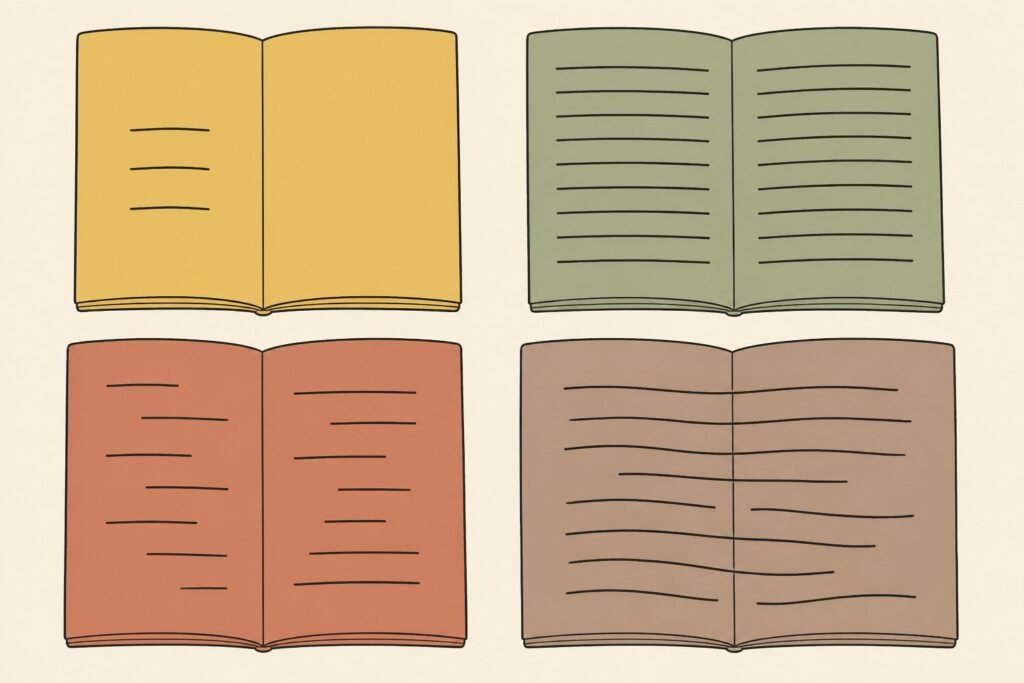
A stanza is a group of lines, like a paragraph in prose. How you group your lines shapes the poem’s pacing. Two-line stanzas (couplets) feel tight and controlled. Long, unbroken stanzas feel like the thought is spilling over. Short stanzas with white space between them slow the reader down.
Sound and Rhythm
Poetry doesn’t need to rhyme, but sound still matters. Repetition of consonants (alliteration), repeated vowel sounds (assonance), near-rhymes — these create texture in a poem without forcing a rigid rhyme scheme. When you read your poem aloud, you’ll hear where the sound is working and where it isn’t.
Metaphor and Wordplay
A metaphor in a poem isn’t decoration — it’s often the engine of the whole thing. The best metaphors show us something we already knew from an angle we hadn’t considered. Margaret Atwood’s poetry is full of this: domestic images turned strange, familiar things made suddenly unfamiliar.
Wordplay — double meanings, unexpected word choices, words used in unusual ways — is one of the real pleasures of writing poetry. You have far more freedom with language in a poem than in any other kind of writing.
The Different Types of Poetry and Poetic Forms
There are many different types of poems, and knowing a few gives you options. You’re not locked into any of them — but trying a specific form can be a good way to start writing when you’re not sure what shape you want.
Free Verse
Free verse has no required rhyme or specific meter. Most contemporary poetry is free verse. It gives you complete control over every line break, every sound, every pause. It’s also the form where craft is most invisible — which means you have to work harder to create shape and structure on your own.
Haiku
A haiku has three lines: five syllables in the first, seven syllables in the second, five in the third. That’s it. Haikus traditionally focus on nature or a single moment in time, using physical details to suggest something larger. Writing haikus is excellent practice even if you prefer poems in longer forms — the constraint forces precision.
Sonnet
A sonnet is 14 lines, typically in iambic pentameter (which means each line has ten syllables, alternating between unstressed and unstressed syllables in a da-DUM da-DUM pattern). Sonnets have a built-in turn — called a volta — where the poem shifts perspective or argument. Shakespeare wrote 154 of them.
Other Forms Worth Trying
- Ode — a poem of direct address, typically celebratory. You can write an ode to anything: your coffee, your commute, your anxiety.
- Limerick — five lines with a specific AABBA rhyme scheme and comic rhythm. Great for wordplay.
- Villanelles — 19 lines, two repeating refrains, one of the most demanding forms in English poetry. Dylan Thomas’s “Do Not Go Gentle into That Good Night” is one.
- Blank verse — unrhymed iambic pentameter. Shakespeare’s plays are written in it.
How to Actually Write Your Poem: Starting and Drafting
Once you have a subject, a spark, or even just a word or image you can’t stop thinking about — start writing. Don’t wait until you have the whole poem in your head.
Start in the middle. You don’t need to know the first line first. Start with whatever feels most alive — an image, a moment, the line you can hear most clearly. You can figure out the beginning later.
Write more than you need. Your first draft will probably be too long. That’s fine. You’re putting material onto the page that you’ll shape later. Give yourself permission to over-write so you have something to edit.
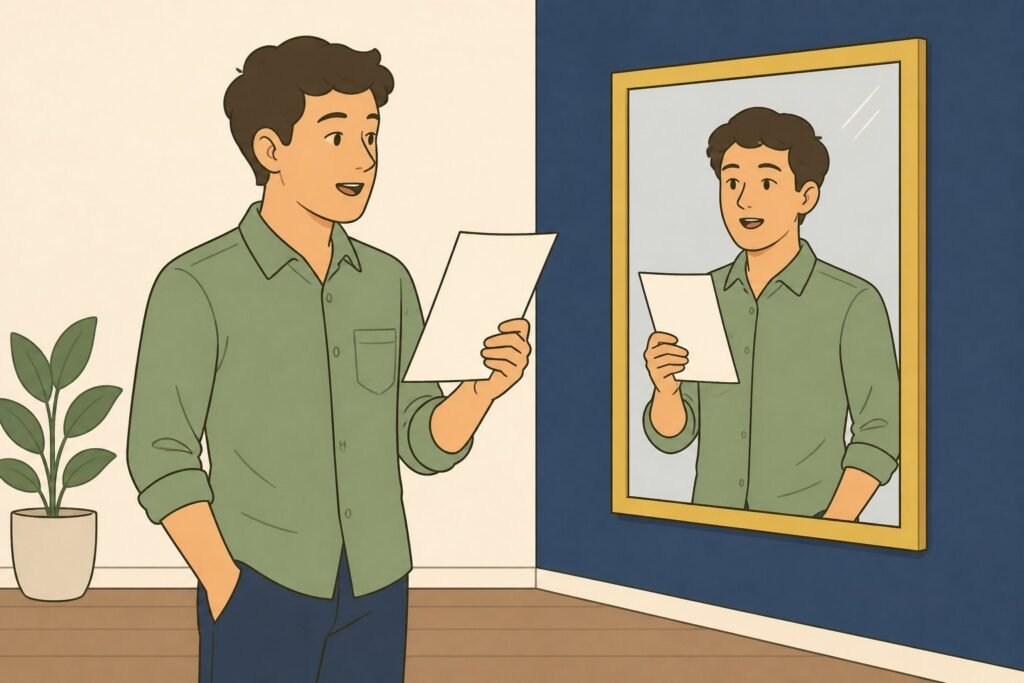
Read it aloud as you go. This is the single best revision tool for poetry and writing. Your ear catches what your eye misses — a clunky phrase, a rhythm that’s off, a line that doesn’t earn its place.
Don’t be afraid to be specific. Vague, abstract language is the enemy of a great poem. The more specific and concrete you are — an actual name, a precise color, a particular street — the more universal the poem becomes. This sounds paradoxical but it’s consistently true.
Leave it alone, then come back. After a first draft, set the poem aside for at least a day. When you revisit it with fresh eyes, you’ll see it differently. You’ll find the line that’s carrying the whole poem and the lines that are dragging it down.
How to Edit Your Poem Once It’s on the Page
Writing the poem is only the first half. Editing is where the real work happens — and where most first poems stop too early.
When you edit your poem, ask yourself:
- Does every line earn its place? If a line isn’t doing anything a previous line already did, cut it.
- Where is the energy? Find the most alive part of the poem. Consider building toward it or opening with it.
- Are there any filler words or phrases? Poems have no room for anything that doesn’t pull its weight.
- Does the ending land? The last word of a poem carries enormous weight. Make sure it’s the right one.
Look carefully at your punctuation too. In poetry, punctuation is a rhythm tool as much as a grammatical one. A period stops everything. A comma slows down. No punctuation at all lets the lines run together. Each choice shapes how the poem is experienced.
Read Poetry to Get Better at Writing It
There’s no shortcut here. The fastest way to understand poetry — and to improve your own — is to read and write poems regularly. The two activities feed each other.
Read a poem. Read it again. Read it aloud. Ask yourself: what is this poem doing? Where does it turn? What’s the last word doing? You don’t need to be able to answer every question, but the practice of asking them sharpens how you think about your own work.
Some starting points if you’re not sure where to look:
- The Poetry Foundation website (poetryfoundation.org) has thousands of poems across every style and era
- Mary Oliver for accessible, nature-driven free verse
- Ocean Vuong for contemporary lyric poetry that doesn’t announce itself
- Lucille Clifton for compression and emotional power in short poems
Reading poetry you love is different from reading it to study it. Do both.
Share Your Work and Find Your Community
A poem lives fully when it’s read — ideally out loud to another person. Sharing your work is uncomfortable at first. It gets easier, and the feedback you get (even informal feedback from a trusted reader) is invaluable.
Join a Writing Group
A poetry workshop or creative writing group gives you a community of people who are also trying to write poems, who will read your work carefully and respond honestly. Many cities have free or low-cost poetry workshops. Universities often have open workshops. Online communities work too.
Try an Open Mic Night
An open mic night is a surprisingly forgiving environment for sharing new work. You read, people listen, and the experience of speaking your poem aloud to a room tells you things about the poem that no amount of silent reading will reveal.
Keep Writing
Every poem you finish teaches you something. Every poem you abandon teaches you something too. The only way to get better at writing poetry is to keep writing it — badly at first, then less badly, then occasionally well.

Writing a poem doesn’t require talent you were born with. It requires attention — to language, to the world around you, to the specific image or feeling that made you want to write in the first place. Start there. Use pen and paper if a screen feels too clinical. Write the bad draft first and trust that the revision is where the poem finds itself. Every poet you’ve ever admired was once exactly where you are right now.