Table of Contents
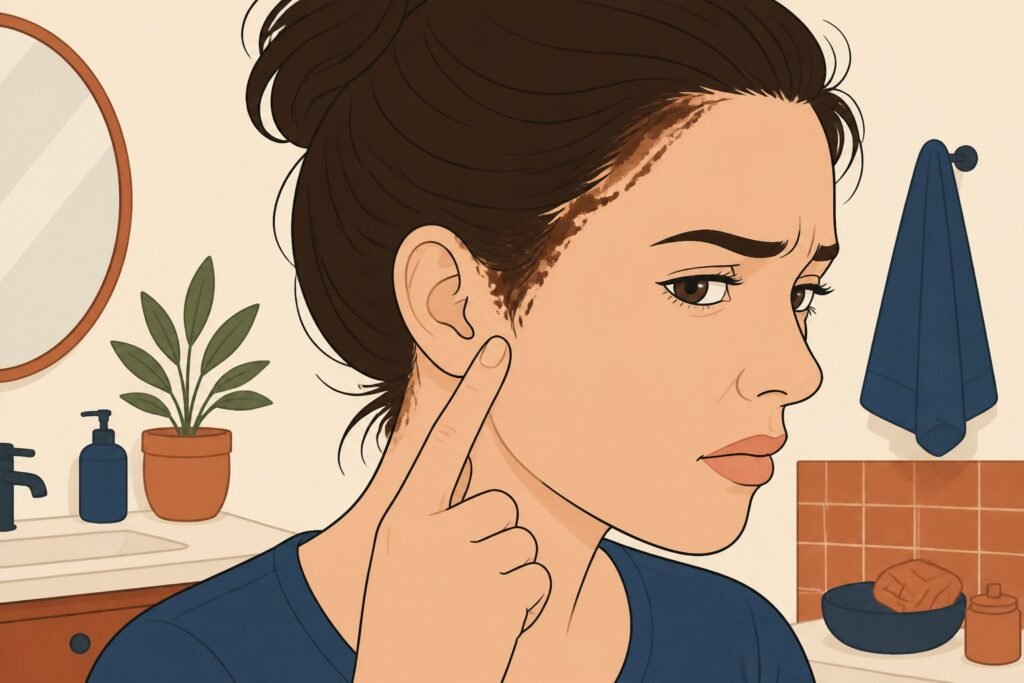
You finished dyeing your hair at home, rinsed everything out, and then caught a glimpse in the mirror. There’s a dark streak running along your hairline, a smear near your ear, and somehow a patch of dye on your neck. Classic.
Getting dye on your skin during at-home hair coloring is almost guaranteed. Hair dye stains fast — the pigment starts bonding with the top layer of skin cells within minutes of contact. The longer it sits, the harder it is to remove. Fresh dye comes off with almost no effort. A stain that’s been on overnight is a different story.
Here’s everything that works to get hair dye off skin, from quick fixes to methods for stubborn stains.
Why Hair Dye Stains Skin So Easily
Hair dye — especially permanent hair dye — contains small molecules that are designed to penetrate. On hair strands, that’s exactly what you want. On skin, it’s the problem.
Skin can absorb dye pigments quickly, particularly around the hairline and ears where the skin is thinner and more porous. Box dye often has a higher developer concentration to push color into coarse hair, which means it’s even more aggressive on the delicate skin around your face.
The good news: skin naturally sheds dead skin cells every few days, which means even a stain you can’t get out today will start fading on its own within 24–48 hours. The methods below speed that process up significantly.
Act Fast: What to Do While the Dye Is Still Fresh
If you catch it immediately — during dye application or right after — you can remove excess dye with almost nothing.
Grab a damp cloth or paper towel and wipe the area of skin clean before the dye has a chance to set. Warm water and a bit of hand soap is usually enough to lift fresh dye stains completely. The color on your skin at this stage hasn’t fully bonded yet, so you’re not fighting the stain — you’re just wiping it off.
If you’re mid-dye job and notice it dripping, don’t panic and don’t rush. Blot, don’t rub. Rubbing spreads the stain and pushes the dye into a larger area of skin.
The Best Everyday Methods to Remove Hair Dye From Skin
These are the options you likely have at home right now. Most of them work on fresh or same-day stains with minimal effort.
Soap and Warm Water
Start here before anything else. Lather up with hand soap or dish soap and work it into the stained skin in small circular motions. The friction helps loosen the dye while the soap breaks down the pigment. Rinse thoroughly and repeat if needed.
This works best on fresh dye. It won’t do much for a stain that’s been sitting overnight, but it’s always worth trying first.
Baking Soda Paste
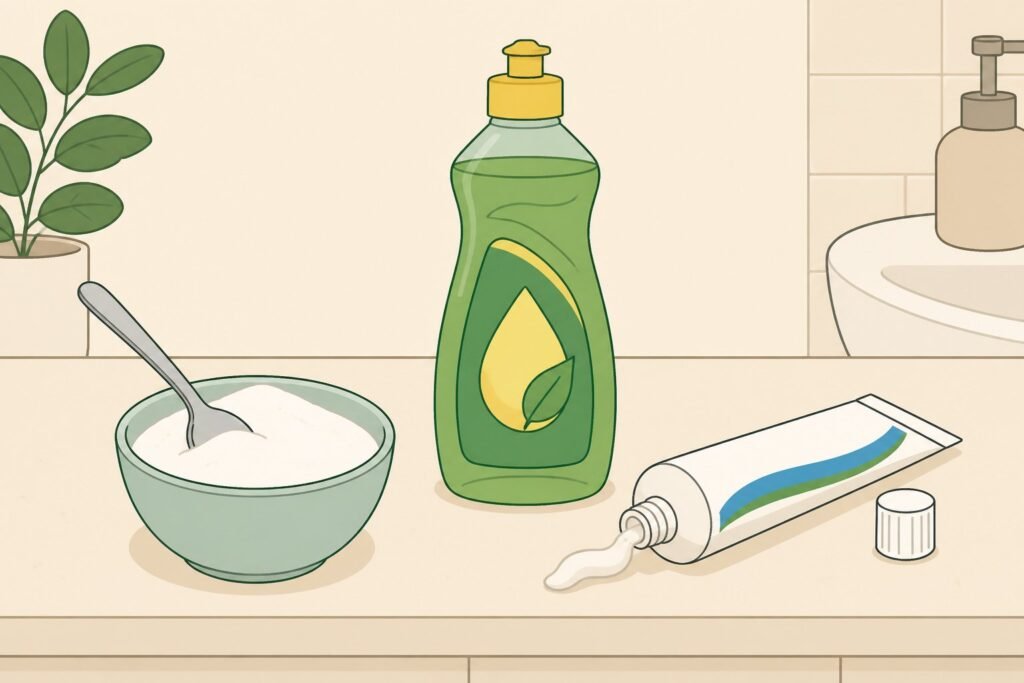
Baking soda is a mild abrasive that helps remove dead skin cells along with the stain sitting on top of them. Mix baking soda with a small amount of dish soap to form a thick paste. Rub it gently onto the hair dye stain in circular motions, leave it for a minute, then rinse with warm water.
Baking soda works well on most skin types and is gentle enough for the skin around the hairline. Don’t scrub aggressively — the goal is light exfoliation, not irritation.
Toothpaste
Non-gel toothpaste contains mild abrasives and works in a similar way to baking soda. Apply a small amount to the dye stain and rub it in using your fingertip or a soft toothbrush. Leave it on for two minutes, then rinse. Toothpaste is particularly handy for small, precise stains around the hairline or near the ears.
The whitening versions tend to work slightly better since they contain a bit more abrasive material, but any plain toothpaste will do the job on a fresh hair dye stain.
Stronger Options for Stubborn Hair Dye Stains
When soap and baking soda haven’t done the job, these methods are more effective at removing a dye stain that has had time to set.
Rubbing Alcohol
Rubbing alcohol is good at breaking down dye pigments because it cuts through the color molecules faster than water-based solutions. Soak a cotton ball and press it onto the stained skin for about 30 seconds, then rub gently in one direction. You’ll often see the dye transferring onto the cotton.
One caution: rubbing alcohol is drying. Rinse thoroughly after use and apply moisturizer to prevent skin dryness. It’s not the first choice for dry skin or sensitive skin, but it works well for stubborn stains on less sensitive areas.
Nail Polish Remover
Acetone-based nail polish remover is more aggressive and should be a last resort. It’s effective at hair dye removal on very set stains, but it can cause skin irritation if left on too long. Apply with a cotton pad, rub briefly, then rinse immediately. Don’t use it on broken or irritated skin.
Petroleum Jelly (as a remover, not just prevention)
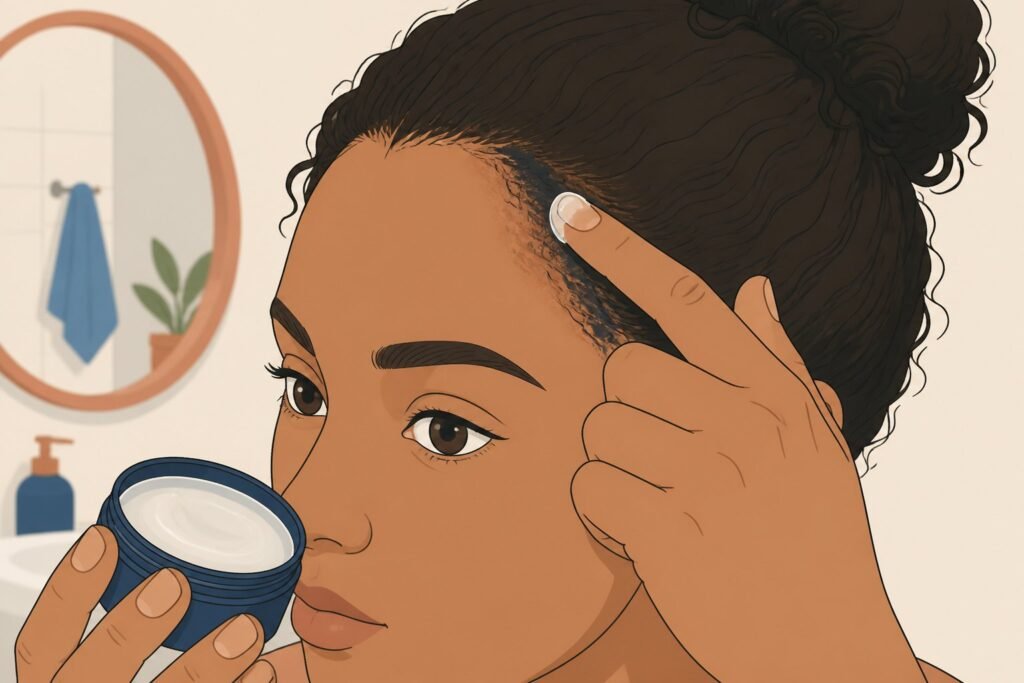
Petroleum jelly isn’t just for preventing stains before dyeing — it can also help loosen dye that’s already on the skin. Apply a thick layer over the stained area and leave it for several hours or overnight. The petroleum jelly softens the top layers of skin, making it easier to remove the dye when you wipe it away. This method is gentle enough for delicate skin and sensitive skin types.
Oil-Based Removers
Baby oil, olive oil, or coconut oil can help fade dye stains by softening the skin and breaking up the color at the surface. Apply generously, massage in for a minute, then rinse. Oil-based methods work better for semi-permanent dye than permanent dye, but they’re worth trying on any stain because they’re gentle on the skin and carry no risk of irritation.
Dedicated Hair Dye Remover Products
If home remedies aren’t cutting it, a dedicated hair color stain remover is worth keeping in your kit — especially if you dye your hair regularly.
Products like Framar Kolor Killer wipes or Pulp Riot’s hair dye remover are specifically formulated to break down dye pigments on skin without the harshness of rubbing alcohol or acetone. A good hair dye remover is gentler than nail polish remover and more effective than baking soda on older, set stains.
Most of these are available at beauty supply stores or online. They come as wipes, liquids, or creams. If you’re wondering how to remove hair dye stains that have been on your skin for more than a day, a dedicated product is usually your fastest option.
How to Remove Hair Dye Stains From the Hairline Specifically
Stains around the hairline are the trickiest. The skin there is thinner, and you’re working right next to your freshly colored hair — which means you can’t be aggressive or you risk pulling color out of the hair strands you just dyed.
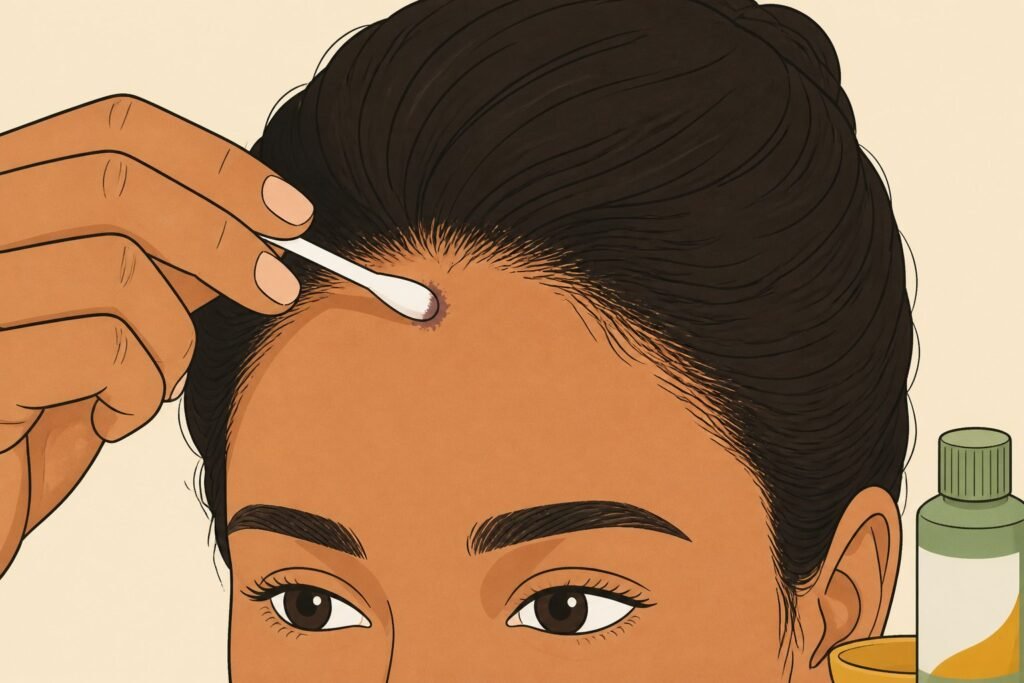
Use a cotton swab instead of a cotton pad for precision. Dip it in your chosen remover — rubbing alcohol, toothpaste, or a dedicated product — and work along the hairline with small, careful strokes. This gives you control and keeps the remover off your actual hair.
A Q-tip dipped in petroleum jelly or oil is ideal for anyone with sensitive skin around the hairline since it’s slow and gentle rather than abrasive.
Mistakes When Removing Hair Dye From Skin
A few common errors that make the stain worse or cause unnecessary irritation:
Scrubbing too hard. Aggressive rubbing doesn’t lift the dye faster — it just irritates the skin and can cause redness. Light circular motions are more effective and far kinder to your skin.
Skipping the rinse. Most removers need to be fully rinsed off, especially rubbing alcohol and acetone. Leaving them on causes dryness and can create a risk of skin irritation on top of an already stained area.
Mixing methods at once. Don’t layer baking soda, rubbing alcohol, and nail polish remover in one session. Pick one, try it, rinse fully, then try another if needed. Combining them can cause stinging and irritation.
Waiting too long. The single biggest factor in how easily a hair dye stain comes off is how long it’s been on your skin. Dealing with it during coloring your hair, or in the first 10 minutes after, takes a fraction of the effort of removing stains from the skin hours later.
How to Prevent Hair Dye Stains Before They Happen
Honestly, preventing the stain is ten times easier than removing it. A few minutes of prep before you start dyeing your hair will save you a lot of cleanup.
Use Petroleum Jelly as a Barrier
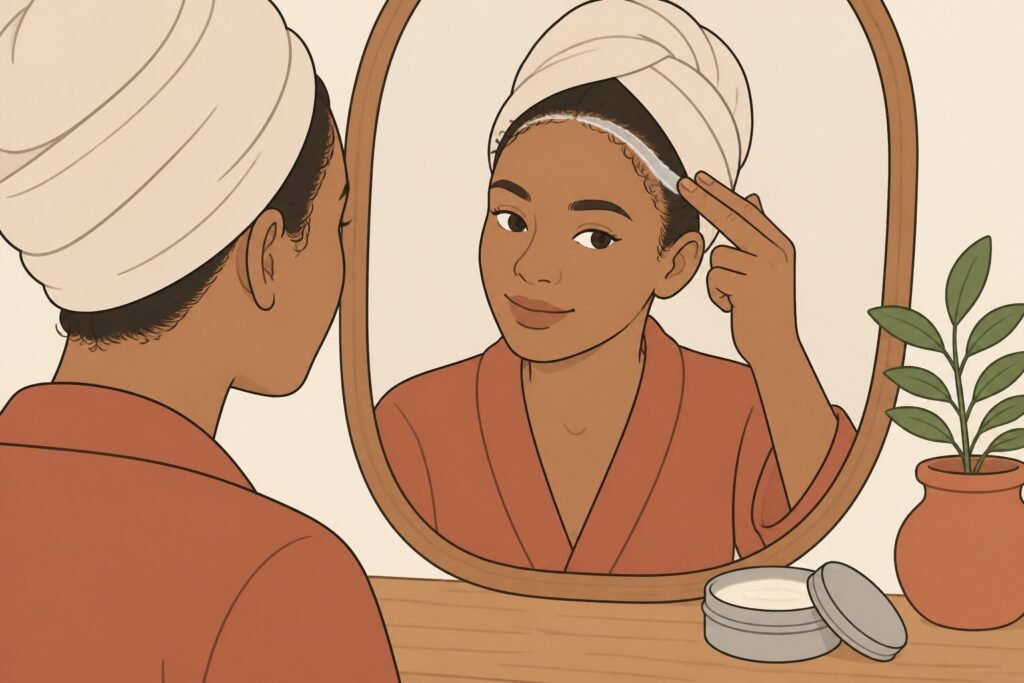
Apply a thin layer of petroleum jelly along your hairline, ears, and the back of your neck before applying any color. The dye slides off the petroleum jelly instead of bonding with your skin. Wipe away any excess dye as you go.
Wear Gloves and Old Clothes
This sounds obvious, but it’s worth saying: always use the gloves included with your dye kit. They’re there for a reason. And don’t underestimate how far dye can drip when you’re applying it.
Apply Dye Carefully at the Roots
A lot of skin staining comes from excess dye application at the hairline. Take your time during dye application right at the roots, use a brush instead of squeezing directly from a bottle, and wipe up drips as they happen rather than waiting until the end.
Have a Damp Cloth Ready
Keep a damp cloth nearby during the process so you can blot away any dye that hits the skin before it has a chance to set. This one habit alone prevents getting dye on your skin from becoming a problem in the first place.
Does Hair Dye Eventually Fade From Skin on Its Own?
Yes — and faster than most people expect. Skin naturally turns over its outer layer every few days, so even permanent hair dye from skin will fade and flake off within 1–2 days without any treatment at all.
If you’ve tried several methods and still have some residual color, give it a day. Showering, washing your face, and normal daily activity all help fade dye stains on your skin gradually. By day two, most hair color stains that weren’t caught early will have faded significantly on their own.
This is also why regular gentle exfoliation in the days after a dye job helps — removing dead skin cells speeds up the process.
The best way to handle hair dye on your skin is to act the moment you see it. Fresh dye takes 30 seconds to remove. An old stain takes effort. Keep petroleum jelly in your prep routine, have a damp cloth nearby during application, and you’ll rarely need the stronger methods at all. And if you miss a spot? Now you know exactly what to reach for.